THCP vs THCA: Potency, Effects, Legality & Key Differences


THCA and THCP belong to the same cannabinoid family but couldn’t be more different. As the market expands well beyond CBD and THC, these two compounds are drawing serious attention for good reason. One is a raw, non-intoxicating precursor. The other is reportedly the most potent THC variant ever discovered.
This THCP vs THCA guide covers potency, effects, legality, and a 20+ attribute comparison chart so you know exactly what you’re dealing with before you buy or stock either one.
🔑 The Short Version
THCA is non-intoxicating in raw form and converts to THC when heated. THCP is already psychoactive and binds to CB1 receptors up to 33 times more strongly than THC. Both are federally legal when hemp-derived.
- Buy More Save More


THCA SUGAR DIAMOND INFUSED PRE-ROLLS | 5-PACK TINS
$29.95Shop Now This product has multiple variants. The options may be chosen on the product page - Sale!On Sale

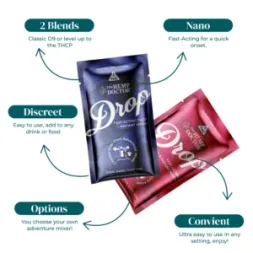
DROP | FAST ACTING MIXER
Price range: $3.50 through $20.00 — or subscribe to save 25%Shop Now This product has multiple variants. The options may be chosen on the product page
What Is THCP?
THCP (tetrahydrocannabiphorol) is a potent, psychoactive cannabinoid known for its high binding affinity to CB1 receptors. While it’s only just starting to catch on, THCP isn’t a new discovery. It was studied as early as 1942, but up until recently, it was only known to be a synthetic member of the THC family. THCP was formally identified in 2019 by Italian researchers at the University of Modena,
THCP is structurally similar to delta-9-tetrahydrocannabinol (THC), the primary active component in cannabis. Delta 9 is the cannabinoid responsible for the “high” you experience after consuming cannabis. While they are structurally similar, THCP differs in that it has a longer side chain than Delta 9.
THCP has a heptyl group, meaning its alkyl side chain contains seven carbon atoms. Compare that to Delta 9 THC, which has a pentyl side chain of only five carbons. This slightly different molecular makeup affects THCP’s interaction with the endocannabinoid system’s cannabinoid receptors.

Early preclinical studies suggest that THCP binds to CB1 receptors up to 33 times more strongly than THC. This high binding affinity towards the CB1 receptors is why THCP is thought to produce more powerful psychoactive effects than THC.
A 33x higher binding affinity doesn’t automatically translate to 33x more potency in practice. Cannabinoids affect everyone differently, so real-world results will always vary from what the numbers suggest.
| THCP is best for | Experienced users with high tolerances seeking more pronounced psychoactive effects, or looking to try out new cannabinoids. |
| THCP is less ideal for | Beginners, people with lower tolerance levels, or those not looking to get intoxicated. |
| Most common THCP formats | Vape cartridges, gummies, and tinctures. |
| Intensity expectation | Expect more intense effects compared to regular THC |
What Is THCA?
THCA (tetrahydrocannabinolic acid) is a non-psychoactive cannabinoid occurring naturally in the cannabis plant and is the precursor to delta-9 THC.
In its raw form, THCA does not produce intoxicating effects. This is because THCA has a carboxylic acid group (COOH) attached to its structure, which prevents it from effectively binding to CB1 receptors.
As such, you won’t experience any psychoactive effects from consuming raw THCA. This, however, changes once you heat it.
When heated, THCA converts into THC through decarboxylation, a chemical process that removes THCA’s carboxyl group, turning it into THC, the active form, and releasing carbon dioxide. This process occurs instantaneously when you smoke THCA flower.
| THCA is best for | Smokers and vapers who want THC effects; also suits those who want the plant experience without intoxication |
| Less ideal for | Raw: anyone seeking a high. Heated: users sensitive to THC, avoiding psychoactivity, or subject to drug testing |
| Most common formats | Flower, pre-rolls, concentrates, vapes |
| Intensity expectation | Raw: none. Heated: same as delta-9 THC |
THCP vs THCA: Key Differences Explained
THCP is a rare cannabinoid only found in trace amounts naturally. THCA, on the other hand, is abundant in the raw plant and is the precursor to the primary cannabinoid in cannabis, THC.
THCP is usually discussed in terms of psychoactive potency, as early research suggests that it has a higher binding affinity to CB1 receptors than THC. THCA often comes up in discussions because it’s the precursor to THC, the cannabinoid responsible for the “high” associated with the cannabis plant.
| Attributes | THCP | THCA |
| Type | Rare naturally occurring cannabinoid in the hemp/cannabis plant | Cannabinoid acid and precursor to THC |
| Psychoactivity | Yes. | Minimal or no action when raw, THC-level action when heated |
| Raw form effects | Psychoactive | Non-intoxicating |
| Heated form effects | Psychoactive | Psychoactive (converts to delta-9-THC) |
| Potency | Believed to be significantly stronger than THC | Converts into THC after decarboxylation |
| Cannabinoid receptors | CB1 and CB2 | Minimal or no action when rawCB1 and CB2 (when decarboxylated) |
| CB1 binding strength | Up to 33 times more active than THC (early research) | Near instant when vaped, 30 to 120 minutes in edibles |
| Activation needed | No | Yes |
| Decarboxylation required | No | Yes |
| Product format | Vapes, gummies, tinctures | Flower, concentrates, raw tinctures, pre-rolls, vapes |
| Vape products availability | Catching on | Widely available |
| Gummy products availability | Available | Less common |
| Flower products availability | Very rare | Very common |
| Onset time | Near instant when vaped or smoked, 30 to 120 minutes in edibles (THC) | 2 to 4 hours when vaped/smoked, 4 to 6+ in edibles |
| Duration | 2 to 4 hours when vaped4 to 6+ in ediblesSome users report being high for 12+ hours | 2 to 4 hours when vaped/smoked4 to 6+ in edibles |
| Tolerance level impact | Higher and faster than THC | Normal |
| Drug test risk | Positive result very likely | Positive result likely if decarboxylated |
| Legal hemp products status | Legal if hemp-derived and contains <0.3% delta-9 THC (federally) | Legal if hemp-derived and contains <0.3% delta-9 THC (federally) |
| Extraction process | Often synthesized from hemp-derived CBD, as it only occurs in trace amounts naturally | Extraction from flower, or used directly |
| Cost | High due to rarity and the expensive extraction process | Moderate due to the abundance of fresh flower |
| Availability | Rare but catching on fast | Widely available |
| User experience | Intense euphoria, long-lasting full-body effects | When decarboxylated, euphoria, relaxation |
| Best for | Experienced users with high tolerance looking for more potent highs | Consumers seeking a traditional cannabis experience |
| Popularity | Rising | Very popular, mainstream |
| Research level | Limited preclinical studies | Well studied as a THC precursor |
Is THCP Stronger Than THCA?
Yes, THCP is stronger than THCA, though the comparison is more nuanced than a simple yes or no.
When THCA is consumed raw, it produces no psychoactive effects at all, so THCP is stronger by default. When THCA is heated and decarboxylated into THC, the gap narrows, but THCP still comes out ahead.
Preclinical studies show that THCP binds to CB1 receptors with up to 33 times greater affinity than THC, translating to noticeably more intense effects at equivalent doses.
Users who have tried both report that THCP feels significantly stronger than smoked or vaped THC. If you are new to THCP, starting with a very low dose is strongly recommended.
THCP Effects vs THCA Effects
THCP vs THCA effects: how do they compare? Well, the effects differ significantly based on how THCA is delivered.
Raw THCA is non-psychoactive, meaning it won’t cause a “high” when consumed directly. That said, some consumers report feeling more relaxed after taking raw THCA.
When heated, THCA becomes THC. Consuming decarboxylated THCA (THC) may cause euphoria, heightened sensory perception, uplifted mood, full body relaxation, and potential couchlock.
THCP users report experiencing the same effects as THC but more intense. You will experience an intense and more sustained euphoria, time distortion, heightened sensory perception, and couchlock is more common.
THCP effects are not delivery dependent; it is active regardless of how you consume it.
How Do THCP and THCA Differ in Onset and Duration by Product Type?
When comparing THCP vs THCA onset and duration times, we can only use decarboxylated THCA. The reason for this is that raw THCA is non-psychoactive, so there is no way to tell when effects start or how long they last.
Here’s how THCP and THCA differ in onset and duration by product type:
| Product Type | Onset | Duration | Onset | Duration |
| THCP | THCP | THCA | THCA | |
| Vape | 0-10 minutes | 2–4 hrs (up to 6+ hrs reported) | 0–10 min | 2–4 hrs |
| Flower | Not available | Not available | 0–10 min | 2–4 hrs |
| Edibles | 30 min to 2hrs | 4–6 hrs (up to 12 hrs reported) | 30 min–2 hrs | 4–6 hrs |
| Tinctures | 15–30 min | 2–6 hrs | 15–30 min | 2–6 hrs |
Note that the onset and duration of THCP have yet to be confirmed, as it’s a relatively understudied compound.
While the claimed onset times do not differ much from THC, there have been reports of some users feeling the effects for longer than 12 hours. More research is needed to confirm these reports.
THCP vs THCA Side Effects and Tradeoffs
When consumed raw, THCA presents very minimal risk of intoxication-related side effects.
Decarboxylated THCA is associated with common, traditional cannabis side effects, including dry mouth (due to reduced saliva production), increased heart rate, reduced motor skills, and drowsiness.
The intensity of THCA’s side effects depends on tolerance and dosage. Beginners are more likely to experience these side effects because of their low tolerance to THC.
Overconsuming THCA increases the severity of the side effects and causes new ones, such as anxiety and paranoia.
Because of its heightened activity at CB1 receptors, THCP significantly raises the risk of overconsumption. Even lower doses have the potential to cause anxiety and paranoia in addition to the usual cottonmouth and increased heart rate.
This shows that stronger isn’t always better. While THCP’s intensity is its main selling point, it’s also its biggest risk. THCA offers a familiar, more controllable experience.
These statements are based on user reports and preclinical research, not medical advice.
Legality: Are THCP and THCA Legal?
Both THCA and THCP are federally legal when derived from hemp containing less than 0.3% delta-9-THC under the 2018 Farm Bill.
However, the legal status of hemp-derived cannabinoids varies significantly from state to state. The general rule is to always check your state’s current regulations before ordering THCA or THCP online.
Drug Test Risk: THCP vs THCA
Both THCA and THCP carry meaningful drug test risks. Using either will likely produce a positive result on a standard drug test.
Raw THCA products may contain small, legal amounts of THC (<0.3%) that may accumulate in your system and eventually trigger a positive result. Your body may also convert some of it into THC metabolites such as THC-COOH, which drug tests screen for.
When smoked, vaped, or infused into edibles, THCA converts into delta-9-THC, which produces metabolites that standard drug tests screen for. The detection window for THC and its metabolites ranges from 1 to 90 days, depending on the frequency of use and the type of drug test.
THCP is also expected to produce positive drug test results. While there’s limited research on THCP’s metabolism pathways, it’s likely metabolized similarly to delta-9-THC, producing THC-COOH, one of the metabolites standard tests look for.
THCP’s detection window has yet to be studied, but it’s expected to be comparable to, or longer than, delta-9-THC’s.
THCP vs THCA: Product Presence Across Formats
THCP and THCA are available in a wide range of product formats. THCP is available in disposable vapes and cartridges, gummy products such as our ZOOTED THCP/delta-9-THC gummies, other edibles, tinctures, oils, and concentrates.
THCA is available in almost all product formats, from flower products such as the potent Zaza THCA flower, THCA bubble hash, edibles, to vape products. THCA is also available in raw tinctures and oils.
As already mentioned, THCA will only cause effects if it’s decarboxylated. This can be done when making THC-infused edibles or instantly when smoking or vaping.
THCP vs THCA: Availability
THCA is arguably the most widely available hemp-derived cannabinoid. It’s in any raw hemp plant, flower product, raw tincture, or oil, and even in some THCA concentrates. You can find THCA at most dispensaries in the US.
But if it’s the quality you are after, we recommend buying hemp-derived cannabinoids and THCA products from a reputable dispensary like The Hemp Doctor.
THCP is also available, but less ubiquitous than THCA. This is mainly because it naturally occurs only in trace amounts.
THCP vs THCA: Cost Comparison
THCA is generally more affordable. It’s found in the raw plant and can be used directly, significantly lowering production costs compared to THCP. This makes THCA a popular choice, especially for budget-conscious consumers and beginners.
THCP products often carry a premium price tag. Firstly, they are rare, which drives demand up. THCP is also naturally present in trace amounts, and thus requires advanced extraction and synthesis processes, which drive costs higher.
However, THCP is very potent, which means you only need a small amount to achieve the desired effects. So, even though a single product may be expensive, it lasts longer.
THCP vs THCA: Extraction and Production
THCA is abundant in fresh cannabis, so it is often sold directly as flower or as THCA pre-rolls. As the dominant cannabinoid, it requires very minimal extraction processes. Producers can use solventless and solvent-based extraction methods to obtain THCA, which can then be processed into tinctures, oils, or concentrates.
THCP naturally exists in minute concentrations in hemp, making direct extraction rarely commercially viable. Most of the THCP is synthesized from hemp-derived CBD or obtained using more advanced extraction methods.
Some producers may cut corners to produce THCP, making third-party lab tests even more necessary.
Who Typically Chooses THCP vs THCA?
The difference between a THCP shopper and a THCA shopper usually becomes clear within the first few seconds of a conversation.
Sam Evers, Retail Location Marketing Strategist and Salisbury Team Lead at The Hemp Doctor, sees this play out on the floor regularly. “Nine times out of ten, when someone asks for THCP, they’ve already tried everything else, and they want more,” she says. “They’ll say something like ‘delta-9 doesn’t really do it for me anymore.’ THCA customers are completely different. They usually just want a good flower and a familiar experience. They’re not chasing the ceiling.”
That tracks with what the products themselves suggest. THCA’s availability in flower and pre-rolls means it naturally draws customers who are comfortable with traditional cannabis consumption. THCP’s product lineup, which skews toward vapes and edibles, tends to attract users who are already comfortable with potency and ready to push it further.
Tolerance is the other dividing line. First-time or occasional users rarely seek out THCP unprompted. It’s almost always experienced consumers, often those who have worked their way through delta-8, delta-9, and THCA, who end up asking about it.
Similarities Between THCP and THCA
THCP and THCA sit at opposite ends of the potency spectrum, but their shared origins mean retailers and consumers are working with more common ground than the differences suggest.
- THCA and THCP occur naturally in the cannabis plant and are federally legal under the 2018 Farm Bill when extracted from compliant hemp.
- Both can be found across a range of product formats, including vapes, tinctures, and edibles.
- Both interact with the body’s cannabinoid receptors, though at different intensities.
- Both carry real drug-test risk — using either can trigger a positive result on a standard screening.
Which is Better for You, THCP or THCA?
THCA:
Choose THCA if you prefer a traditional cannabis experience, a familiar flower format, or if you have low THC tolerance. THCA is more predictable and easier to control when dosing. It is also more budget-friendly.
THCP:
Choose THCP if you are an experienced THC user with a high tolerance, seeking a more intense, longer-lasting psychoactive experience, and are willing to experiment with novelty products.
Same Plant, Worlds Apart
The THCP vs THCA comparison ultimately comes down to format, activation, and potency. THCA is a precursor to THC, the primary intoxicating compound in the cannabis plant, while THCP is a psychoactive cannabinoid that occurs in very small amounts naturally.
While research on THCP is limited, available studies show it has up to 33x more activity at the CB1 receptor than THC. Consumers report that it’s more intense as a result.
For THCA to cause effects, it has to be converted into THC through a process called decarboxylation. THCP, on the other hand, is already active.
While it comes down to personal preferences, THCA’s versatility and familiarity make it a logical starting point for most users. At the same time, THCP’s intensity is better suited for the more experienced consumers who have developed higher tolerance levels.
Ready to explore THCA or THCP products? The Hemp Doctor carries lab-tested THCA flower, THCP gummies, and more, with transparent COAs so you know exactly what you’re getting.