Is THCP Stronger Than THCA?


The difference between THCP and THCA isn’t subtle, unlike some other notable hemp-derived cannabinoids. These two compounds have very different effects when consumed, stemming from their unique structures and interactions with the body’s endocannabinoid system.
So, is THCA stronger than THCP? It’s not a simple “yes” or “no” question, and the answer depends heavily on the type of effects we’re examining. Here’s what we know about THCP and THCA, including their effects, risks, chemical structures, and beyond.
🔑 Key Takeaways
- THCP is intoxicating, while THCA is not.
- THCP shows dramatically stronger CB1 receptor binding than THC in lab studies.
- Decarboxylating THCA produces delta 9 THC, the cannabis plant’s dominant psychotropic compound.
- “Stronger” depends on what you’re measuring; THCA isn’t psychotropic, but it has potential medicinal benefits.
- Start low with THCP, as even small amounts may feel powerful.
What is THCP?
Tetrahydrocannabiphorol (THCP) is a trace phytocannabinoid—a naturally occurring cannabis derivative, not one invented in a lab—found primarily in marijuana, or cannabis plants high in delta 9 THC. It wasn’t identified until 2019 by Italian researchers, which is part of why there’s still so much we don’t know about it compared to more established cannabinoids.
Like delta 9 THC, THCP is a psychotropic compound. It’ll get you very high, although not necessarily to the same exaggerated degree that early headlines suggested. We’ll get into that nuance later.
Because THCP naturally occurs in extremely small concentrations, the THCP found in hemp-derived products is typically created by chemically modifying CBD extracted from legal hemp. In essence, it’s synthesized from a hemp source rather than directly extracted in meaningful quantities from the plant itself. This is also one of the reasons it’s deemed federally legal under the 2018 Farm Bill, assuming the starting material is compliant hemp.
While delta 9 THC remains a controlled substance at the federal level (with a limit of 0.3% by dry weight for legal products), neither CBD nor hemp-derived THCP is currently regulated in the same way. Even then, individual states may restrict or ban it, and the regulatory terrain could shift with upcoming changes to federal hemp policy.
What is THCA?
Tetrahydrocannabinolic acid (THCA) is THC’s acidic precursor. It shows up just before delta 9 THC in the plant’s chemical lifecycle and is the dominant cannabinoid in freshly harvested cannabis flower, a quality that doesn’t change even after the bud has been dried and cured.
Structurally, THCA is almost identical to THC, with one core difference: it contains a single carboxylic acid group. This acid group changes THCA’s shape and polarity, rendering it unable to bind effectively to CB1 receptors in the brain. Thus, it isn’t intoxicating in its raw form.
That same structural difference also explains why the amount of THCA does not convert into an equal amount of THC. When you heat THCA (through smoking, vaping, or baking), it undergoes decarboxylation, a process that removes the carboxylic acid group and converts it into delta 9 THC. Because THCA weighs slightly more than THC, the math looks like:
(THCA% x 0.877) = total THC
So, if you start with 10 milligrams of THCA, you’ll wind up with about 8.77 milligrams of THC after decarboxylation. That’s why regulated marijuana products often list “total THC” rather than just THCA content—they also do this because the product might already contain some converted THC, which is added to the total. It gives you a more accurate sense of how intoxicating the products may be. Smokable or vapable THCA products will almost certainly cause you to fail a drug screening, as well.
THCA isn’t the first compound the cannabis plant creates. That title belongs to cannabigerolic acid (CBGA), sometimes referred to as the “mother cannabinoid.” THCA forms slightly later in the plant’s development.
How Much Stronger Is THCP Than THCA?
If we’re going to quantify it, it’s challenging to compare THCP and THCA’s potencies, given that the types of effects they create are fundamentally different.
But let’s step back for a minute. The biggest claim about THCP doesn’t compare it to THCA at all, but instead to delta 9 THC, which is a more similar compound. Specifically, THCP is sometimes said to be thirty times as potent as THC. That’s not entirely true. Or at least, it requires context.
In laboratory settings, THCP was shown to bind to CB1 receptors with thirty times greater affinity than delta 9 THC. Binding affinity isn’t the same thing as real-world psychotropic potency, however. Yes, THCP is a highly intoxicating compound and will undoubtedly get you high. Many users do vouch for it being considerably stronger and longer-lasting than delta 9 THC, as well. But THCP probably isn’t going to get you thirty times as high as plain old THC, which is frankly for the best.
Now, returning to THCA: it isn’t psychotropic in its raw form, period. We can’t exactly pit it against THCP in the same way we can compare THCP and THC.
THCA may have effects that THCP doesn’t, though, and other effects could be stronger than they are in THCP. Early research suggests potential neuroprotective, anti-inflammatory, and anti-nausea properties, although much more data is needed to validate the specifics. It’s a bit more complex than THCP, just being “stronger” than THCA in all categories.
-
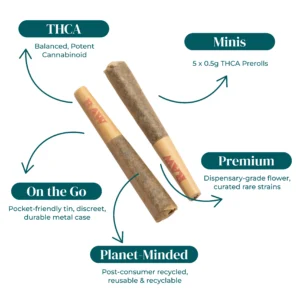
THCA SUGAR DIAMOND INFUSED PRE-ROLLS | 5-PACK TINS
$29.95Shop Now This product has multiple variants. The options may be chosen on the product page -
ZOOTED | THCA LIVE RESIN DISPOSABLE VAPE | 1G
$34.95 — or subscribe to save 25%Shop Now This product has multiple variants. The options may be chosen on the product page -


THCA BATTER | 2G
$49.95 — or subscribe to save 25%Shop Now This product has multiple variants. The options may be chosen on the product page
Potency & Psychoactive Effects (THCP Gets You High, THCA Doesn’t)
Again, here’s a simple one: THCP is a highly intoxicating cannabinoid, while THCA isn’t psychotropic at all. You can’t get high off of THCA unless you’ve decarboxylated it. Given its close relation to delta-9 THC, the confusion over this does make sense.
You can get high from a large number of THCA products, technically. Raw cannabis bud contains far more THCA than it does THC, with the majority of THCA only converting after the plant material is heated. This is also why you can’t get high from consuming raw flower. Similarly, some hemp-derived vape carts or disposables contain unconverted THCA. These are still intoxicating products.
Other THCA products—namely, capsules or tinctures—are specifically formulated to preserve THCA’s non-intoxicating profile. These are typically marketed as wellness products, similar to those derived from CBD, rather than something intended for recreational use. Unless one of these THCA products also includes THC or another psychotropic compound, it’s non-intoxicating.
On the other hand, all authentic THCP products are psychotropic and designed to get you high, including those blended with other cannabinoids.
Since THCP tends to hit harder than traditional THC, you’ll want to be careful not to overdo it your first time. There’s no reliable way to predict how intensely a cannabinoid will affect you until you try it. Metabolism, tolerance, health history, and other physiological factors all play a role. With THCP products, start with the manufacturer’s recommended dose or lower.
Chemical Structure & Interaction with CB1/CB2 Receptors
THCP has a strong affinity for CB1 and CB2 receptors in the endocannabinoid system, which isn’t the case for THCA. This interaction is the hallmark of intoxicating cannabinoids. For reference, cannabinoids that don’t get you high—CBD, CBG, and so on—typically don’t interact directly with these receptors. Indirect interactions are possible, though.
It’s not the case for every intoxicating cannabinoid, but in general, those with long carbon side chains often create stronger highs. THCP has seven carbon atoms in its side chain, while delta 9 THC has just five. This is one potential reason for its exceptional CB1 affinity.
THCA, in contrast, has little to no meaningful CB1 affinity in its raw form. Again, the addition of its carboxylic acid group and the resulting change in molecular shape seem to negatively impact its affinity. You’ll need to carboxylate THCA first if you’re looking to get high.
Structurally, both THCP and THCA have their own unique chemical formulas (C23H34O2 and C22H30O4, respectively) and aren’t simple isomers of delta 9 THC, or of each other. Isomers have all the same molecular components, just arranged differently (and thus, producing distinct effects).
Medical reviewer perspective: Short quote or insight confirming THCP’s stronger binding to CB1 receptors and implications for users.

“Although high affinity to receptors does not necessarily high potency, studies have shown that THCP has high affinity and potency. This means that to achieve the high you get from THC, you would only need a lower concentration of THCP. It’s possible you may experience a more intense high compared to what you get with THC.”
Medical Reviewer
Recreational Effects
For the most part, users consume THCP for recreational purposes, rather than for their health. It isn’t a cannabinoid you’ll find in a typical medical dispensary—or even from some of the more wellness-centric hemp brands, which tend to prioritize CBD and similar compounds.
Reported effects of THCP include, but are not necessarily limited to:
- Euphoria
- Deep relaxation
- Heightened sensory perception
- Altered time perception
- Powerful body effects
Because of its potency, many users report an intensified version of the typical THC experience. The exact intensity varies from person to person, but it isn’t difficult to find tales of ultra-long-lasting highs from THCP, including those well over the typical three to six hours for edibles. You’ll also want to pay close attention to possible side effects here. We’ll go over those later, but with potent cannabinoids comes an increased risk for adverse reactions.
Meanwhile, THCA isn’t used recreationally in its raw form. While many consumers (particularly those in states without legal marijuana) rely on high-THCA flower to get high, this is generally heated first, producing delta 9 THC. It’s more of a wellness cannabinoid than a typical recreational option.
At this point, the differences between THCP and THCA should be clear, but seeing them side by side through a table summarizes the contrast.
| Feature | THCP | THCA |
| Psychoactive? | Yes | No (unless decarboxylated) |
| Potency | High (strong CB1 affinity; stronger per mg than delta 9 THC) | Non-intoxicating in its raw form |
| Typical Effects | Euphoria, powerful body relaxation, altered perception, intensified sensory experience, possible sedation | Non-intoxicating |
| Binding to CB1 Receptors? | Yes (high affinity; thirty times as strong as delta 9 THC) | Minimal to negligible in raw form |
| Usual Dose for Beginners | ~1-2 mg (sometimes lower depending on tolerance and formulation) | No established minimum dose; often 10-50 mg in wellness products (varies widely) |
| Duration of Effect | 4-8+ hours for edibles (anecdotal); shorter when inhaled | No intoxicating duration; wellness effects may vary and aren’t well-defined |
Why THCP Is Considered Stronger Than THCA?
Simple. THCP is considered “stronger” than THCA when discussing intoxication.
THCP is one of the most psychotropic cannabinoids (if not the most psychotropic cannabinoid) discovered to date. Then we have THCA, which has no intoxicating qualities unless it’s converted into delta 9 THC, the cannabis plant’s dominant psychotropic compound.
But it’s not entirely fair to frame this as a competition, seeing as these cannabinoids aren’t quite competitors. They’re consumed for different reasons. THCA isn’t intended to be intoxicating, and many people choose it specifically because it isn’t. Its potential benefits lie elsewhere.
Medical reviewer perspective: Include a cautionary note about dosing, tolerance, or health considerations. Example:
“Our medical reviewer emphasizes starting with microdoses of THCP due to its high potency, especially for new users or patients sensitive to THC.”
“Since THCP is relatively new to the industry, there aren’t enough studies for its safe and responsible use just yet. Start with the lowest possible dose of THCP for new users or people sensitive to THC. Similar to any form of drug or substance, it’s important to keep an eye out for any adverse effects and seek medical help as soon as possible.”
Medical Reviewer
THCP vs THCA: Which Has More Evident Side Effects?
It’s often the case with psychotropic cannabinoids, but THCP is more likely to trigger side effects than non-intoxicating THCA. It might also be more side-effect-inducing than THC itself, given the difference in potency.
Potential adverse reactions to THCP are almost identical to delta 9 THC:
- Dizziness
- Anxiety or paranoia
- Rapid heart rate
- Sedation or grogginess
- Dry mouth
One important consideration: many THCP products are blends, not pure THCP. If THCP is combined with other cannabinoids (such as delta 8 or delta 9 THC), you’ll want to ensure you’re not sensitive to any compound involved. Sensitivity to one cannabinoid doesn’t necessarily translate to sensitivity to others, although it often does with intoxicating compounds.
THCA appears to be well-tolerated in healthy individuals. Just keep in mind that raw THCA products are relatively new to the market, and we don’t have the most complete idea of their potential risks, if any. Some users report mild digestive discomfort or headaches after consuming non-intoxicating cannabinoids like THCA.
Safety Considerations
In either case, you’ll want to be careful where you’re purchasing products. Quality varies tremendously across the hemp market.
Although THCP is acceptable in many states as far as its legal status goes, it’s still not comprehensively regulated under the 2018 Farm Bill—as hemp products aren’t in general. This is what leads to such severe disparities in quality and safety.
Before buying hemp-derived products of any kind (including THCA), don’t forget to check the certificate of analysis (COA), if one exists. This document will give you the rundown on, at the very least, the product’s chemical contents. You may also find information on heavy metals, residual solvents, and other potential contaminants. If you can’t find a COA at all, then don’t buy the product. Reputable brands will make sure it’s easy to locate test results on their website.
It’s also worth accounting for personal health and physiological factors. Individuals with a history of anxiety disorders, cardiovascular conditions, or just a plain old sensitivity to THC may want to approach THCP cautiously, if at all. Be sure to start with a small dose (possibly under the manufacturer’s recommendation) and refrain from taking more until the effects have fully settled in. Start low and go slow, as they say. You can also consider speaking with a healthcare professional first.
Conclusion
In the THCA vs THCP duel, it isn’t actually hard to determine which cannabinoid comes out on top—but only if we’re prioritizing intoxication. It’s somewhat of an understatement to say that THCP has a potent effect on the body and mind. This cannabinoid binds to CB1 endocannabinoid receptors with thirty times the effectiveness of THC, while THCA interacts negligably, at best.
Regardless, THCA has unique effects that could make it worthwhile for certain users, even if it hasn’t been decarboxylated into intoxicating delta 9 THC.
Both THCA and THCP have a place in the market. Ultimately, the one you choose depends on why you’re consuming cannabis in the first place. Who knows, maybe you’ll grow to love both.
If you’re interested in experiencing THCA the way most consumers do, explore our premium selection of THCA flower, THCA concentrates, THCA vapes, and THCA gummies. When heated, THCA converts into delta 9 THC for that classic, full-bodied effect. Every batch is third‑party tested for potency and purity, so you know exactly what you’re getting.
Shop our THCA collection and find the format that fits your style today!