How Is THCA Flower Made? Producers Break Down the Process

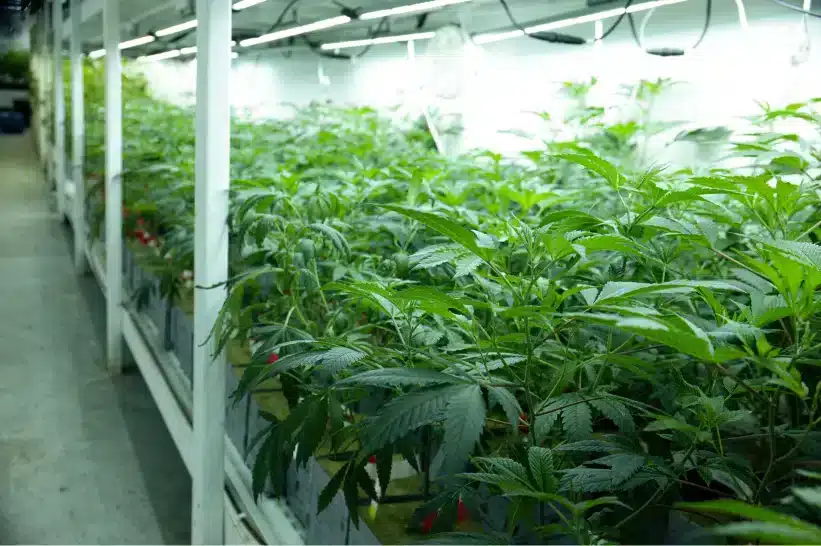
If you’ve driven through Montgomery, Texas, one of the places with the strictest cannabis laws, and caught a whiff of pot from a smoke shop, chances are you were smelling THCA and not THC.
When heated, THCA smells and tastes just like THC—and it’s even intoxicating. That’s because heated (decarboxylated) THCA is, in fact, THC. The good news is that hemp-derived THCA remains legal in most states, including Texas.
But how is THCA flower made?
While the average THCA flower is grown without much care, expert producers follow meticulous cultivation and processing methods to create a product that packs a punch.
This piece outlines the stages of growing THCA flowers, featuring insights from our Clay Kramm, who has a previous background in producing premium flower for several brands.
🔑 Key Takeaways
- Lab tests ensure THCA is pure, safe, and up to code, so you know what you’re getting.
- Strong and high-quality THCA starts with the right genetics.
- Expert cultivation is what makes THCA flower stand out.
What Is THCA Flower?
Raw THCA is like eating a green salad, but when you introduce some fire, the salad transforms into Bruce Banner!
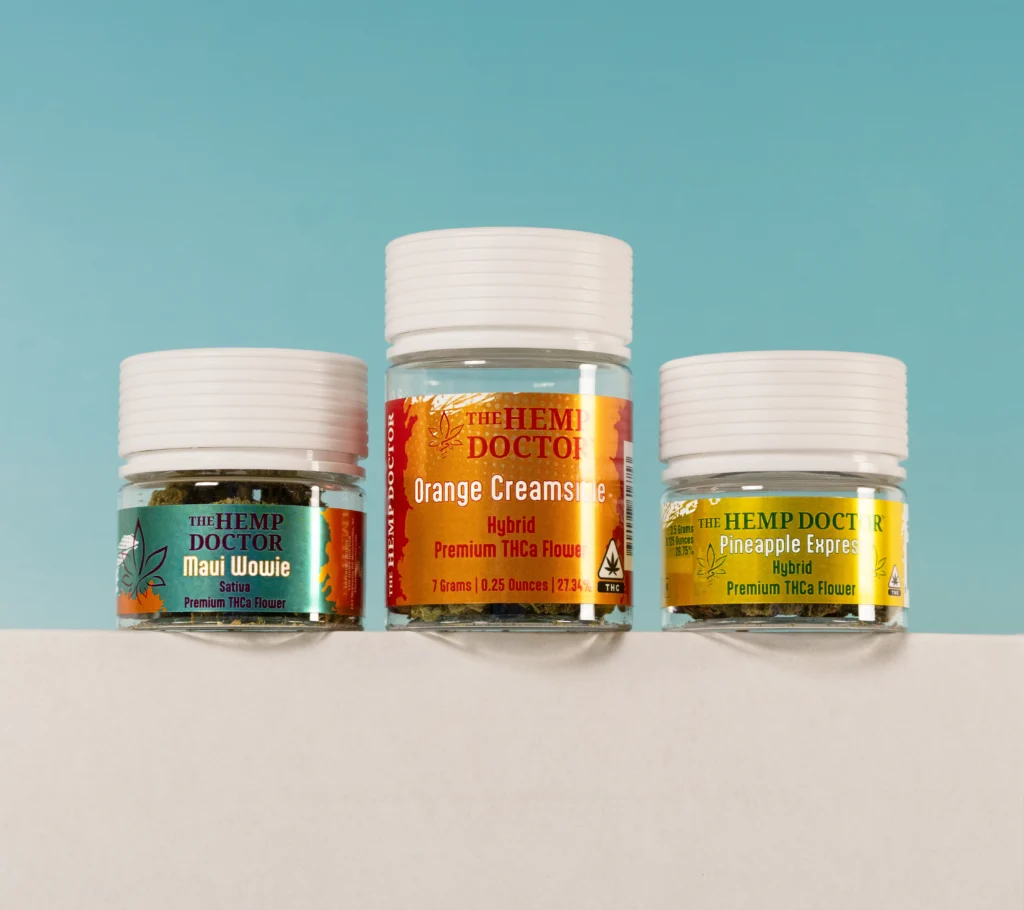
THCA flower is essentially hemp carefully bred to contain high levels of THCA and low THC levels—specifically 0.3% THC or less. This means you can consume THCA flower without worrying about breaking federal law.
The main thing to remember about THCA flower is that it’s non-psychoactive in its raw form. So, if you’re eating raw cannabis flower or juicing fresh leaves, you won’t get high. However, as soon as you apply heat—by smoking, vaping, or cooking—THCA undergoes decarboxylation, a process that activates its psychoactive properties.
Decarboxylation requires heating THCA at around 220°F to 240°F (104°C to 115°C). Experts recommend heating at 230°F (110°C) for optimal results to get the best conversion with minimal degradation.
Beyond THCA, THCA flower contains a rich blend of cannabis compounds that contribute to its overall effects, such as terpenes, flavonoids, and minor cannabinoids like CBDA, CBGA, and CBCA, each with unique effects.
-
Sale!60% Off
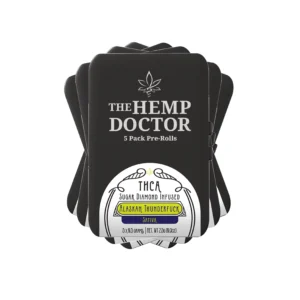
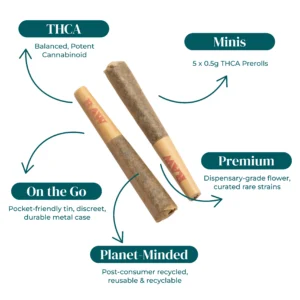
THCA SUGAR DIAMOND INFUSED PRE-ROLLS | 5-PACK TINS
Original price was: $29.95.$11.98Current price is: $11.98.Shop Now This product has multiple variants. The options may be chosen on the product page -
Hot Seller
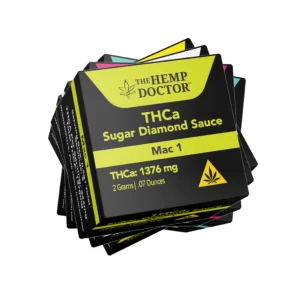
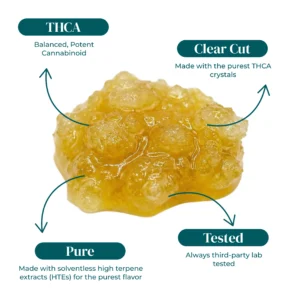
1376MG THCA SUGAR DIAMOND SAUCE | 2G
$49.95Shop Now This product has multiple variants. The options may be chosen on the product page
The Step-by-Step Process of How to Grow THCA Flower Naturally
Here’s an actual sequence used by cultivators to grow industry-standard THCA flower.
Step 1. Select the Right Genetics
High-quality THCA flower production starts with choosing the right genetics. Not all cannabis strains produce high levels of THCA, so cultivators carefully select strains known for their THCA potency, resilience, and terpene profiles.
“Genetics are everything. You can have the best cultivation practices in the world, but if your starting material isn’t solid, you’re already at a disadvantage,” says Clay.
Expert growers focus on high-THCA hemp strains bred for their cannabinoid-rich profiles. These strains are carefully cultivated to maximize THCA content while ensuring a robust yield. The goal is to select genetics that offer a balance of potency, aroma, and flavor while thriving in the intended growing environment.
Here are the top 10 most popular THCA-rich strains used by top growers:
| Strain | Type | THCA Content | Major Terpenes | Effects |
|---|---|---|---|---|
| Agent Orange | Sativa-Dominant Hybrid | 28.90% | Myrcene, Terpinolene, Caryophyllene | Uplifting, citrusy, great for daytime use |
| Ice Cream Man | Indica-Dominant Hybrid | 27.94% | Terpinolene, Myrcene, Limonene | Creamy aroma, deeply relaxing, best for night |
| Candyland | Sativa-Dominant Hybrid | 26.74% | Caryophyllene, Limonene, Humulene | Sweet, boosts creativity and energy |
| Peanut Butter Shake | Indica-Dominant Hybrid | 29.14% | Caryophyllene, Limonene, Pinene | Melty and imaginative |
| Lemon Barz | Sativa-Dominant Hybrid | 33.35% | Limonene, Pinene, Humulene | Energetic & Motivated |
| Maui Wowie | Sativa | 24.88% | Limonene, Myrcene, Pinene | Fruity, calming, ideal for relaxation |
| Space Kush | Indica | 26.8% | Linalool, Myrcene, Caryophyllene | Talkative & Cerebral |
| Forbidden Fruit | Indica-Dominant Hybrid | 31.3% | Myrcene, Caryophyllene, Limonene | Sedative & Stony |
| Slurty | Indica-Dominant Hybrid | 26.6% | Humulene, Caryophyllene, Limonene | Sedative & Zen |
| Blackberry Moonshine | Indica-Dominant Hybrid | 29.74% | Caryophyllene, Limonene, Pinene | Chatty & Complex |
Step 2. Apply THCA-Specific Cultivation & Growing Conditions
Once the right THCA-rich genetics are selected, cultivators arrange the optimal conditions according to the selected environment: indoors, outdoors, or in greenhouses.
Here’s a table comparing indoor vs. outdoor vs. greenhouse cultivation regarding their pros and cons.
| Growing Environment | Pros | Cons |
|---|---|---|
| Indoor Cultivation | – Provides the most controlled environment. – Growers can adjust temperature, humidity, and lighting to optimize THCA production. – Generally produces higher-potency flower but requires more energy and resources. | – High operational costs. – Requires significant space. – Can have a larger environmental impact. |
| Outdoor Cultivation | – Uses natural sunlight, which can enhance terpene and cannabinoid development. – Less expensive but subject to weather conditions, pests, and contaminants. – THCA levels may fluctuate due to environmental factors. | – Exposure to pests, mold, and extreme weather conditions. – Less control over consistency in cannabinoid content. – Longer growth cycles and seasonal limitations. |
| Greenhouse Cultivation | – A hybrid approach that harnesses sunlight while providing some environmental control. – More sustainable than indoor growing but offers less control over variables than fully indoor setups. | – Requires supplemental lighting and climate control, increasing costs. – Potential for humidity and ventilation issues. – Higher initial investment than outdoor cultivation. |
Now, what’s the best cultivation setup for THCA flowers among the three?
Clay’s Take: “There’s no one-size-fits-all answer, but if we’re talking pure potency and consistency, indoor is king. You control everything—light cycles, humidity, nutrients—so you can push those plants to their max THCA potential.”
At the end of the day, it depends on what the grower aims to achieve with their budget. Indoor cultivation is the ideal option for those who need high THCA potency for their flower and have no budget constraints. For those concerned with cost-effectiveness and sustainability, outdoor cultivation is the answer. Finally, greenhouse cultivation is the middle ground where the quality, cost, and effort of growing THCA flower is not too high nor too low.
Regardless of the growing setup, here are the factors that cultivators adjust and check when growing THCA flowers.
Soil & Nutrients
Organic, nutrient-rich soil enhances plant health. Key nutrients that should be found in soil include Nitrogen (N), Phosphorus (P), and Potassium (K). Additionally, micronutrients like calcium and magnesium help maintain robust growth.
Light Cycles
THCA production thrives with intense, consistent lighting. Indoor growers use 18/6 (veg) and 12/12 (flowering) light cycles, while with the outdoors, natural seasonal shifts trigger flowering.
Humidity & Temperature
During the vegetative stage, plants need 55-65% humidity under 70-80°F (21-27°C). THCA flowers are subjected to 45-55% humidity and 65-75°F (18-24°C) growing conditions to support the flowering stage. Growers also install vents, airflow nozzles, and oscillating fans to promote proper airflow and prevent mold and mildew.
Step 3. Harvest at Peak THCA Levels
Timing is everything when it comes to harvesting cannabis for maximum THCA concentration. If you harvest too early, the buds won’t be as potent. Wait too long, and the cannabinoids disintegrate, reducing their effectiveness.
Growers check the tiny resin glands, called trichomes, to know when to harvest. Clear trichomes mean the plant isn’t ready, milky ones signal peak THCA levels and amber trichomes show it’s starting to degrade. Pistil color also helps—white hairs turn orange or brown as the plant matures.
Additionally, growers send samples to third-party labs to test THCA levels and help them better decide when to harvest at just the right moment.
“Lab testing is a game-changer. We used to rely purely on visual cues, but confirming those THCA numbers helps us dial in our harvest timing to the day,” Clay says.
For the best results, cultivators prefer hand-trimming more than automatic reaping methods during THCA flower harvest. Manual harvest allows for meticulous attention to preserving trichomes (holds the highest THCA content), minimizing damage to trichomes. This technique results in a cleaner appearance and enhanced flavor profile.
🔎 Pro Tip: Use a magnifying glass or jeweler’s loupe to get a close-up look at trichomes—this helps spot the perfect harvest window with precision!
Step 4. Dry & Cure for Potency Preservation
Drying and curing your THCA flower properly is key to maintaining its potency, flavor, and smoothness. If you rush the process, you risk mold, harsh smoke, or losing valuable THCA. But when done right, it enhances the terpene profile and overall quality.
After harvest, the THCA flower must dry slowly to lock in its cannabinoids. The best conditions? Hang the buds upside down for 7–14 days in a cool, dark room with gentle airflow, 60–70°F (15–21°C) and 50–60% humidity.
Once dried, the curing process begins. This involves storing buds in airtight jars for 2–8 weeks while “burping” them to release moisture. If curing isn’t done right, the flower can lose potency, taste harsh, or even develop mold. Keeping it away from heat, light, and too much oxygen helps preserve quality.
🌡️ Pro Tip: Place a small hygrometer in your curing jars to keep humidity at 58–62%—this ensures your THCA flower stays fresh and potent!
Step 5. Start Cold Processing & Storage
Keeping THCA flower fresh and potent requires proper cold storage. Heat, light, and oxygen speed up decarboxylation, turning THCA into THC. To prevent this, producers use cold temperatures to keep THCA in its natural, non-psychoactive form for as long as possible.
Freezing is a popular method—many growers flash-freeze THCA flower at -30°F to -50°F right after drying and curing. For short-term storage, refrigerated environments (35°F–50°F) help prevent heat exposure while maintaining ideal humidity. Storing flower in airtight, UV-blocking jars or vacuum-sealed bags further protects them from oxygen and light degradation.
Long-term storage often involves vacuum-sealing to remove air, slow oxidation, and preserve terpenes. Some producers add humidity control packs to maintain freshness.
☃️ Pro Tip: Always store THCA flower in a cool, dark place—keeping them in the fridge or freezer is the best way to lock in potency and flavor!
Step 6. Conduct Lab Testing & Compliance
Third-party lab testing is essential for ensuring THCA flower meets purity, potency, and legal standards. Reputable producers test for THCA levels, terpene profiles, and contaminants like pesticides, heavy metals, and mold with a third-party independent lab.
When buying THCA flower, always check the certificate of analysis (COA). This confirms that the product has been tested for purity and potency.
🍃 Can I Grow THCA At Home? You can grow THCA-rich cannabis at home if local laws permit. Choose high-THCA strains, optimize growing conditions, and control temperature, light, and humidity. Federal law requires hemp-derived THCA to stay below 0.3% delta-9 THC. Always check local regulations before cultivating to ensure compliance.
The THCA Flower Life Cycle
The THCA flower life cycle consists of several key growth stages, each requiring specific care to maximize THCA production. Here’s a breakdown of the process from seedling to harvest:
Germination (3–10 days)

Seeds sprout and develop a taproot. They require moisture, warmth (70–85°F), and darkness to encourage growth. Once the seedling emerges, it’s ready for transplantation.
The best season to germinate THCA flower depends on the cultivation method used. For outdoor cultivation, the best time to start germinating seeds is spring (March-May). For greenhouse, late winter to early spring is the best time (January-April). Indoor cultivation has the most flexible germination timing, which can be year-round with the help of proper light cycles.
Seedling Stage (2–3 weeks)

The plant develops its first true leaves. It requires 18–24 hours of light daily for strong root development. Careful monitoring of humidity (65–70%) prevents stress.
Vegetative Stage (3–8 weeks)

This is called the rapid growth phase, where stems and leaves expand. It needs 18–24 hours of strong light and nutrient-rich soil—Nitrogen (N), Phosphorus (P), and Potassium (K). Topping and pruning help shape the plant for better yields.
Flowering Stage (6–10 weeks)

At this point, trigger the flowering stage by shifting the light cycle to 12 hours light / 12 hours darkness. It also requires stable humidity (40–50%) and proper airflow. Eventually, buds will form and begin producing THCA-rich trichomes.
Harvesting & Post-Harvest (1–2 weeks drying, 2–8 weeks curing)
Trichome maturity determines the ideal harvest time. After the harvest, buds are dried and cured slowly to preserve THCA potency. Proper storage ensures long-term freshness.

Is It Legal to Grow THCA Flower?
In the US, growing THCA flower is legal federally if it qualifies as hemp, meaning it contains less than 0.3% Delta-9 THC under the 2018 Farm Bill. Take note that THCA flower can be sourced from either hemp or cannabis plants.
Licensed hemp farms can legally cultivate high-THCA strains, provided they meet strict THC compliance testing. However, home cultivation laws vary by state—some allow residents to grow hemp or cannabis, while others prohibit it entirely.
Since THCA converts to THC when heated, some states regulate or restrict THCA flower like marijuana. Always check local and state laws before attempting to grow THCA flower at home or commercially.
Here’s a list of the 50 states and their stance on growing THCA flower within the jurisdiction.
| State | Legality of Growing THCA Flower |
|---|---|
| Alabama | Home growing is prohibited, but growing on licensed hemp farms is allowed. |
| Alaska | It’s legal to grow THCA flower both at home and on a licensed farm. |
| Arizona | It’s legal to grow THCA flower at home (for medical use only) and on a licensed hemp farm. |
| Arkansas | Home growing is prohibited, but growing on licensed hemp farms is allowed. |
| California | It’s legal to grow THCA flower at home and on a licensed farm. |
| Colorado | It’s legal to grow THCA flower at home and on a licensed farm. |
| Connecticut | Home growing is prohibited, but growing in licensed hemp farms is allowed. |
| Delaware | Home is growing prohibited, but growing on licensed hemp farms is allowed. |
| Florida | Home growing is prohibited, but growing on licensed hemp farms is allowed. |
| Georgia | Home growing is prohibited, but growing on licensed hemp farms is allowed. |
| Hawaii | It’s legal to grow THCA flower at home (for medical use only) and on a licensed hemp farm. |
| Idaho | Home growing is prohibited, but growing on licensed hemp farms is allowed. |
| Illinois | It’s legal to grow THCA flower at home (for medical use) and on a licensed hemp farm. |
| Indiana | Home growing is prohibited, but growing on licensed hemp farms is allowed. |
| Iowa | Home growing is prohibited, but growing on licensed hemp farms is allowed. |
| Kansas | Home growing is prohibited, but growing on licensed hemp farms is allowed. |
| Kentucky | Home growing is prohibited, but growing on licensed hemp farms allowed. |
| Louisiana | Home growing is prohibited, but growing on licensed hemp farms allowed. |
| Maine | It’s legal to grow THCA flower at home and on a licensed farm. |
| Maryland | It’s legal to grow THCA flower at home (for medical use only) and on a licensed hemp farm. |
| Massachusetts | It’s legal to grow THCA flower at home and on a licensed farm. |
| Michigan | It’s legal to grow THCA flower at home and on a licensed farm. |
| Minnesota | It’s legal to grow THCA flower at home and on a licensed farm. |
| Mississippi | Home growing is prohibited, but growing on licensed hemp farms allowed. |
| Missouri | It’s legal to grow THCA flower at home (for medical use only) and on a licensed hemp farm. |
| Montana | It’s legal to grow THCA flower at home (for medical use only) and on a licensed hemp farm. |
| Nebraska | Home growing is prohibited, but growing on licensed hemp farms allowed. |
| Nevada | It’s legal to grow THCA flower at home and on a licensed farm. |
| New Hampshire | It’s legal to grow THCA flower at home (for medical use only) and on a licensed hemp farm. |
| New Jersey | Home growing is prohibited, but growing on licensed hemp farms allowed. |
| New Mexico | It’s legal to grow THCA flower at home (for medical use only) and on a licensed hemp farm. |
| New York | It’s legal to grow THCA flower at home (for medical use only) and on a licensed hemp farm. |
| North Carolina | Home growing is prohibited, but growing on licensed hemp farms allowed. |
| North Dakota | Home growing is prohibited, but growing on licensed hemp farms is allowed. |
| Ohio | Growing THCA flower at home and on a licensed farm is legal. |
| Oklahoma | It’s legal to grow THCA flower at home (for medical use only) and on a licensed hemp farm. |
| Oregon | Growing THCA flower at home and on a licensed farm is legal. |
| Pennsylvania | Home growing is prohibited, but growing on licensed hemp farms is allowed. |
| Rhode Island | It’s legal to grow THCA flower at home (for medical use only) and on a licensed hemp farm. |
| South Carolina | Home growing is prohibited, but growing on licensed hemp farms allowed. |
| South Dakota | It’s legal to grow THCA flower at home (for medical use only) and on a licensed hemp farm. |
| Tennessee | Home growing is prohibited, but growing on licensed hemp farms is allowed. |
| Texas | Home growing is prohibited, but growing on licensed hemp farms is allowed. |
| Utah | Home growing is prohibited, but growing on licensed hemp farms allowed. |
| Vermont | Growing THCA flower at home and on a licensed farm is legal. |
| Virginia | It’s legal to grow THCA flower at home and on a licensed farm. |
| Washington | It’s legal to grow THCA flower at home and on a licensed farm. |
| West Virginia | Home growing is prohibited, but growing on licensed hemp farms is allowed. |
| Wisconsin | Home growing is prohibited, but growing on licensed hemp farms is allowed. |
| Wyoming | Home growing is prohibited, but growing on licensed hemp farms is allowed. |
What Is THCA Infused Flower?
While there are cannabis strains that naturally contain high THCA content, certain producers opt to use spraying techniques to enhance concentration artificially. Hence, you’ll often see terms in the market such as “sprayed THCA flower” or “THCA-infused flower.” In a sense, THCA-infused flower or buds sprayed with THCA-rich solution is cannabis coated with a THCA-rich solution to boost potency beyond natural levels.
Spraying methods include pesticides for pest control, growth-enhancing solutions for faster growth, and THCA coatings to increase potency.
Related Blog: Is THCA Flower Sprayed? A Closer Look At THCA Production
How THCA Flower Differs From Traditional Cannabis Buds
THCA flower differs from traditional cannabis buds or marijuana mainly because it doesn’t get you high like marijuana does—at least not until it’s heated. As for the type of high you get from each type, it’s difficult to pinpoint the differences as every user will have different perceived effects. It’s better to judge the type of high you get by comparing strains.
Under the 2018 Farm Bill, THCA hemp flowers are legal as long as they contain less than 0.3% delta-9 THC. While most states allow the sale and cultivation of THCA flower, a few have passed laws banning THCA altogether, so it’s always good to check local rules before buying.
Marijuana buds, on the other hand, are still illegal at the federal level, although several states have regulated the plant for medical or recreational purposes.
Look-wise, THCA flower looks like any regular cannabis with variance in color according to strain type.
Related Blog: THCA vs THC: An In-Depth Analysis of Their Differences
Why Choose High-Quality THCA Flower?
For the best experience, choosing high-quality THCA flower makes all the difference. Expert cultivation using organic methods and solvent-free extraction helps preserve potency, flavor, and therapeutic benefits. Premium THCA flower delivers richer aromas, smoother smoke, and lab-tested purity. So why settle for anything less?
At The Hemp Doctor, we pride ourselves on cultivating proprietary, phytocannabinoid-rich hemp strains in organic, nutrient-rich soils of Colorado and North Carolina. After harvest, we carefully dry and mill our plants to preserve valuable cannabinoids like THCA.
The result is a full-spectrum product crafted through advanced extraction methods that remove unwanted compounds while retaining beneficial cannabinoids and terpenes for maximum potency and the entourage benefits. Visit our online shop and check out our specially crafted THCA flower range.