Does THCA Get You Higher? Potency, Conversion & THC Comparison

THCA products, including THCA flower, are popping up everywhere from online stores to your local cannabis dispensary. Looking at the lab test results, THCA numbers appear almost identical to traditional cannabis, which leads to the question: Does THCA get you higher than regular THC?
To answer that question, no—raw THCA will not get you high. However, heat changes everything. Once THCA is heated, it converts into Delta-9 THC, which is what produces the full, traditional cannabis experience.
This guide takes a closer look at the science behind the THCA to THC conversion, THCA potency misconceptions, how THCA potency stacks against other cannabinoids, and more.
🔑 Key Takeaways
- Raw THCA will not get you higher than regular THC because it is not psychoactive in its natural form.
- Heat is what changes THCA into THC.
- THCA is not stronger than THC by default. High THCA percentages can look impressive, but the actual THC potential must be calculated after conversion.
- Smoking and vaping THCA can feel very similar to traditional cannabis.
- Heated THCA is typically stronger than Delta-8 THC.
- Hemp-derived THCA products can still affect legality, safety, and drug testing outcomes.
Does THCA Get You Higher Than Regular THC?
Not on its own. In raw form, THCA will not get you high because it cannot bind to CB1 receptors the way Delta-9 THC can. That is the biggest difference between THCA and regular THC.
Once heat is applied, though, THCA changes everything. Smoking, vaping, or otherwise decarboxylating THCA converts it into Delta-9 THC, which is the cannabinoid responsible for the traditional cannabis high. So while raw THCA is not stronger than regular THC, heated THCA can produce a very similar experience because it becomes THC before absorption.
Compared with Delta-8, heated THCA is usually the stronger option because it converts into Delta-9 THC rather than staying in a milder psychoactive form. In simple terms, raw THCA does not get you higher than regular THC, but once heated, it can feel much like it.
What Is THCA and How Is It Different From THC?
THCA, or tetrahydrocannabinolic acid, is the raw, acidic precursor to THC that forms naturally in cannabis plants. Contrary to what many assume, the cannabis plant doesn’t produce THC directly. It synthesizes THCA, which remains in its acidic form until it’s converted into THC.
THC, or tetrahydrocannabinol, is the primary psychoactive cannabinoid in cannabis. Delta-9 THC is the form most people mean when they say “THC,” and it is responsible for the classic high associated with cannabis.
The Molecular Difference Between THCA and THC
The variation may seem minor, but the molecular distinction between THCA and THC is responsible for the difference in experience and the legal divide between hemp and cannabis.
THCA: THCA has an extra molecular group, called carboxyl, attached to its molecular chain. This carboxyl group prevents THCA from binding to the CB1 receptors in the brain. CB1 receptors are the receptors responsible for the psychoactive effects of cannabis.
Because THCA, with its carboxyl group, can’t fit into the receptors, it can’t trigger psychoactive effects. It’s like trying to open a lock with the wrong key.
Delta-9-THC: Regular THC doesn’t have the carboxyl group; as such, it fits the CB1 receptors precisely like a key in a lock, triggering the cascade of effects we associate with being high.
What Happens During Decarboxylation?
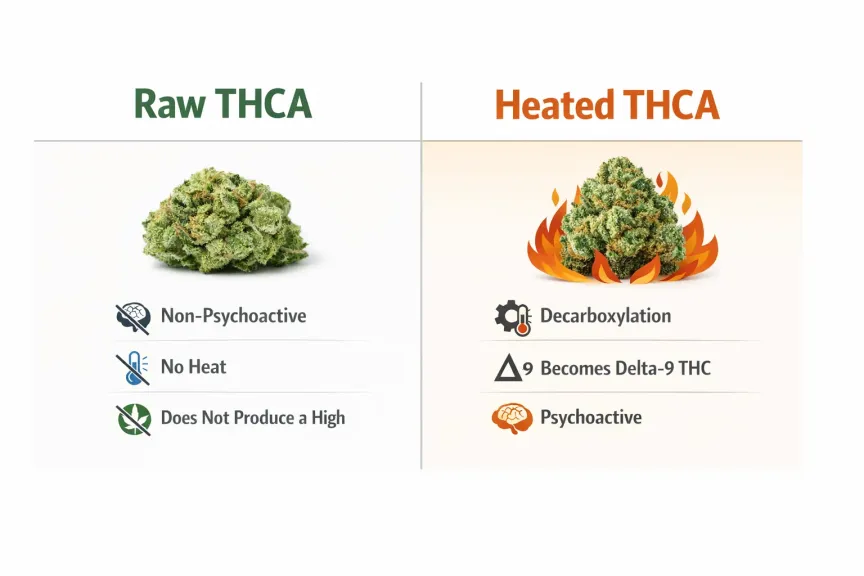
Decarboxylation is a heat-driven process that converts THCA into THC. As THCA reaches temperatures between 200°F and 300°F, it begins to lose its carboxyl group, transforming from C22H30O4 into C21H30O2, the molecular formula of THC.
During combustion or smoking, the temperature exceeds the decarboxylation threshold, so the conversion occurs instantaneously. Vaping achieves the same effects, although at lower, more controlled temperatures.
You can also decarboxylate THCA to make edibles in an oven. This, however, takes longer as you use lower temperatures to avoid vaporizing the cannabinoids. The chemical process remains the same.
Conversion Rates by Consumption Method
| Method | Heat Level | Conversion | Onset |
| Smoking | High/instant | Near-complete | 2-15 Minutes |
| Vaping | Moderate/controlled | High | 2-15 Minutes |
| Oven decarb (for edibles) | Low/slow | Variable based on time/temp | 30-90 Minutes |
| Raw consumption | None | No conversion | No high |
How to Calculate Effective THC From THCA Percentage?
You may have noticed that most hemp-compliant flower will have the THCA percentage indicated on the label. So, how can you calculate the actual THC yield? Will it exceed the THCA level? No.
87.7% of THCA converts into THC. The remaining 11.3% is lost during decarboxylation. That amount represents the carboxyl group that escapes as carbon dioxide when heat is applied.
The 0.877 factor accounts for the change in molecular weight when THCA loses its carboxyl group during decarboxylation. This does not mean real-world conversion is always perfect, but it is the standard way to estimate potential THC from THCA on a lab report.
Example:
If a flower contains 26% THCA and 0.2% delta-9 THC, the estimated total THC is:
26 × 0.877 + 0.2 = 23.002% total THC
This makes the lab test results, also known as the Certificate of Analysis, all the more important. A good COA shows the cannabinoid breakdown clearly, making it easier to understand how much potential THC a THCA-rich flower may yield once heated.
At The Hemp Doctor, we provide detailed lab test results for all our hemp products for full transparency.
Do you want to compute the total THC faster? Use this THCA to THC converter tool. Enter the THCA percentage of your flower and click “Calculate THC Content.”
THCA to THC Calculator
Calculate the actual THC content using the standard 87.7% conversion ratio.
Conversion Ratio: 87.7%
THC Content: –%
ℹ️ When cannabis is heated (decarboxylated), THCA converts to THC at approximately 87.7% efficiency.
Does THCA Get You High When You Smoke or Vape It?
Yes. Smoking or vaping THCA will get you high. Contact with the flame or any adequate heating element triggers THCA to THC conversion.
When you smoke THCA flower, decarboxylation happens very quickly because the burning tip and the hot zone expose cannabis to temperatures far above the threshold needed for conversion.
In practice, the smoking process has been reported to convert THCA to THC essentially completely, although a lot of total cannabinoids are still lost to sidestream smoke, combustion, and thermal degradation before they ever reach you.
When you vape THCA, the process is gentler and more device-dependent. A vape coil or oven heats the material into a range that can decarboxylate THCA and aerosolize cannabinoids without open combustion.
Not necessarily. Once heated, THCA can convert into Delta-9 THC, so the high may feel similar, but the real intensity depends on conversion efficiency, formulation, and the device itself.
THCA Potency Compared to Delta 9 and Delta 8 THC
Delta-8-THC is a psychoactive cannabinoid that occurs in hemp, but in very low concentrations. This cannabinoid provides the same effects as delta-9-THC, but milder, which has earned it the name “Diet THC.”
After decarboxylation, THCA will be more potent than Delta-8-THC. This is because THCA turns into delta-9-THC, which is stronger than delta-8.
What the THCA High Feels Like?
Decarboxylated THCA becomes regular THC; as such, the high it produces is exactly the same as you’d get from traditional cannabis.
Users report experiencing heightened sensory awareness and euphoria accompanied by physical relaxation. Depending on the strain’s terpene profile, you may also experience heightened creativity or introspection, as well as increased appetite.
If you have lower tolerance levels or overconsume THC, you may experience temporary disorientation, paranoia, or increased heart rate.
Onset Time and Duration
How quickly will the effects kick in?
Smoking/vaping (THCA): Effects of THCA vapes typically begin within 2 to 15 minutes, peak around 30 minutes, and last between one and three hours. Inhalation methods deliver effects fast as THC is absorbed directly into the bloodstream via the lungs.
Edibles (Decarbed THCA): THCA gummies take longer to kick in, usually around 30 to 90 minutes, because the THC must move through the digestive system, be absorbed, and pass through the liver before entering the bloodstream. The tradeoff is a longer-lasting experience, with effects that often last 4 to 6 hours.
Sublingual Application (Active THC): THCA applied sublingually (under the tongue) delivers the effects faster than edibles, starting at 15 to 30 minutes. THC is absorbed directly into the bloodstream via blood capillaries in the oral mucosa. Effects last for up to 4 hours.
Why THCA Affects Everyone Differently?
THCA does not affect everyone the same way, even when the product and potency look similar on paper. One big reason is tolerance. People who use THC regularly tend to build tolerance over time as their CB1 receptors become less responsive, which means a daily THCA smoker may need more to feel the same effects an occasional user would notice quickly.
Your body chemistry also plays a role. Some people metabolize THC more quickly than others, which can affect both how strongly it hits and how long it stays around.
The way you consume THCA matters too. Smoking, dabbing, and vaping tend to produce faster effects that peak quickly and fade sooner, while edibles take longer to kick in but can feel stronger and last much longer. Even sublingual use can feel different because it enters the bloodstream more directly.
And finally, potency is not the whole story. Two strains can have similar THCA levels yet feel very different due to their terpene profiles. Flavor, aroma, and the broader cannabinoid mix all shape the experience, which is why the same percentage on a label does not always translate to the same kind of high.
How Strain Type Affects Your THCA Experience?
Two different strains with the same THCA percentage can produce significantly different experiences. This is mostly determined by strain type. Strains are typically classified into three: sativa, indica, and hybrids.
Sativa strains produce upbeat, energizing, uplifting effects. Users describe sativas as providing a more cerebral than physical high. This type of strain may promote creativity, making it ideal for daytime consumption.
Indica strains are known for their heavy, physically relaxing effects. As such, indicas are often associated with evening use, when one isn’t expected to be active.
Hybrid strains, on the other hand, deliver the best of both worlds. Note that hybrids can lean more towards indica or sativa. However, it’s the terpenes that influence the overall experience.
Is THCA Safe to Smoke?
Combustion of any plant material produces smoke and other byproducts that pose some risks to your respiratory system. Smoking THCA flower involves burning the plant material and inhaling the smoke into your lungs, which may cause coughing and irritation.
While vaporization (vaping) reduces some of these concerns by heating the plant material rather than combusting it, it’s still an act of introducing substances directly into your lungs.
With this in mind, it is more vital than ever to buy from a transparent, reputable vendor that tests all products for potency, pesticide residues, heavy metals, and other contaminants. A reputable dispensary that cares about transparency will publish lab tests for all its products.
Common Side Effects
These are common THCA side effects associated with weed consumption:
- Dry mouth and eyes: THC binds to CB1 receptors, which signal the salivary and lacrimal glands to reduce salivary and tear production, respectively, leading to cottonmouth and dry eyes. You can manage dry mouth and eyes by staying hydrated. You can also relieve dry eyes by using lubricating eye drops.
- Increased heart rate: This is especially common in new users. Try to remain calm as you wait for the effects to fade away.
- Anxiety, or paranoia: This occurs mostly at high doses or in people with low tolerances.
- Impaired coordination and reaction time: Plan accordingly. Ensure you have completed all your tasks and you’re at a safe location before consuming. Avoid driving or operating machinery after smoking cannabis.
- Short-term memory effects: THC use can affect short-term memory formation. Lowering THC potency or reducing the frequency of consumption may help combat memory problems.
Is THCA Legal If It Gets You High?
Whether THCA is legal depends less on whether it can get you high and more on how the product is classified, tested for total THC, and regulated in your state.
If we’re talking about the legality of THCA as a cannabinoid derived from hemp? Then, yes. The 2018 Farm Bill legalized hemp federally and removed it from the list of controlled substances, defining it as any cannabis plant with less than 0.3% delta-9 THC by dry weight. As such, THCA from hemp below the 0.3% THC threshold qualifies as legal.
Once heated, the THCA converts to delta-9 THC, but by that point, the legal classification of the product has already been established. This makes it possible to buy THCA legally.
Note that state laws vary significantly. We recommend familiarizing yourself with your state laws before making a purchase.
At The Hemp Doctor, we sell and ship high-quality, federally compliant THCA products to legal states. Buy THCA hemp products online from us today.
Will THCA Show Up on a Drug Test?
Yes. THCA, especially heated, will show up on a drug test. Standard drug tests, including urine, hair, blood, and saliva, don’t test for THC itself, but its metabolites.
The primary metabolite tested is THC-COOH, which is produced as the body breaks down THC. This metabolite is stored in body fat and can be detected in urine for days or even weeks.
There is no way to use THCA products and pass a standard drug test. If you are subject to drug testing, we recommend avoiding THCA and other cannabis products entirely.
How Long Does THCA Stay In Your System? (Decarboxylated & Raw Form)
How to Get the Most From THCA?
Getting the most from THCA starts with choosing the right format for the kind of experience you want. While THCA is the same cannabinoid at its core, flower, pre-rolls, THCA concentrates, vapes, and edibles all deliver it differently.
Some THCA formats feel faster and more immediate, while others are stronger, longer-lasting, or simply more convenient. The best choice depends on how quickly you want the effects to come on, how intense you want them to feel, and how much control you want over the session.
Get to know the different THCA product formats available here:
THCA Flower and Pre-Rolls (Straightforward Starting Point)
Smoking is the traditional and widely used method of consuming THCA. Smoking dry herb activates the THCA instantly, delivering delta-9-THC, terpenes, and other cannabinoids to your lungs where they are absorbed directly into the bloodstream.
Smoking is ideal for consumers who value the classic cannabis experience and fast onset of effects. Effects kick in within 2 to 15 minutes and peak in about 30 minutes. The high lasts for 1 to 3 hours.
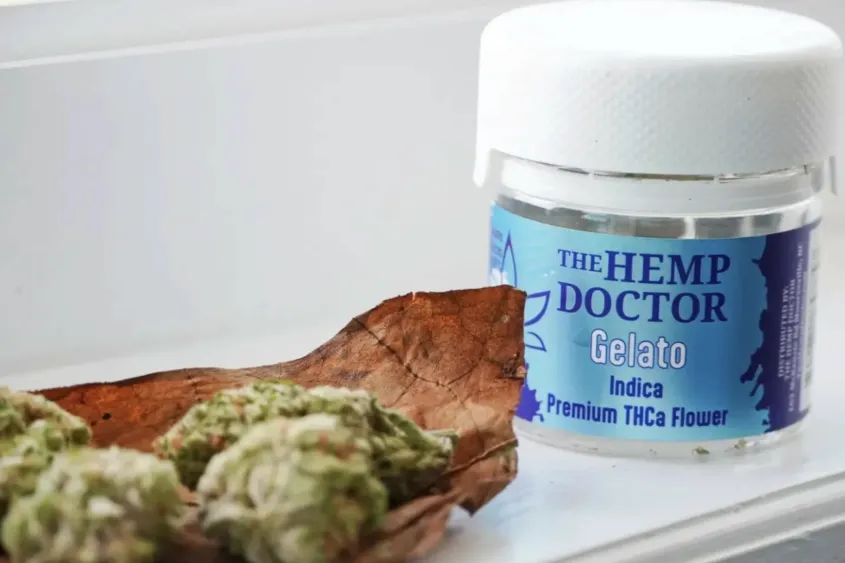
At The Hemp Doctor, we offer a curated lineup of exotic and premium THCA strains grown in living soil for users who value organic, high-terpene experiences. If you are too busy to roll your own joints, we also have premium THCA pre-rolls made using quality lab-tested flower.
THCA Concentrates and Vapes (Strongest Option)
Looking for a more potent experience? THCA concentrates and vapes deliver a stronger, richer cannabis experience. Concentrates are several times stronger than regular flower, while vapes solve some of the concerns associated with smoking.
Vaporization delivers effects in between 2 and 15 minutes, peaking at 30 minutes. Vapes are discreet, and depending on the type, you may get temperature controls for a more personalized vaping experience.
The Hemp Doctor’s ZOOTED THCA vapes are the go-to, ready-to-use vaporizers for users who want quality, convenience, and consistency.
Making THCA Edibles at Home (Slower Onset But Sustained Longer)
Yes, you can make THCA edibles at home, but you must ensure the THCA flower is decarboxylated before infusion.
To activate THCA into THC, you must apply heat in a controlled environment, a process that requires control and time. Start by grinding the buds, then spread the ground flower evenly on a baking sheet and put it in a preheated oven at 200 to 240°F for 30 to 40 minutes.
Once decarbed, infuse the flower into butter, coconut oil, or another fat/oil you can use in your recipe. Use the cannabutter or cannaoil to make your edibles.
The edibles will deliver effects in 30 to 90 minutes, but they will be more intense and last for 4 to 6 hours.
Finding THCA Products You Can Trust
THCA products are everywhere. But as is the case with cannabis products, especially trending ones, know that not all are created equal.
For your peace of mind, third-party lab testing is non-negotiable. Every THCA product you consider must be accompanied by a certificate of analysis from an independent lab, and you should be able to confirm the THCA and THC levels, as well as safety tests.
The Hemp Doctor is one of the dispensaries that provide third-party lab tests for all compliant THCA hemp products. This way, you never have to guess what is in your products.
Want to save a few bucks today and for bigger sale events like 420? Read our complete guide to unlocking massive savings from The Hemp Doctor.