
What Is CBC in Gummies? Effects, Amount & Wellness Benefits

Quick Answer: CBC is a non-intoxicating minor cannabinoid that shows up in gummies mostly as a small supporting ingredient inside full-spectrum or multi-cannabinoid blends, not as the star of the formula. Because true CBC-isolate gummies are rare, the real question is not whether CBC is in your gummy but how much of it is actually there, which you can only confirm by reading the certificate of analysis.
You pick up a gummy pouch, scan the front label, and spot three letters you weren’t expecting: CBC. It sits there next to CBD and THC without much explanation, which naturally raises the question of what it is and whether it actually changes the edible experience. CBC stands for cannabichromene, a lesser-known compound from the same plant family that produces CBD, CBG, and delta-9 THC. If you’re asking what is CBC in gummies, the short version is that it’s a non-intoxicating cannabinoid that often gets added to blended edibles to round out the overall experience of the more familiar compounds on the label.
The catch, and the reason this guide exists, is that a lot of products labeled as containing CBC actually include a very small amount of it. Understanding why that happens, and how to spot the difference between a real CBC gummy and a marketing sticker, comes down to reading the label the way a formulator would read a recipe.
🔑 Key Takeaways
- CBC, short for cannabichromene, is a non-intoxicating cannabinoid that will not get you high on its own.
- Most gummies that list CBC are full-spectrum or blended edibles, since CBC can be costly and difficult to feature on its own.
- Gummies usually take 30 to 90 minutes to be noticed, and CBC follows the same general timing as the other cannabinoids in the blend.
- Realistic CBC per gummy often lands around 1 to 3 mg, well below the 10 to 40 mg figures repeated online.
- Always check the COA to confirm CBC content, since front-of-pack claims can overstate what is actually in each piece.
What Is CBC?
Cannabichromene, or CBC, was first identified by researchers in 1966, making it one of the earlier minor cannabinoids ever cataloged. It forms from CBGA, a parent compound that also plays a role in the formation of other cannabinoids. As the plant matures and dries, CBGA-related pathways can lead to compounds such as CBC, CBD, and THC. These cannabinoids share a plant origin, but they can create different consumer experiences.
Among the many naturally occurring compounds in hemp, CBC is usually considered one of the more notable minor cannabinoids, depending on the cultivar. That still puts it well behind CBD and THC in most hemp flower, which is why CBC is a lesser-known name to casual shoppers. It is non-intoxicating, meaning that on its own it will not produce a high in the way delta-9 THC can.
What makes CBC interesting to formulators is not solo strength but its role in the wider chemistry of the plant. It is often included as part of a broader cannabinoid blend, where it may help shape the overall feel of a product. For a broader look at how cannabinoids branch out from that CBGA origin, our CBGA guide walks through the family tree in more detail.
How Does CBC Work in Gummy Form?
When you eat a gummy, the cannabinoids do not become noticeable right away. They first pass through digestion before becoming part of the overall edible experience. That process is why edibles usually take 30 to 90 minutes to be felt, and it applies to CBC the same way it applies to CBD, CBG, and delta-9 THC. The tradeoff is a slower, steadier experience window that can last several hours for some adults.
Unlike delta-9 THC, CBC is not known for creating an intoxicating high. So the answer to “Does CBC get you high?” is no. In blended gummies, it is usually included to help create a more layered edible experience rather than to take center stage.
Here is the part most articles skip. Most gummies on the market do not actually contain meaningful CBC, because CBC can be difficult and expensive to preserve through the isolate manufacturing process used for many standard CBD or delta-9 gummies. When you do see CBC on a gummy label, it almost always arrived there through a full-spectrum or blended-cannabinoid extract, where CBC appears alongside CBD, CBG, CBN, and low-dose THC.
That blended approach is deliberate. When cannabinoids are combined with other cannabinoids in a single product, some formulators believe they may create a more rounded experience than any single compound would on its own. This is often referred to as the entourage effect. The idea is that CBC and THC, or CBC alongside CBD and CBG, might contribute to a fuller overall feel. That is one reason brands formulate with CBC even when the amount per gummy is small.
So when you ask what does CBC do in edibles, the honest answer is that it works in the background. It supports the broader cannabinoid profile of a blended edible rather than taking center stage the way delta-9 THC does. That does not make it pointless, but it does mean expectations should match the label.
-
Best Seller
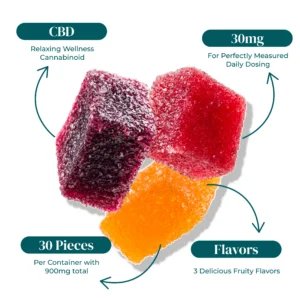
REVIVE | CBD GUMMIES | 30MG
$44.95 — or Original price was: $44.95.$33.71Current price is: $33.71. every 2 weeksShop Now This product has multiple variants. The options may be chosen on the product page
How to Tell If Your Gummies Actually Contain CBC
This is where most shoppers get tripped up. A brand can put “CBC” on the front of a pouch, or list it in a product description, and still include a tiny fraction of what customers assume they are getting. The only way to know what is really in the piece is to open the certificate of analysis, usually called the COA, and read the cannabinoid breakdown line by line.
A COA is a third-party lab report that shows the listed amount of each cannabinoid in a product. Reputable brands publish these on their product pages. When you pull one up, scroll to the cannabinoid profile section and look for CBC listed alongside CBD, CBG, CBN, and the various forms of THC. The number next to CBC is your real answer. If CBC is not listed at all, or shows up as “ND” or “not detected,” then the front-of-pack marketing is doing more work than the actual formula.
Here is a concrete example using a real blended product to show what the math looks like on a label that genuinely includes CBC.
| Cannabinoid | Amount Per Gummy | Share of Total Active Cannabinoids |
| Delta-9 THC | 7.5 mg | 62.5% |
| CBC | 1.5 mg | 12.5% |
| CBG | 1.5 mg | 12.5% |
| CBN | 1.5 mg | 12.5% |
| Total per gummy | 12 mg | 100% |
That breakdown, drawn from a Downshift-style nano delta-9 formula, is a fairly typical example of how CBC actually shows up in a modern blended gummy. The delta-9 THC is the main feature, and the CBC, CBG, and CBN are supporting cast at equal 1.5 mg amounts. This is what a real “CBC in the recipe” gummy looks like. Not a headline amount, but a small, deliberate slice of the total profile designed to shape the overall feel.
A few practical checks when you are reading any COA:
Look at the batch date and match it to the specific product you have. Look for the CBC row in the cannabinoid table, not just the summary at the top. Confirm the milligrams per piece rather than milligrams per pouch, since a 300 mg pouch of 30 gummies is only 10 mg per piece. And check for the lab’s contact information and license, since a legitimate COA always identifies the testing facility.
If the product page says “contains CBC” but the COA does not list CBC in the cannabinoid profile, that is a red flag. It usually means the brand is relying on the general presence of full-spectrum extract without confirming the actual CBC content in that specific batch. For a walk-through on other label details worth checking, our guide on how to read a CBD label covers the same skills applied to a slightly different product type.
CBC Gummies vs. Vapes and Tinctures
CBC behaves differently depending on the format you choose. Gummies are slower and steadier, vapes are fast but short, and tinctures fall in between with more flexibility on serving size. The bigger issue with CBC specifically is that gummies are the format most likely to under-deliver on it, since isolate-based gummies rarely include CBC at all.
| Format | Typical Timing | Typical Experience Window | Typical CBC Delivery |
| Gummy | 30 to 90 minutes | 4 to 6 hours | Usually trace amounts, mostly in full-spectrum or blended products |
| Vape | 2 to 15 minutes | 1 to 3 hours | Depends heavily on live resin vs. distillate; live resin may keep more CBC intact |
| Tincture | 15 to 45 minutes when used under the tongue | 4 to 6 hours | Serving size can be adjusted by drop; easier to find full-spectrum options |
The takeaway is straightforward. If a rounder cannabinoid profile is what you are after, tinctures and live-resin vapes may preserve minor cannabinoids like CBC better than distillate-based gummies. Gummies are still worth considering for convenience, portion control, and social settings, but you need to confirm on the COA that CBC is actually present. For readers who want to dig into the format comparison further, our post on live resin vs. distillate explains why extraction method matters so much for minor cannabinoid retention.
CBC vs. CBD and CBG in Gummies
CBC and CBD both come from the same CBGA precursor, but they are not used in products the same way. CBD is the more widely recognized and more widely available compound, while CBC is usually a supporting minor cannabinoid that is harder to isolate and less common as the main feature.
CBG shows up in the same conversation because blended gummies frequently include CBD and THC alongside CBG, CBN, and CBC. In the Downshift example from earlier, CBG and CBC appear at identical 1.5 mg amounts because formulators pair them as part of a combined profile rather than treating either one as the headline compound. If you want a deeper side-by-side on the two closest siblings here, our post on CBC vs. CBD goes further into how the two differ.
How Much CBC Are You Actually Getting Per Gummy?
Look up daily CBC intake online and you will see the same figure repeated across dozens of articles: 10 to 40 mg. That number is not always relevant to the blended gummies most shoppers are actually buying. Applied to a real edible, that range is often several times higher than what a single gummy contains.
Go back to the Downshift-style breakdown. That gummy contains 1.5 mg of CBC per piece. Even eating two gummies in a sitting only brings you to 3 mg of CBC, which is still nowhere near the 10 mg lower bound of the widely cited range. That is not a knock on the product. It is doing what it was designed to do, using CBC as a supporting cannabinoid within a delta-9 THC-forward formula.
The gap matters because marketing language around CBC gummies can suggest you are getting a headline-level amount when the label math tells a different story. A gummy pouch showing “300 mg total cannabinoids” might contain only 30 mg of CBC across the whole 30-piece bag, which works out to 1 mg per gummy. That can be honest formulation, but only if the COA confirms the split.
If CBC is genuinely what you are chasing, a full-spectrum tincture may give you more control over the serving size than a gummy, since you can adjust the drop count more easily. Gummies are still a solid pick for consistency and convenience, but treat the CBC in them as a background ingredient rather than the main feature.
Always consult a healthcare professional before adding any new supplement to your routine.
Potential Wellness Benefits of CBC Gummies
Consumer interest in CBC is still developing, so most of what gets written about its potential comes from early research, product formulation discussions, and reports from adult consumers rather than broad consensus. With that caveat firmly in place, CBC is often discussed in relation to mood, everyday comfort, and the way it may round out the feel of the other cannabinoids it is paired with. These possible wellness benefits are most often associated with full-spectrum or blended formulas.
The wider case for CBC gummies is really the case for the entourage effect. Individually, 1.5 mg of CBC is a small amount. Combined with CBG, CBN, and low-dose delta-9 THC, it becomes part of a fuller cannabinoid profile that some adult consumers describe as smoother or more balanced than THC edibles. That is what CBC in gummies is used for more often than not: shaping the character of a blended edible rather than driving it.
Because CBC is non-intoxicating, it does not add the same type of high associated with THC. It sits alongside CBD and THC in the formula and may shift the overall experience without increasing the THC-forward feel. That balance is why brands include it despite the added formulation cost.
Research and product development are ongoing. Do not treat current marketing about CBC as settled science, and be skeptical of any brand making guaranteed promises about results.
Are CBC Gummies Legal?
Hemp-derived CBC gummies fall under the same federal framework as most other hemp cannabinoids. The 2018 Farm Bill legalized hemp and its derivatives at the federal level, provided the finished product contains no more than 0.3% delta-9 THC by dry weight. CBC itself is not listed as a controlled substance, and hemp-derived CBC products meeting that threshold are federally legal to sell and possess.
State laws are a different story and vary widely. Some states restrict specific cannabinoids or require additional testing beyond federal minimums. Always confirm your state’s current rules before ordering, and remember that federal legality does not guarantee state legality. For a broader look at how this works across cannabinoids, our overview of THC gummies’ legal status by state is a good starting point.
The Bottom Line on CBC in Gummies
CBC in gummies is best understood as a supporting ingredient rather than a standalone experience. It is non-intoxicating, it shows up mostly in full-spectrum or blended-cannabinoid formulas, and the actual milligram amount per piece tends to be small. That is not a reason to skip products containing CBC. It is simply a reason to read the COA before buying and to set expectations by the label rather than by the marketing.
The best move for shoppers curious about CBC is to look at what else is in the gummy alongside it. A blended edible that pairs CBC with delta-9 THC, CBG, and CBN is doing something different from a plain THC gummy, and the difference is where the value sits. Match the format to your preferences, verify the numbers on the lab report, and treat CBC as one piece of a larger cannabinoid profile.
If you’re comparing blended, full-spectrum options, explore The Hemp Doctor’s Delta 9 gummies and check the lab reports to see exactly which cannabinoids are along for the ride.

