Live Resin Vs Distillate: Key Differences Explained

Live Resin
- Live resin production preserves the whole terpene and cannabinoid profile.
- Live resin maintains the full body of its aroma, due to its intact terpene profile.
- Offers a more complex, balanced high through the entourage effect.
- Typically more expensive and less widely available
Distillate and live resin are concentrates used in vape cartridges, also known as carts. People want to see how each one stacks up to the others because they offer wildly different results in terms of taste, smell, cost, compound composition, and overall experience.
Distillate extract is described as highly refined or processed. It contains higher THC levels but lacks most of the original terpenes and cannabinoids present in raw cannabis flower. Live resin extract, on the flip side, has preserved most of the fresh cannabis bud’s cannabinoids and terpenes, earning it the label “full-spectrum.”
We’re diving deep into the live resin vs distillate debate, and trust us, the differences in flavor, effects, and quality might just change what you vape next.
-
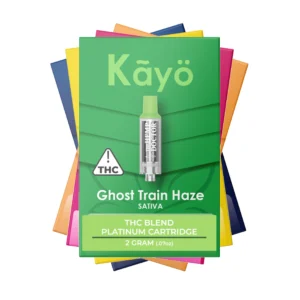
KAYO | THC BLEND VAPE CARTRIDGE | 2G
$15.00Shop Now This product has multiple variants. The options may be chosen on the product page -
Sale!On Sale
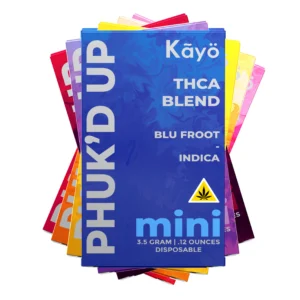
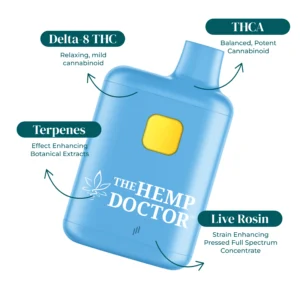
PHUK’D UP | THC BLEND DISPOSABLE VAPE | MINI 3.5G
Original price was: $25.00.$15.00Current price is: $15.00.Shop Now This product has multiple variants. The options may be chosen on the product page
Two Extracts, Two Experiences: A Quick Primer
When it comes to live resin vs distillate, the most defining difference lies in the extraction and production methods. Distillate is highly refined, “too processed,” as others would say. It contains mostly pure THC or CBD (depending on the manufacturer’s intent) with nearly all other compounds stripped away.
Distillate, as an “almost isolate” type of extract, is incredibly versatile because of its neutral flavor and adjustable THC level. Aside from distillate carts, it can be infused in almost any type of cannabis products, such as edibles, THC drinks, tinctures, topicals, softgels, and dabs.
Live resin, on the other hand, is made using flash-frozen cannabis flower, a method that captures and preserves the full spectrum of cannabinoids and terpenes. This results in a product that offers a richer flavor profile, more complex effects, and a stronger connection to the original chemical profile of the strain.
If you care about flavor, aroma, and a more full-bodied experience, live resin is the better choice for you.
Live Resin vs. Distillate: Comparison Table
| Feature | Distillate | Live Resin |
| Processing Method | Highly refined | Flash-frozen whole plant extraction |
| THC Potency | Very high | High, but slightly lower than distillate |
| Flavor and Aroma | Minimal to none | Strong and strain-specific |
| Typical Use | Edibles, vape carts, tinctures, topicals, etc. | Dabbing, premium vape products |
| Price | Cheaper than live resin | More expensive than distillate |
| Entourage Effect | Limited | Strong |
What Is Distillate?
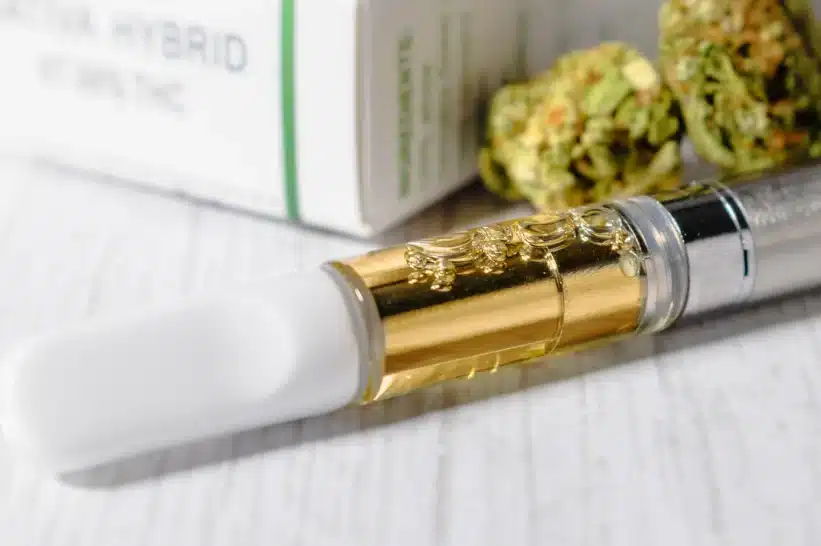
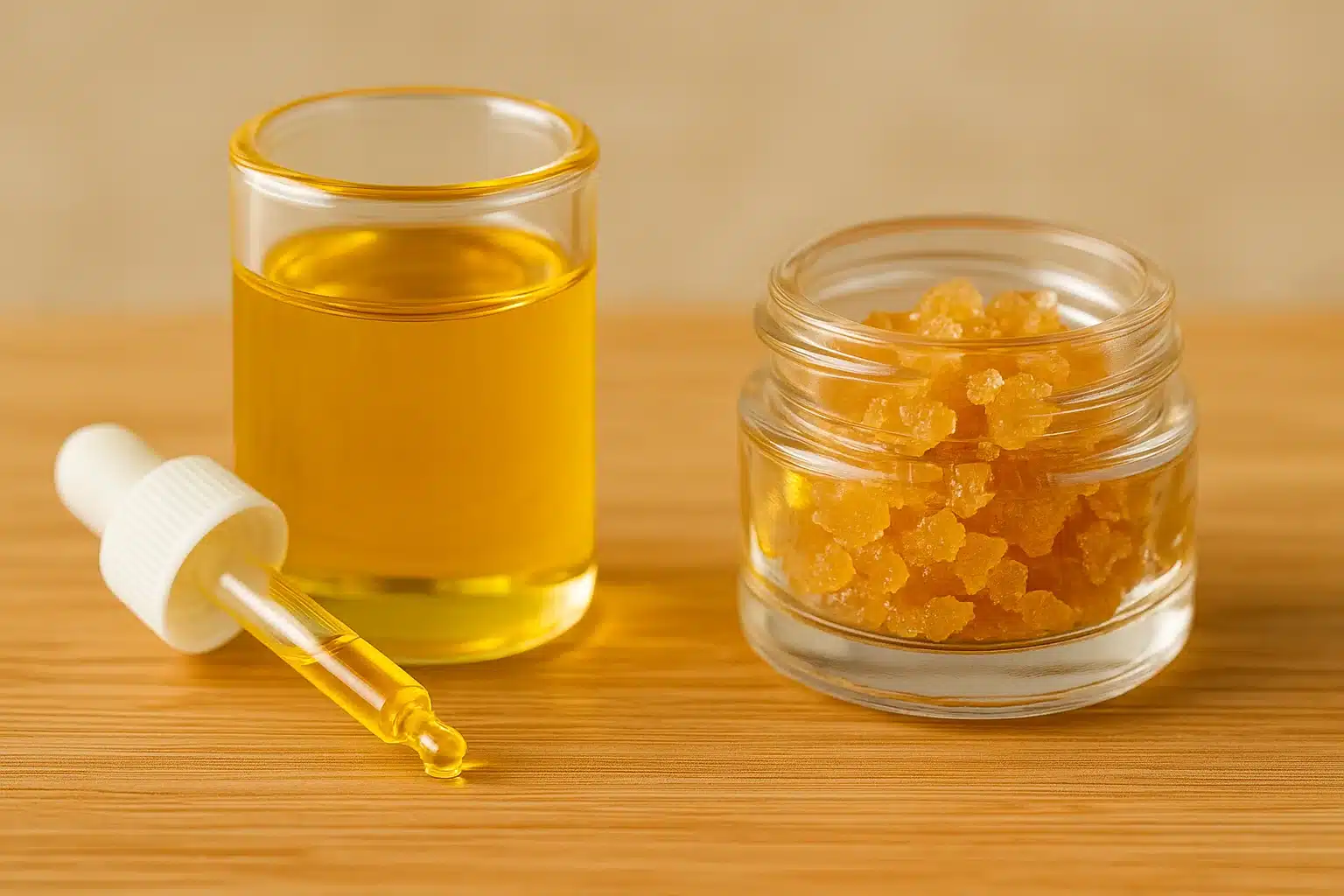
Distillate is a highly purified and concentrated form of cannabis extract that is usually translucent, runny, and looks like golden oil. It is produced through a process called distillation, where a single cannabinoid (often THC) is isolated while all other natural compounds, such as terpenes, minor cannabinoids, fats, and waxes, are removed.
This results in a pure extract with a potency of about 90% to 95%.
Although distillate is indisputably potent and favored for its versatility due to its lack of taste and smell, the stripping away of terpenes is theorized to diminish its wholesome potential. This is likely because terpenes play a key role in the entourage mechanism.
Some manufacturers, however, have the habit of reintroducing terpenes to the distillate at a later stage. Unfortunately, this doesn’t fully restore the plant’s original entourage effect. Stripping away naturally occurring compounds during refinement reduces the full-spectrum impact and, with it, much of the cannabis plant’s natural therapeutic potential.
Does distillate get you high?
Whether distillate can get you is highly dependent on the exact cannabinoid you’re consuming. For example, a THC distillate is likely to have very high concentrations of THC and will therefore be more intoxicating. A CBD distillate, on the other hand, is likely to be potent as well, but may not be intoxicating, seeing that it lacks the intoxicating cannabinoid THC.
Expect a Delta 9 distillate to be more potent than other forms of extracts because a formula will typically contain 90% or upwards of the target cannabinoid. The high can be intense and fast-acting, especially for inhalable products like vapes, dabs, and infused pre-rolls.
✅ PROS
- Since distillates are potent, a little goes a long way.
- Lower chance of contamination due to it being highly refined.
- Versatile and a base for many cannabis product formats.
- Cheaper compared to live resin
⚠️ CONS
- It’s easy for beginners to overdo dosage with distillates because of their potent nature.
- There is a risk of increased tolerance.
- Might contain thinning agents like vegetable glycerine, propylene glycol, or MCT oil
What Is Live Resin?
Back in the 60s, the term resin referred to the tar-like buildup left at the bottom of pipes and bongs after a heavy smoking session. Not very appealing, is it?
You would have to understand that weed was quite hard to come by in those days, and digging out this stuff for a second smoke was actually considered a treat. Since that era is behind us, there is no reason for you to know how smoking that black gunk feels.
Today, “live resin” is something entirely different and far more appealing.
Live resin is the resin collected from fresh, uncured cannabis plant material that has been cryogenically frozen in temperatures of below -292°F (-180°C) shortly after harvest. This process is considered full-spectrum because freezing preserves the plant’s full range of cannabinoids, terpenes, and flavonoids, compounds often lost during traditional drying and curing.
Because live resin uses the entire plant in its freshest state, it’s considered a full-spectrum extract, meaning it captures the full chemical profile of the cannabis strain. This allows users to experience the entourage effect, which is the synergistic interaction between cannabinoids and terpenes, resulting in a more complex, flavorful high compared to isolates or distillates.
Producing live resin is, without doubt, one of the more costly processes to exist. Unlike distillate, live resin requires specialized equipment, cryogenic freezers, and a closed-loop hydrocarbon extraction system. On top of that, live resin yield is lower because it prioritizes connoisseur-level quality over volume.
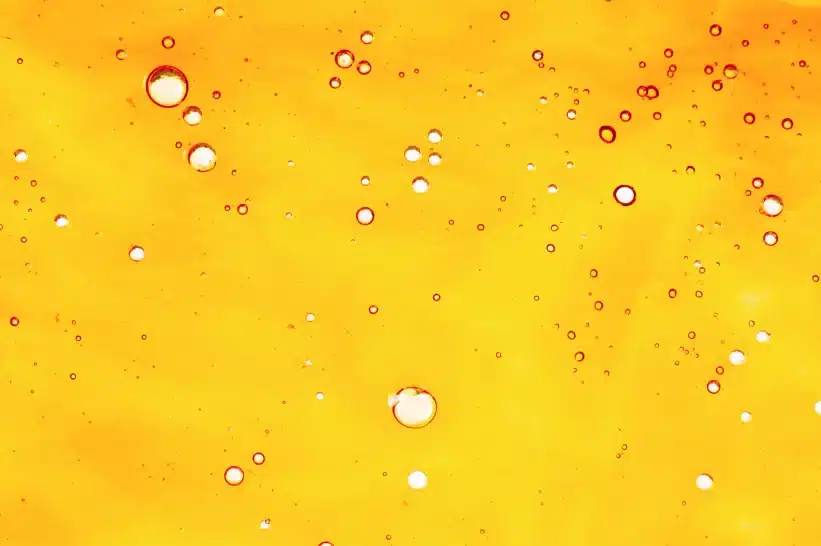
Live resin’s texture and look range from saucy to shatter-like form. It’s thought to be aesthetically pleasing because of its rich gold and sometimes, amber-like hue.
✅ PROS
- Live resin is known for its exceptional flavor and aroma, adding to the full-spectrum experience.
- Live resin captures the uniqueness of a strain.
- Visually appealing and premium-looking.
⚠️ CONS
- Expensive due to specialized equipment that revs up cost.
- Lower production yield
- Easily degrades with heat or light exposure.
- Not as widely available as distillates
How They’re Made (And Why It Matters)
How distillate and live resin are made plays a huge role in the final product you consume. Distillate goes through an extensive refinement process that strips away almost everything except the targeted cannabinoid, usually THC or CBD. However, this level of refinement also removes the terpenes and minor cannabinoids that contribute to the plant’s aroma, flavor, and therapeutic synergy.
Live resin, by contrast, is made from fresh, flash-frozen cannabis flower and extracted at low temperatures to preserve the full spectrum of compounds found in the plant. This means more terpenes, more flavor, and a stronger entourage effect.
So, while distillate delivers raw potency, live resin offers a fuller, more authentic high that better reflects the plant’s natural profile.
How is Cannabis Distillate Made?
The process of making cannabis distillates is quite intense and best left to professionals due to the precision and accuracy required, as well as for health and safety reasons. That said, here’s the step-by-step process of extracting cannabis distillate.
Step 1: Crude Oil Extraction
This is the process that separates the cannabinoids from the cannabis plant material. A crude extraction involves separating the cannabinoid physically or chemically.
A. Physical separation techniques include sieving or rosin pressing. They tend to yield concentrates containing more plant impurities.
B. Chemical-based extraction methods use Butane Hash Oil (BHO) or supercritical fluid carbon dioxide extraction, which are cleaner.
The crude extract produced by either of these methods still contains impurities, which must be removed before the oil is separated into its individual cannabinoids.
Step 2: Winterization
This is the next major step, which is used to remove byproducts such as plant waxes, lipids, fats, and chlorophyll from the crude extract.
During winterization, the crude extract is first mixed with ethanol and then placed under cold temperatures for between 24 and 48 hours.
The cold causes the impurities to coagulate and precipitate (separate) and sink to the bottom of the container. The solution, composed of ethanol and crude extract, is then filtered, and the ethanol is evaporated using a falling film evaporator or a rotary evaporator.
Step 3: Decarboxylation
The process of winterization results in the non-psychoactive cannabinoid tetrahydrocannabinolic acid (THCA). THC is created by applying heat to THCA in a process known as decarboxylation. This process removes carboxylic acid from THCA, leaving behind the potent and psychoactive THC.
Step 4: Distillation
This final step involves the use of vacuum pressure and heat. Individual cannabinoids and terpenes have unique boiling points as well as differentiated molecular weights. This is used to separate and collect them in a strictly controlled environment, individually. The high pressure ensures the “boiling points” are achieved at much lower temperatures to preserve potency.
How is Live Resin Made?
The production of live resin aims to preserve the fresh state of the cannabis plant to retain its full range of cannabinoids and terpenes. Here’s how it’s carried out.
Step 1: Harvesting and Flash Freezing
Fresh cannabis plants are harvested and immediately flash-frozen at ultra-low temperatures, usually below -292°F (-180°C). This quick freezing preserves the delicate terpene profile and cannabinoid integrity by preventing degradation that occurs during drying and curing.
Step 2: Cryogenic Extraction
The frozen plant material is then subjected to cryogenic or solvent-based extraction methods, often using butane or propane as solvents. The frigid temperatures help maintain the plant’s original chemical composition while the solvents dissolve the cannabinoids and terpenes.
Step 3: Purging Solvents
After extraction, the solution contains residual solvents that must be carefully removed. This is achieved through a purging process using vacuum ovens or specialized equipment that evaporates solvents at low temperatures to avoid destroying terpenes and cannabinoids.
Step 4: Final Refinement and Testing
The resulting live resin concentrate is refined to remove any impurities while preserving its aromatic and potent profile. The product is then tested for purity, potency, and safety before packaging.
This process creates a richly flavored and aromatic concentrate that delivers a complete and full-spectrum cannabis experience.
Realistically, no. Because of the basic assumption that live resin is obtained from fresh plant matter, many might have misunderstood the possibility of making live resin at home. This hardly works because trying to press it will end up “boiling” the moisture contained in the plant, which can turn out to be a messy affair, shrouded with danger.
While you might end up with some substance at the end, which might even be useful, it will certainly not be Live Resin.
Effects, Potency & Experience: What You’ll Actually Feel
The effects of distillate and live resin can feel worlds apart, even though both are cannabis extracts. Think about the difference between a straight shot of alcohol and a carefully crafted cocktail. Both will get you there, but the journey feels different.
Distillate Hits Hard
Distillate is often seen as the more intense of the two in terms of potency. That’s because it contains extremely high concentrations of a single cannabinoid, usually THC or CBD, often reaching levels above 90 percent. With this level of purity, the effects tend to hit hard and fast.
If you’re using a THC distillate, expect a strong, sometimes overwhelming high, especially if you are new or have low tolerance. However, because it contains little else, the experience may feel one-dimensional. It gets you high, but without the nuance or complexity you’d get from a product with more of the plant’s original compounds.
Live Resin Hits Deeper
Live resin offers a different kind of experience. For some users, live resin provides a clearer, more manageable high with added relaxation or creativity depending on the strain used.
While its THC levels may be slightly lower than those of distillate, it delivers a more balanced and well-rounded high. That’s because it retains the plant’s full terpene profile and minor cannabinoids, where together, the compounds work to enhance both the psychoactive and therapeutic effects.
The origins of live resin trace back to 2010, when cannabis innovator William “Kind Bill” Fenger made the first known attempt at producing it using the Original Diesel strain. The result was a flavorful but low-yield extract, and the process itself was risky and unrefined.
In 2013, Fenger teamed up with extraction specialist Jason “Giddy Up” Emo, leading to a major breakthrough. Using Emo’s EmoTek Labs OBE-Dos extraction unit, the pair successfully created the first commercially viable batch of live resin, combining flavor preservation with a much safer, more scalable production method.
Taste, Smell & Terpenes: The Flavor Showdown
The taste and smell of cannabis concentrates are largely defined by their terpene content.
Live Resin is celebrated for its rich and robust terpene profile. Thanks to the live resin extraction process, which preserves most of the original terpenes and aromatic compounds of the fresh cannabis plant. This results in vibrant flavors that closely mimic the live plant.
In contrast, Distillate generally has a neutral taste and smell by design. The extensive refinement process strips away most terpenes and other plant compounds, leaving a mostly flavorless and odorless concentrate.
With live resin vape, you are likely to smell and taste earthy notes from myrcene, some peppery notes from caryophyllene, as well as floral notes from linalool. With a distillate, both taste and aroma are likely to be bland.
While this makes distillate highly versatile for mixing into products like edibles and vape cartridges, it lacks the aromatic and flavorful qualities of live resin. Users who prioritize flavor and aroma often prefer live resin, whereas those seeking pure cannabinoid potency opt for the more subtle Distillate.
If you’re only recently switching to live resin carts, choose a cart that shares the same terpene profile as your favorite flower strain. Terpenes are the key to preserving the familiarity of aroma and effects you get from your cult-favorite strain.
Cost, Availability & Product Variety
Generally, distillates tend to be more affordable because the extraction process is less complex and can use lower-quality starting material.
Prices for high-quality distillate cartridges typically range from $20 to $40, making them accessible to a broad range of consumers. Live Resin, due to its labor-intensive production, tends to be pricier, often costing between $40 and $80 per gram or cartridge. This price reflects the premium quality and richer flavor profile it offers.
Availability also differs: distillate is widely available across most dispensaries because it is easier to produce and has a longer shelf life. Live Resin products, on the other hand, are less common and sometimes limited to regions with advanced extraction facilities due to the need for fresh-frozen materials and specific equipment.
When to Choose Distillate vs Live Resin
Choose distillate if you’re looking for straightforward high potency at a lower price and if flavor isn’t your priority. It’s also a good option if you need a nearly odorless product, prefer precise dosing, or consistent, predictable effects every time.
On the other hand, choose live resin if you want a richer, more full-bodied experience with natural flavor and aroma. It’s ideal for connoisseurs or anyone who values the entourage effect. While it costs more, live resin offers a more authentic connection to the cannabis plant and can deliver a more balanced and enjoyable high.
Neither live resin nor distillate is inherently better because each serves different needs.
Experience the Taste of Fresh Flower in Every Puff
Try the Kayo | THC Blend Live Resin Disposable Vape (1g). It’s the perfect way to experience everything live resin has to offer. For just $17.95, you get:
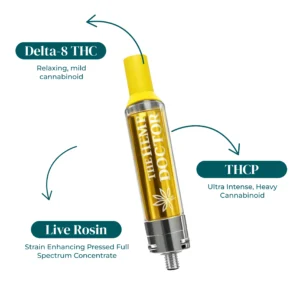
- A potent blend of Delta 8, Live Resin, and THCP
- Enhanced with 5mg of CBD live resin and real terpenes for full-spectrum flavor
- Available in five delicious strains