
How to Make Edibles + 6 Recipes You Can Make at Home

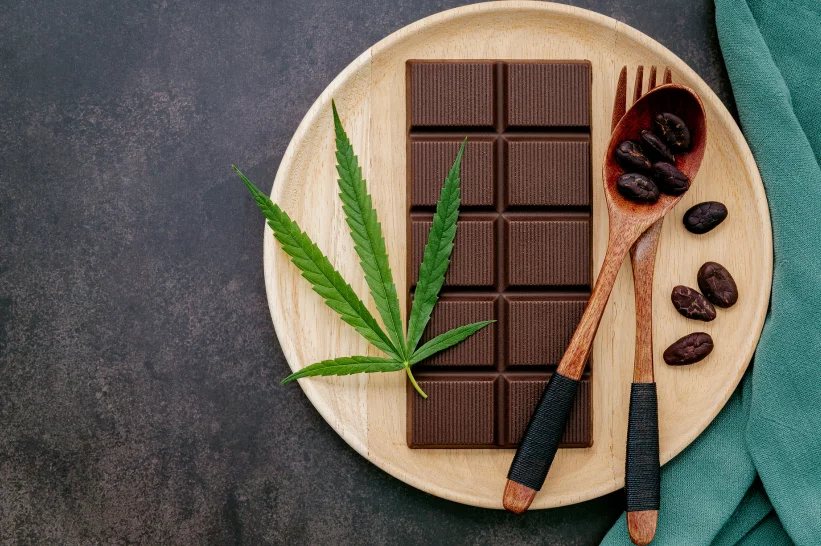
Learning how to make THC edibles may seem daunting. But on the contrary, all you need are the necessary ingredients and proper steps to bake a batch of homemade space cakes, gummies, cookies, and other cannabis-infused treats.
Today, we’ll provide a crash course on making weed edibles and some amazing pot edible recipes you can try. Hopefully, after reading this, you’ll be whipping your own batch in no time.
🔑 Key Takeaways
- Raw cannabis is not psychoactive. Buds must be decarboxylated or placed under high temperatures to activate the cannabinoids.
- Cannabutter, cannabis oil, and tinctures are three excellent ingredients to infuse cannabis into food. Preparing them beforehand makes cooking shorter and more manageable.
- Manage dosing by following the 1:1 ratio between cannabis buds and the infusion base of your choice. You can add more weed for more potent effects or lessen it.
Let’s dive into the meat of the matter. Here’s your step-by-step process for making homemade edibles. This guide can help ensure quality, regardless of your experience level with cannabis cooking and food preparation.
Step 1: Select the Strain
Before anything else, you must determine the strain you want to use. You can always do prior research to determine the desired effects, whether for boosting productivity or relaxation.
As you know, specific strains have their perceived effects. Strains under Indica are known to calm a worried mind and relax a tired body. They are usually the go-to strains for people who want to wind down after a long day at work.
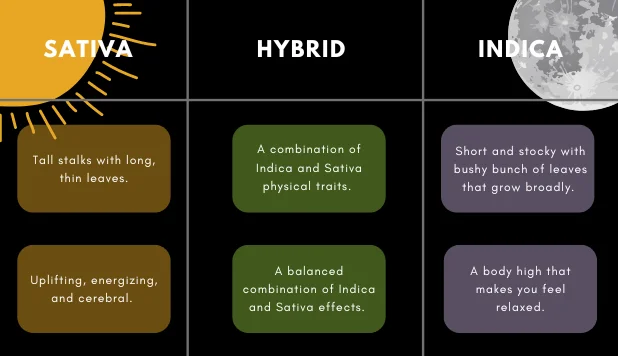
Sativas have the opposite effect. They are known to induce a head high that can spark creativity. Cannabis users who prefer this strain enjoy it for its ability and reputation to turn a dull day around.
Check out The Hemp Doctor’s yummy edibles with a focus on giving energy and focus.
As the name suggests, hybrids are a mix of both. Some are a 50-50 indica-sativa blend, while others have more dominant traits.
It’s important to note that Indicas and Sativas may have opposing effects on other people. Feel free to experiment, but you can also go with a strain you know very well.
Step 2: Decarb the Buds (Decarboxylation)
Don’t let the fancy-sounding word intimidate you. Decarboxylation simply means the process of activating the plant’s cannabinoids using heat.
From a scientific viewpoint, decarboxylation removes the carboxylic acid from a cannabinoid’s molecular structure. At the same time, carbon dioxide is released. This process converts the non-psychotropic tetrahydrocannabinolic acid (THCA) and cannabidiolic acid (CBDA) into the THC and CBD we know.
Decarboxylating cannabis simply involves exposing the plant to heat, and combusting the plant material is one of the ways to do it. But if you’re making homemade edibles, you can use an oven.
To do this, follow the instructions below in sequence:
- Spread around seven grams of ground buds onto a piece of parchment or over a baking sheet.
- Next, place the sheet into an oven preheated to 220°F (105°C) and leave it for at least 30 minutes.
- After removing them from the oven, allow the buds to cool for another half hour. You should see distinct color changes, from a bright green to a lightly toasted, golden brown hue.
Step 3: Prepare the Ingredients and Equipment
These days, pot edible recipes aren’t limited to brownies and space cookies. You can infuse the magic herb into different sweet and savory dishes.
🧈 Cannabutter
If you’re into making desserts, cannabutter is a primary ingredient. The infusion process is straightforward, which we will discuss in a later section.
🫒 Cannabis-Infused Olive Oil
But for savory meals, you can mix the decarbed buds into olive oil, allowing you to prepare dishes like pasta and salads.
🧻 Baking Sheet and parchment paper
Regarding equipment, the baking sheet and parchment paper are starter tools you can also use for baking with weed.
🌡️ Small pot, cheesecloth, measuring cups, weighing scale, and thermometer.
Other necessary devices include a small pot and cheesecloth to make cannabutter, measuring cups and weighing scales for accuracy, and a thermometer to ensure proper temperature control.
Step 4: Choose the Cannabis Infusion
Like the ingredients and equipment, the infusion methods will depend on the dish you’re preparing. Here are some cannabis infusion-base ingredients you can use:
Cannabutter and Infused Cooking Oil
Cannabutter and infused cooking oils are versatile enough to be used for baking or cooking savory meals.
Tinctures
Similarly, tinctures are excellent ingredients for food infusion. In a nutshell, they are alcohol-based extracts made by soaking the buds in food-grade alcohol like ethanol or carrier oils like coconut oil. Some use high-proof beverages like vodka and rum.
Edible Cannabis Concentrates
You can also use cannabis concentrates for infusion. However, you must proceed cautiously because they are highly potent and could result in unpleasant experiences when done carelessly.
Step 5: Infuse the Cannabis Base Ingredient to Your Recipe
Now, it’s time to infuse the most suitable cannabis infusion base ingredient into your recipe. It can be either cannabutter, tincture, or edible cannabis concentrate. If you don’t know what to make, pick any recipe below and bake or cook your heart out!
Pot Edible Recipes You Can Make Using Cannabutter and Tincture
Now that you’re familiar with the steps, it’s time to try making homemade edibles. We have six recipes for you to try using cannabutter and tinctures. They’re tasty and easy to follow.
- Sale!60% Off
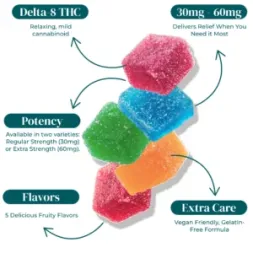
DELTA 8 THC MEDIBLES GUMMIES
Price range: $5.18 through $18.38 — or subscribe to save 25%Shop Now This product has multiple variants. The options may be chosen on the product page - Sale!35% off


CBD:D9 THC MILK CHOCOLATE MINIS | 30MG
Price range: $2.80 through $38.97 — or subscribe to save 25%Shop Now This product has multiple variants. The options may be chosen on the product page - Price reduced
CBD:D9 THC BLEND CHOCOLATE BITES | 20CT | 30MG
$34.95 — or subscribe to save 25%Shop Now This product has multiple variants. The options may be chosen on the product page
Cannabutter Recipe for Edibles
Before proceeding with things to make with pot butter, we must know how to make cannabis-infused butter. Like decarboxylation, it’s a straightforward process anyone can do.
Step 1: Begin by adding a quarter of an ounce of decarboxylated cannabis buds into a medium saucepan with eight ounces of melted butter. You can use clarified or unsalted variants.
Step 2: Allow the mixture to simmer for up to four hours, stirring it every 30 minutes. This process prevents the butter from burning quickly. Once the four-hour mark is up, strain the mixture using cheesecloth or a mesh strainer while allowing the butter to cool to room temperature.
Step 3: For storage, use an airtight container like a mason jar. You can leave it in the fridge or freezer for up to six months and use it when needed.
Classic Weed Brownies
Let’s proceed with the dishes we can prepare using cannabutter, beginning with the classic weed brownies. It’s an iconic treat that most cannabis lovers enjoy, mainly because the decadent chocolate flavors excellently mask the herb’s earthy taste.
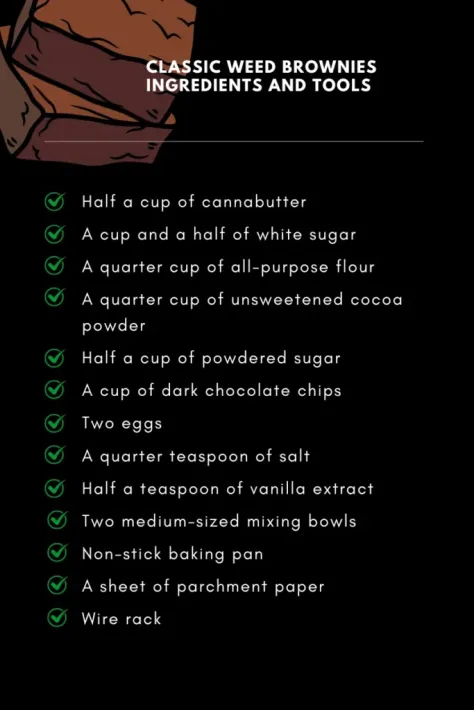
Once you’ve gathered all you need, here are the necessary steps:
Step 1: Preheat your oven to 325°F (160°C). This process usually takes up to 20 minutes.
Step 2: Place the sheet of parchment paper on the baking pan before spraying it with oil. You can also remove the paper and spray the pan directly.
Step 3: Combine the dry ingredients in one bowl and mix thoroughly. Add all the wet ingredients to the other bowl and whisk them together.
Step 4: Add half of the dry ingredients into the bowl of whisked eggs, butter, and vanilla and lightly mix. Incorporate the other half before doing another round of mixing.
Step 5: Once the batter is mixed, pour it into the greased baking pan and spread evenly. Use a spoon or spatula if needed.
Step 6: Bake the batter for 30 to 45 minutes. A good way to check for doneness is by placing a toothpick in the center. You can kill the heat if it comes clean after pulling it out.
Step 7: Allow the brownies to cool at room temperature for half an hour before serving. Freezing them after cooling is another option if you want a firmer texture.
Cannabutter Peanut Butter Cookies
Weed-infused peanut butter cookies are another sweet treat to make with your cannabutter. They’re easy to make and pair perfectly with a cup of coffee.
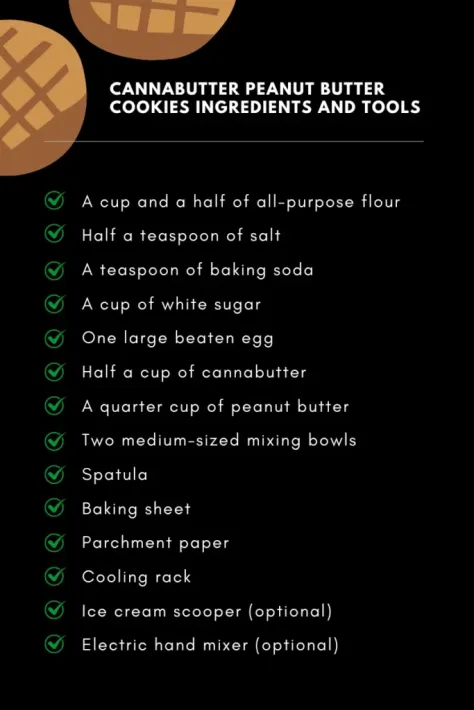
Here is your step-by-step process:
Step 1: Preheat your oven to 350°F (175 °C).
Step 2: Pour the dry ingredients (sugar, salt, flour, and baking soda) into one bowl while the wet ingredients (cannabutter, egg, and peanut butter) go in another.
Step 3: Blend the wet mixture until well incorporated using a spatula or electric mixer.
Step 4: Mix half of the try ingredients into the batter. Incorporate the other half until you achieve a moistened dough consistency.
Step 5: Roll a piece of dough into a ball with your hands. Use an ice cream scooper for more consistent measurements.
Step 6: Line the baking sheet with parchment paper. Place the dough balls on the paper and spread them out evenly. Leave enough space for the cookies to flatten.
Step 7: Bake dough for 10 to 12 minutes or until golden brown.
Step 8: Leave the cookies on the sheet for five minutes before transferring them to a cooling rack. Allow them to settle for 20 more minutes before consuming them.
Cannabis Cacio e Pepe
Moving away from desserts and snacks, we have a classic Italian meal that literally translates to “cheese and pepper.” This pasta dish involves a straightforward process that anyone can make.
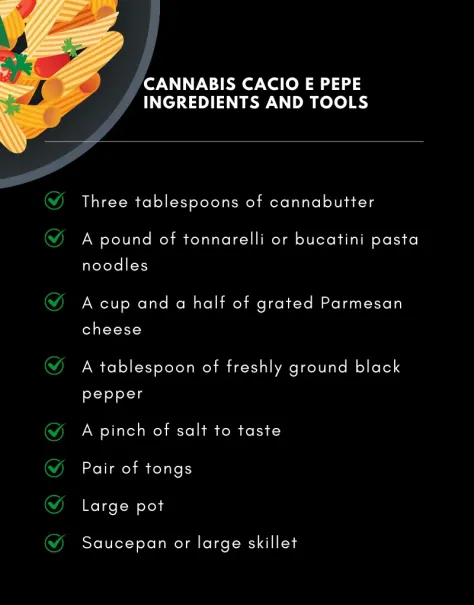
The step-by-step process:
Step 1: Add three to five quarts of water to the large pot. Bring it to a boil and add a pinch of salt.
Step 2: Add the pasta. Cook for up to eight or two minutes less than the indicated cooking instructions. Once the noodles are chewy with a slight resistance, turn off the heat. Drain the water, but leave about a quarter cup for later.
Step 3: Melt roughly two tablespoons of cannabutter in a skillet over medium heat. Add the pepper and stir the butter until it reaches a golden brown hue.
Step 4: Pour in the remaining pasta water and simmer. Add the cooked noodles and the last tablespoon of cannabutter.
Step 5: Reduce the heat to low and add the grated cheese. Toss the pasta and sauce using a pair of tongs until thoroughly mixed.
Step 6: Let the dish cool for up to five minutes before serving.
Simple Edibles
As previously mentioned, tinctures (it can be anything from Delta 8 tinctures to CBD) are likewise excellent options for making cannabis edibles. But before we proceed, here’s a crash course on making homemade cannabis tinctures.
First, the ingredients and equipment:
- Half an ounce (or 14 grams) of decarboxylated cannabis buds.
- Up to 12 fluid ounces of food-grade ethanol or coconut oil
- Glass mason jars for storage
- Glass bottle or dropper cap worth at least a fluid ounce
- Cheesecloth
Next, the step-by-step process:
Step 1: Add the buds and preferred soaking liquid into the mason jar. If you want an easygoing high, bring the ratio to around an eighth of the half-ounce cannabis to three fluid ounces of either alcohol or oil. Increase doses according to your preference.
Step 2: Stir the mixture and store it in a cool, dry place for at least four weeks. Remember to shake the jar at least once daily to allow the plant material to soak into the liquid.
Step 3: After storage, strain the mixture using cheesecloth to remove excess plant material. Then, pour the dark liquid into the glass bottles to prepare it for use.
It’s important to note that the longer the steep time of the buds, the more potent they can get.
Now that you know how to make homemade cannabis tinctures, it’s time to start using them as a base ingredient. As we did with cannabutter, here are three tincture-infused recipes for you.
Two-Bean Salsa
Here’s the perfect side dish that can serve as a dipping sauce or enjoyed alone. You can never go wrong with a bowl of cannabis-infused two-bean salsa to liven up a party. The best part is that no cooking is needed. You can complete this dish within minutes.
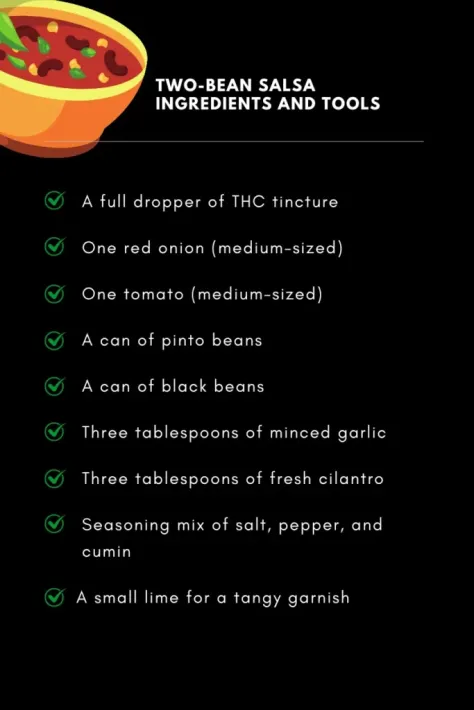
Now, for the step-by-step guide:
Step 1: Drain both beans from their respective cans and put them in a colander. Then, dice the onion, tomato, and cilantro.
Step 2: Integrate all the ingredients in a medium bowl. Add the full dropper of your homemade cannabis tincture before mixing again, allowing it to incorporate completely.
Step 3: Add the seasonings and mix. Use your desired amount, but add more cumin if you want that distinct salsa flavor.
Step 4: Top the salsa by squeezing the juice of a whole lime for an added refreshing taste.
Step 5: Serve and enjoy.
THC Gummies
Why drive to the dispensary when you can make your own batch of THC gummies? Like all recipes on the list, this is an easy one.
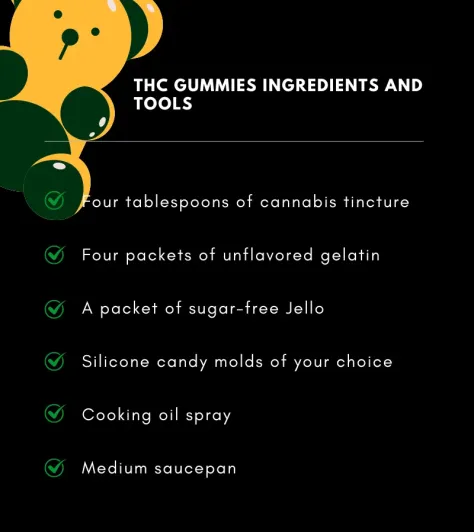
Here is the step-by-step guide
Step 1: Lightly spray the candy molds with oil. Remove any excess by wiping it down with a paper towel.
Step 2: Mix all packets of gelatin and Jell-O into a cold saucepan until fully combined.
Step 3: Add half a cup of cold water to the gelatin and Jello mixture. Place the saucepan over medium heat until the mixture boils.
Step 4: Once it reaches boiling point, lower the heat. Allow the mixture to simmer for five minutes as you occasionally stir.
Step 5: Take the saucepan away from the heat and add the tincture. Mix it well to allow it to be fully incorporated.
Step 6: Pour the mixture into the molds using a small funnel to avoid spillage. Refrigerate it for at least 15 minutes.
Step 7: Serve and enjoy, but be mindful of the dosage. Taking too much may lead to an unpleasant experience.
Cannabis-Infused Hard Candies
Making weed-infused hard candies may seem complicated until you find out they aren’t. The process involves slightly more tools, but you can complete it by following these steps.
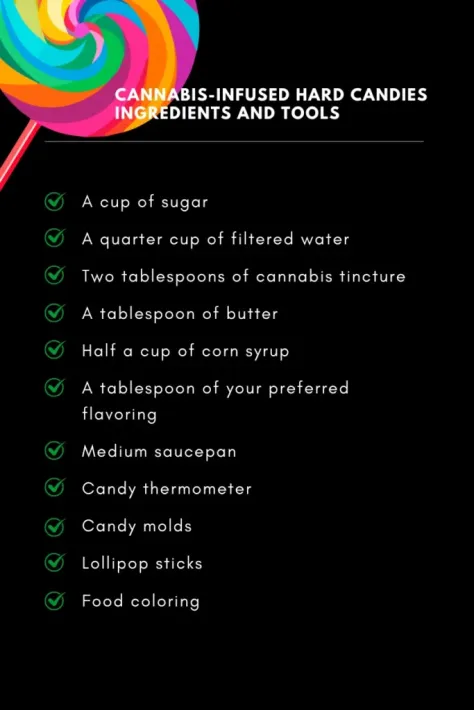
And here are the necessary steps:
Step 1: Lightly grease the saucepan with butter. Pour the corn syrup, sugar, and water into the saucepan and place it over medium heat. Continuously whisk the mixture until the sugar finally dissolves.
Step 2: Turn the heat to high. Add two drops of the food coloring of your choice. Boil the mixture until it reaches the 300°F (148°C) point, using the thermometer for an accurate reading.
Step 3: Take out the saucepan from the heat. Allow it to cool down to 235°F (112°C).
Step 4: Add the cannabis tincture and your desired flavoring. Stir to ensure they are thoroughly mixed in.
Step 5: Once the mixture has cooled, pour it into the candy molds using a small funnel to prevent spilling. For lollipops, insert a stick into the mold.
Step 6: Serve and enjoy, but like the THC gummies, be mindful of the servings.
Tips and Tricks for Making Weed Edibles
As you’ve seen in the recipes above, making weed edibles does not require advanced kitchen skills or fancy equipment. However, you can use some tricks to enhance the experience for everyone around you.
Here are some tips you can try to help you make the best batch of homemade cannabis edibles.
How to Make Edibles Hit Harder
For the uninitiated, consuming edibles hits harder than smoking. Unlike inhalation, where the plant’s compounds go straight to the bloodstream, ingesting has the THC go through the stomach before the liver metabolizes it.
Once metabolized, it turns into 11-hydroxy-THC, which can be up to four times stronger than the regular delta-9. The stronger, longer-lasting high that edibles bring is why even seasoned smokers like Snoop Dogg avoid them like the plague.
In his words, “They have no on and off button.”
But there are a few tricks you can do if you want a more potent edible hit. One way is to increase the fat content since THC is fat-soluble. You can do this by using high-fat ingredients like coconut oil or butter. This method works well in desserts and some savory dishes.
Another way is to add a food supplement known as lecithin. It is commonly used to improve the shelf life of the dough in baked goods and as a skincare ingredient.
However, it is also known to increase the bioavailability of THC. This simply means the body absorbs it better, intensifying its effects. You can incorporate this ingredient through products like soy lecithin, which, on their own, contain potential health benefits.
Proper decarboxylation is also a way to achieve stronger-hitting cannabis edibles. As mentioned earlier, you would want to heat the raw buds at a minimum temperature of 220°F (105°C) for at least 30 minutes.
However, you can increase these figures to a maximum of 245°F (118°C) for up to 40 minutes. Going beyond these limits may burn off those precious terpenes, which can ultimately compromise the quality of your buds and lead to a less potent hit.
Our fourth tip for harder-hitting edibles is to increase the ratio of cannabis buds and your preferred base, whether butter or alcohol, and oil for tinctures. The ideal ratio for both is 1:1, but you can add more buds if you want a stronger high.
The fifth and final tip would be to consume more than the recommended amount. Five milligrams is the suggested minimum dose, but you can go as high as ten for a moderate hit. Increase doses once you feel comfortable handling an edible high, but it’s always wise to start with a small amount.
How to Make Edibles Fast
Having your ingredients prepared beforehand can help shorten the process of making edibles. This approach is similar to cooking, where chefs have their mise en place, which literally translates to “putting in place.” In a nutshell, it’s about having all components ready beforehand.
Whether you’re using cannabutter or tincture for your food infusion, it helps to prepare them in advance. The former can last a few weeks when stored in the fridge and up to six months when frozen. The latter can stay as is without degradation for years when stored inside an airtight glass jar in a cool, dry place.
However, both a tincture and cannabutter require buds to be decarboxylated. It pays to be adept at this process instead of fumbling around in the kitchen.
Familiarize yourself with how your oven works and its heat fluctuations, then make the necessary adjustments. As previously mentioned, properly decarboxylated cannabis buds are one way to achieve excellent-quality edibles for a potent high.
Speaking of excellent quality, accurate dosing plays a significant role. You can increase the chances of making top-notch, perfectly dosed edibles by calculating potency based on your chosen strain’s THC percentage.
As a ballpark, high-grade buds from a reputable dispensary will have 20-30% THC, which means they have approximately 200 to 300 mg of concentration. Doses from lowest to highest are between 10-60 milligrams per serving.
Knowing these figures removes one crucial aspect from your to-do list, allowing you to prioritize preparation and cooking if the dish requires it.
How to Make Edibles Without Smell
Cooking with cannabis may leave distinct and sometimes off-putting odors, but you can take measures to avoid stinking up your kitchen or entire house. One way is to use the sous vide method instead of an oven to make cannabutter.
However, decarboxylating cannabis can also generate a strong aroma. Here, the sous vide method is also an option. Using a machine or a pot of water, bring the temperature to 200°F (90°C). As you wait for the water to heat, place the ground buds in a vacuum-sealed bag, which you dump into the water for 90 minutes.
To begin making the cannabutter, take a third of a pound of high-quality butter with a high-fat content. Dice it into chunks and place it in a pan over medium heat to begin the clarifying process.
As the butter bubbles, a layer of white film will settle on top. Scoop it out using a spoon before tossing some of the decarboxylated buds. Remember the standard 1:1 ratio of bud to butter.
Place the herb and butter mixture in a small mason jar and dump it into the boiling water. Leave it for up to three hours. For the final step, cool the mixture down without allowing it to solidify. Strain the plant material using a cheesecloth.
However, not everyone may have the time and patience to sous vide cannabis herbs. Another option would be to use concentrates, oils, or tinctures instead of butter. Oils, in particular, allow for more precise dosing, which is a plus.
Final Thoughts
Hopefully, this article has provided sufficient insight into making homemade edibles, including proper dosing. We’ve also shared some tricks for making cooking, baking, and preparation hassle-free.
But before we wrap up, we’ll answer some frequently asked questions about cannabis edibles.
FAQs
What ingredients do you need for edibles?
The ingredients will vary, depending on what dish you’re cooking. If you’re baking, you will need the usual eggs, flour, sugar, and salt. For savory dishes, you may use meats like bacon or beef.
However, butter and oil are staples for every cannabis cooking recipe. For the latter, you can use neutral varieties like vegetable oil or something with a high-fat content like coconut oil.
How is an edible made?
You can make edibles either by infusing cannabutter, oils, or tinctures of your choice. But as you’ve likely read in earlier sections of this article, all of these ingredients require decarboxylated cannabis buds.
Once you’ve finalized your base ingredient, you can decide which dish you want to make. However, oils are more versatile, as you can use them in both sweet and savory recipes.
What is the easiest way to infuse edibles?
Following our previous FAQ, oils, and tinctures are the easiest ways to infuse edibles. Once you have them prepared, you can simply add a few drops or whatever is required to your chosen dish.
Cannabis oils and tinctures are excellent additions to dipping sauces like salsas or garnishes to salads. While cannabutter isn’t as complicated, it requires cooking, which becomes an added step.
How long do homemade edibles take?
The amount of time it takes to make homemade edibles will depend on the dish or treat you’re preparing. A batch of cannabis brownies, for example, can take between 20 to 90 minutes, depending on whether you already have pre-made or store-bought cannabutter.
A grilled chicken salad, on the other hand, can take a maximum of 20 minutes to prepare and cook. If you want to shorten your time in the kitchen, have all ingredients ready, particularly your infused base of choice.
How to make edibles with wax
Decarboxylate the wax. Then, pour the decarboxylated wax into a saucepan with the melted butter or oil over low heat. This infusion can be added to your favorite edible recipe.