How Much THC Is in a Dime Bag of Weed


If you’re familiar with cannabis slang terms, you also likely know what “a dime bag of weed” is. But for the uninformed, it simply means $10 worth of cannabis (not ten cents as what a dime is actually worth).
The term originated during the “flower power” decades of the 60s and 70s. It was a discreet way to describe weed and cater to those who are on a tight budget and could only afford smaller amounts at a time.
As for how much THC is in a dime bag of weed, it typically contains between 100 mg and 200 mg. However, this number varies based on the bag’s weight, strain potency, and quality.
If you’re curious about dime bags, we’ve got you. This extensive article explores not only the THC content but also how it measures up compared to other forms of cannabis consumption.
This article is as informative as it gets, so be sure to read until the end.
🔑 Key Takeaways
- A dime bag is $10 worth of weed. It is measured by price rather than weight, unlike other units (e.g., pounds, ounces, or grams).
- A dime bag typically contains a full gram of weed. However, the weight may depend on quality and potency.
- The amount of THC in a dime bag will also vary (between 100 mg and 200 mg), depending on quality, strain type, season, region, and growing environment.
- Buy More Save More
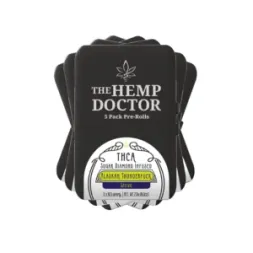
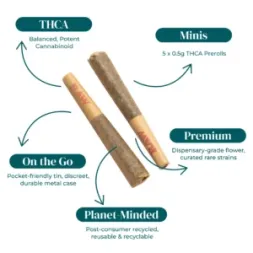
THCA SUGAR DIAMOND INFUSED PRE-ROLLS | 5-PACK TINS
$29.95Shop Now This product has multiple variants. The options may be chosen on the product page - Back in Stock
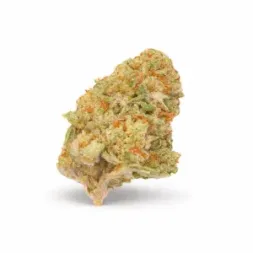
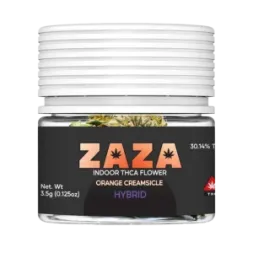
ZAZA | ORANGE CREAMSICLE THCA EXOTIC FLOWER
$30.00Shop Now This product has multiple variants. The options may be chosen on the product page
What Is a Dime Bag of Weed?
As mentioned earlier, a dime bag of weed is $10 worth of dried cannabis buds. Unlike other means of selling that are defined by a fixed weight (e.g, ounces, pounds, or grams), a dime bag is defined by a fixed price.
A dime bag is more of a colloquial term used by illicit dealers, so you won’t see the term used in legal dispensaries. So, if you ask for a dime bag at your local weed store, the budtender will likely offer you a pre-rolled joint.
For visual context, a dime bag of weed is about the size of a large grape or a standard metal paperclip. It typically fits comfortably between your thumb and index finger and may comprise up to two small, snugly rolled joints.
How Many Grams Is a Dime of Weed?
Traditionally, a dime bag of weed amounts to a full gram. However, asking this question in 2026 will render less straightforward answers due to varying factors.
These days, buying a dime bag might get you between 0.5 and 0.7 grams if you’re paying $10 worth of higher-quality weed. But if you’re willing to stick to the middle tier, you can get a full gram or more for the same price.
That means you can roll one decent-sized joint for $10, which is not such a bad deal, especially if you’re not consuming large amounts at a time.
How Much THC Does A Dime Bag of Weed Contain?
A dime bag typically contains about 0.5 to 1 gram of cannabis flower. At 20% THC, that would equal roughly 100 to 200 mg of total THC, depending on potency. This amount of THC feels strong for beginners and moderately strong for regular users.
As you can see, these numbers are rough estimates. A dime bag can contain significantly more or less THC depending on several variables. Here’s what influences it:
By Quality:
When we discuss quality at a superficial level, we typically refer to trichome density, aroma, terpene profile, moisture content, and aesthetics. For many cannabis users, this is the most important factor.
- Low-quality, a.k.a “schwag”: The lowest rung products that come with seeds and stems will typically have between 5% and 10% THC, which means they may contain between 50 mg and 100 mg.
- Mid-tier: This is the standard street-quality dime bag a black-market dealer may offer. They typically contain between 12% and 18% THC, with around 120 mg to 180 mg.
- Premium: These are the top-shelf products you will find in reputable dispensaries. These buds contain around 20% to 30% THC, with around 200 mg and 300 mg.
By Type of Cannabis Strain (Indica, Sativa, Hybrid)
Most cannabis users are aware that the indica-sativa distinction is more about determining the type of high they may experience. What many likely don’t know is that it can also affect THC density.
- Sativa: Sativas have an “airy” structure, which historically means they have lower THC by weight. THC levels are typically between 20% and 28%, corresponding to 200-280 mg.
- Indica: Indicas, on the other hand, are typically compact and resin-heavy, which means they have higher THC density. THC percentages hover between 25% to 33%, which approximates to 250 to 350 mg.
- Hybrid: Most hybrids are bred to maximize THC production. THC levels average 20%, with top-tier strains reaching 40%, and doses range from 200 to 300 mg.
By Season
This does not apply to indoor cultivation, given the option for environmental control; therefore, the focus is primarily on outdoor cultivation.
- Fall: This is usually the harvest season for many growers, when plants are at peak levels of terpenes and cannabinoids. The average THC percentage is between 18% and 25%, containing between 180mg and 250 mg per gram.
- Spring/Summer: These are typically the planting seasons, so the stocks available at this time are older and “sun-grown.” THC levels are lower, ranging from 12% to 18%, corresponding to 120 mg to 180 mg per gram.
By Region
Since dime bags are measured by price, and prices differ between regions, you may also get varying THC totals per bag.
- West Coast: States such as Oregon, California, and Washington have higher supply, so a $10 bag will typically contain a full gram of top-shelf weed. THC content in such products may average 25%, corresponding to approximately 250 mg.
- East Coast: Lower supply means higher prices. In these states, a dime may only contain 0.7 grams of mid-tier buds, with an average THC content of 15% (105 mg).
- Illegal Markets: Unregulated products lead to inconsistent, unverified potency. Here, the THC content of a standard one-gram bag may range between 10% and 15% (100 mg to 150 mg in total).
By Growing Environment
The growing environment you choose will dictate the ceiling of the plant’s genetic potential. That means growing indoors, which is more controlled, will yield different results than outdoor growing or a hybrid method like a greenhouse.
- Indoor: Optimized lighting and CO2 typically produce higher potency. THC content in these products may range from 20% to 30% (equivalent to 200 mg to 300 mg per gram).
- Greenhouse: This hybrid approach produce higher-quality buds, but the potency may be slightly lower. THC percentage may range from 15% to 22% (equivalent to 150 mg to 220 mg per gram).
- Outdoor: Exposure to natural elements may reduce THC levels. However, these products may contain a broader range of cannabinoids. THC percentage may range from 10% to 18% (equivalent to 100 mg to 180 mg per gram).
Indoor Grown Weed vs. Outdoor vs. Greenhouse: Comparing Methods and Choosing the Best
By Hemp Store Vs. Dispensary
The difference between these two lies in the type of products they sell. Dispensaries sell traditional cannabis, while hemp stores must adhere to federal guidelines, which means THC content will greatly vary.
Dispensary
Most strains will have THC percentages ranging between 18% and 28% (amounting to around 180 mg).
Hemp Store
Low-quality hemp products (often sprayed with Delta-8 THC) will usually contain between 5-10% (amounting to 50 mg to 100 mg in total).
Premium THCA flower, however, is a different story. They can test 18–35% THCA, meaning a 35% THCA flower can theoretically yield around 30–31% THC after combustion.
That puts premium THCA flower firmly in high-potency territory.
At The Hemp Doctor, our THCA Flower features lab-tested strains selected specifically for potency, terpene richness, and consistency, not sprayed hemp or synthetic enhancements. If you’re looking for dispensary-level strength, explore our collections today.
How THC Content Is Measured
Measuring THC involves several factors, whether it’s expressed as a percentage or in actual milligrams. This section explores several of those metrics to help you better understand them.
THC Percentage vs. Actual Milligrams
The THC percentage measures the ratio of THC weight to the product’s total weight. So, if you see something like 30% THC, that means 30% of the flower’s mass is pure THC.
Meanwhile, milligrams are used to measure consumption and dosing. A gram of flower, for example, weighs 1,000 milligrams. And if that gram contains 30% THC, it contains 300mg (1,000 multiplied by 0.30).
It is important to note that you can have a high THC percentage, like 30% in a half-gram bag, or a lower percentage (12%) in a standard one-gram bag.
Difference Between THCA and THC
For the uninitiated, THCA is the raw form of THC found in the plant. It does not get you high until you activate it through decarboxylation (i.e., by heating it to high temperatures).
Another thing to take note of here is the chemical conversion that happens when THCA turns to THC. When heated, CO2 vaporizes, so THCA molecules become lighter as well.
Looking at the numbers in a laboratory setting, 100mg of THCA only amounts to 87.7mg of THC upon conversion.
Lab Testing and Why It Matters
This perfectly segues from the previous section. Lab testing is needed for accurately verifying potency, specifying terpene profiles, and determining whether the specific strain is indica or sativa.
But more importantly, lab testing also rules out potential contaminants, including pesticides, heavy metals, and microorganisms such as mold, mildew, and E. coli, all of which can be harmful if consumed.
How Does the THC in a Dime Bag Compare to Vapes, Concentrates & Gummies?
Typically, a dime bag of weed contains between 100 mg and 280 mg of total THC. The amount depends on several factors, such as weight and quality. However, where it differs is in THC concentration and how the body absorbs it.
- Vapes: Cannabis in vape form has a much higher THC concentration compared to raw plants because the oil goes through different processes to isolate cannabinoids from plant material. A one-gram vape cartridge may contain 70% THC.
- Concentrates: Some may know it as dab or wax. This form of cannabis consumption has up to 99% THC. That means a tiny dab, which is the size of a single grain of rice, can contain up to 45mg of THC.
- Gummies: Standard Delta 9 gummies typically contain between 5mg and 10mg of THC per piece, which is much less than a dime bag that averages 200 mg of THC.
It’s worth noting that concentrates and vapes have a higher bioavailability, or the percentage of the substance that reaches the system. A dime bag, or any smoked form of cannabis, only has a maximum of 20% bioavailabilty, compared to vapes (up to 50%) and concentrates (up to 80%).
How Much Is a Dime Bag of Weed?
As mentioned earlier, a dime bag of weed costs $10. The amount of flower you may get in return will vary depending on several factors, but the weight may range from 0.5 to a full gram.
Here are the factors that may affect the weight:
- Market type: Illegal markets are more inconsistent in weight than regulated sellers like dispensaries. The latter also won’t follow the “dime bag” definition and instead measures in grams, which may cost higher or lower than $10.
- Market maturity and location: Places where legal cannabis has recently been implemented may have higher prices due to lower competition and higher production costs.
- Quality: Using the $10 gauge, higher-quality weed may weigh less (closer to 0.5). Meanwhile, mid-tier products will be closer to a full gram or may even exceed it.
How Much Can You Roll/Use From a Dime Bag of Weed? (Joints, Bowls, and More)
We’ve previously established how much a dime bag weighs. The next question, then, is how much you can get out of it. Here’s a breakdown in terms of consumption method:
- Joints/blunts: A dime bag can make a full joint or two “pinners” (a.k.a. thin joints with 0.5 grams of flower).
- Glass bowls: You can get up to 4 full bowls from a dime bag, assuming the average bowl size fits up to 0.3 grams of weed.
- One-hitters: A standard one-hitter can contain up to 0.1 grams. With a dime bag, you can get up to 20 hits, which can last for up to five days if you’re a light smoker.
- Bongs: A standard bong rip contains up to 0.5 grams of weed, which means you can get up to three large bong rips. When shared with another person, you can finish an entire dime bag in one session.
- Dry herb vaporizers: The chamber size of a standard dry herb vape can fit up to 0.2 grams of flower. This can get you up to 10 sessions, but you can double the dime bag’s life by re-vaping the same flower twice at varying temperatures.
Smart Buying Tips for Small Weed Purchases
Here are some tips if you’re buying weed in small amounts:
- Ask for smalls. If you’re on a strict $10 budget on your dispensary visit, ask for “Smalls.” These are popcorn-sized nugs from high-quality plants, typically priced lower than larger nugs.
- Always do the “snap” and “spring” test. The product should be sticky and springy to the touch. Once it snaps and shows signs of brittleness, you’re likely dealing with lower-quality buds.
- Inspect the trichomes. The buds must have milky-white trichomes that give them a frosty appearance. Clear trichomes indicate low THC levels, while amber/brown trichomes indicate THC degradation.
- Avoid pre-rolls if you can. Budget pre-rolls are often filled with either sugar leaves (otherwise known as “trims”) or “shakes,” which are tiny fragments of buds. These have fewer trichomes and higher chlorophyll, leading to a harsher and less potent smoking experience.
- Store them properly. Proper storage extends the shelf life of your small stash. It is always advisable to transfer your buds from the plastic baggie to a small glass jar as soon as you get home.
It’s also worth knowing the other slang terms that define small amounts of weed.
Nickel bag: Otherwise known as a “nick,” a nickel bag is a five-dollar purchase that typically weighs between 0.25 grams and 0.5 grams.
Dub sack: Others may simply call it a “dub.” It is a $20 purchase that typically yields 2.0 grams. “Dub” is derived from “double dimes” or “double tens.”
A point: A point refers to one-tenth of a gram, which is 0.1. This term is primarily used when purchasing concentrates, which are much more potent.
A G: You’ve likely heard this mentioned in African-American circles. A G is shorthand for a gram, which specifies weight and not the price. It can overlap at the $10 mark, which could be mistaken for a dime bag.
Conclusion
The cannabis market has changed since legalization swept the nation. These days, $10 worth of weed isn’t the same as it was two decades ago. The weight is no longer standard, and neither is the quality.
If you want to guarantee you’re getting your money’s worth, stick to regulated, lab-tested sources like The Hemp Doctor. Not only are you ensuring quality control, but you can also be assured that you’re buying a product that has undergone testing for possible contaminants that may harm your health in the long run.
Sure, you may not always get a full gram from a reputable dispensary. But if you’re paying $10, you might as well get a bang for your buck.
Ready to experience verified, high-potency flower?
Explore The Hemp Doctor’s premium THCA Flower collection — selected for serious strength. When it comes to value, potency, and compliance, we make every gram count.