Do THC Carts Expire?

Quick Answer: Yes, THC carts expire. Once opened, most last about 6 to 12 months, and unopened carts stored in a cool, dark spot can stretch close to two years before potency and flavor noticeably slip.
You found an old cart in the back of a drawer, behind a charger you forgot you owned. The oil looks a little darker than you remember, the hit tastes off, and now you’re wondering if it’s still worth using or if it’s time to toss it.
That’s the question we’re answering today. The short version is up top, but the why behind it—storage, cannabinoid type, and what “expired” actually looks like—matters if you want to avoid wasting good oil or taking a puff that tastes like burnt toast. Let’s break it down so you know exactly what you’re holding.
🔑 Key Takeaways
- THC carts do expire, with potency and flavor fading the longer they sit.
- Opened carts last roughly 6 to 12 months; unopened and properly stored, up to about 2 years.
- Dark or sludgy oil, a harsh taste, weak hits, and frequent clogging are the main signs your cart is past its prime.
- Store carts cool, dark, and upright. Skip the fridge and skip the hot car.
- Visible mold, leaks, or unknown sources are reasons to toss without testing.
How Long Are THC Carts Good For? Opened Vs. Unopened
Vape cartridge shelf life depends on three things: whether the seal is broken, how it’s stored, and what’s actually inside. A sealed cart sitting in a cool, dark drawer ages slowly. An opened cart riding around in your pocket all summer ages fast.
Here’s a snapshot of how long carts typically last under different conditions. Use it as a rough guide, not a promise, since formulation and packaging vary between brands.
| Cart Condition | Typical Lifespan | What To Do |
| Unopened, stored cool and dark | 12 to 24 months | Keep it sealed until you’re ready to use it. |
| Opened and in regular use | 6 to 12 months | Finish within a year for best flavor. |
| Improperly stored, such as a hot car, sunny windowsill, or humid bathroom | 1 to 3 months before noticeable drop-off | Move it to a cool, dark spot immediately. |
| Past printed expiration date | Varies; assess by sight, taste, and smell | Inspect before puffing. When in doubt, replace. |
The printed expiration date is a good starting point, but it isn’t gospel. A cart kept in great conditions can still taste clean a few months past that date, while one left in a glovebox can taste rough well before it. Trust your senses more than the calendar.
Does Shelf Life Change By Cannabinoid? Delta-8, Delta-9, THCa, And THCP
Most articles treat “THC cart” as one thing, but the cannabinoid inside can affect how the oil ages. Different molecules change at different rates, and live resin carts, which contain more delicate aroma compounds, can lose flavor faster than plain distillate.
Here’s a rough comparison of how the major cannabinoids hold up over time. These are general trends, not lab guarantees, since storage and starting quality drive most of the outcome.
| Cannabinoid | Relative Shelf Life | Aging Notes |
| Delta-9 THC | Standard. Over time, it can gradually shift into other naturally occurring cannabinoids. | Sensitive to heat and light. |
| Delta-8 THC | Similar to Delta-9, sometimes slightly more stable in distillate form. | Color shifts to pink or amber are common and not always a defect. |
| THCa | Stable in raw form, but it changes when exposed to heat. | Aging may slowly change some THCa into Delta-9, which can then continue to change over time. |
| THCP | Limited public data. Often treated similarly to Delta-9 in distillate. | Store it like Delta-9. |
A quick note on THCa vapes: because THCa changes with heat, an older THCa cart may not feel exactly like it did when it was fresh. The oil can still work, but the flavor, smoothness, and overall experience may shift over time.
Want to see how the extract type matters too? Our breakdown of live resin vs. distillate covers why delicate aroma compounds in live resin can fade faster than what you’ll find in a plain distillate cart.
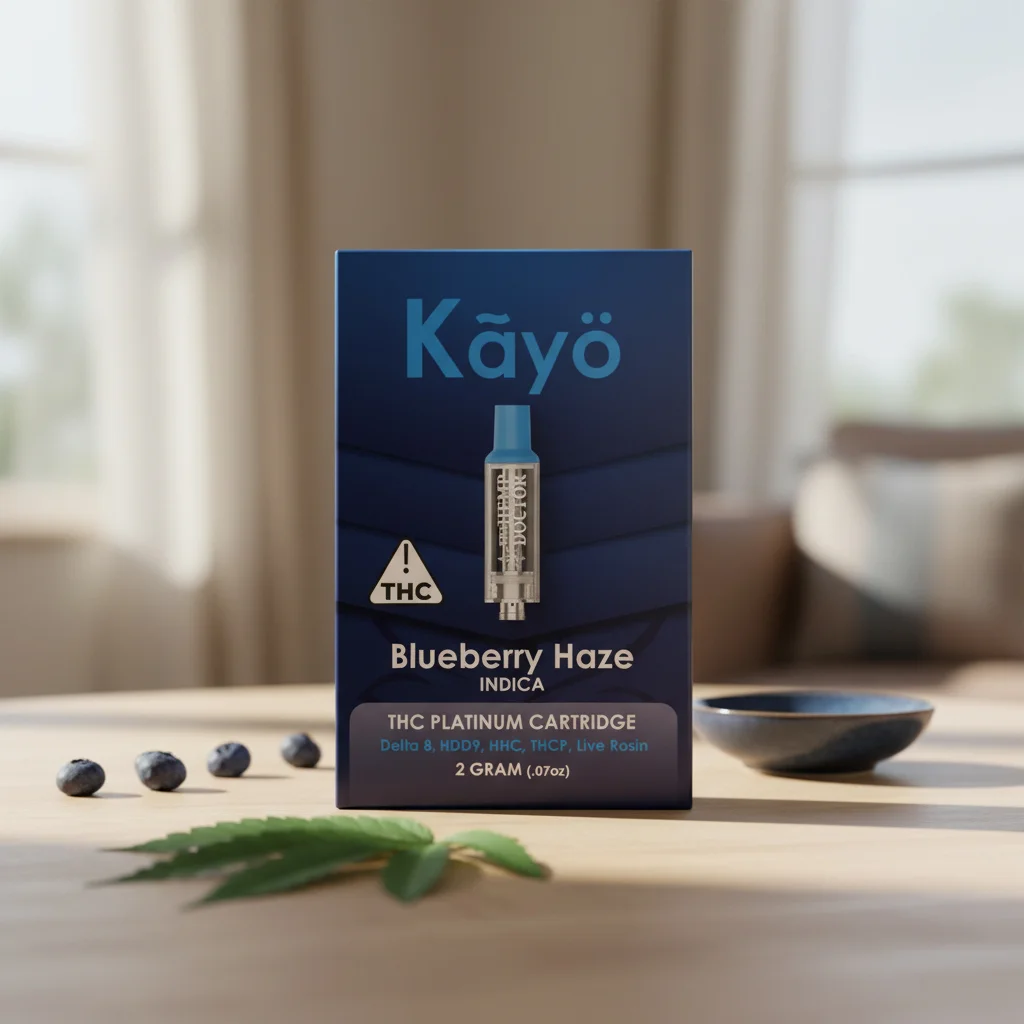
If your current cart is fading, the KAYO 2G THC Blend Vape Cartridge is a popular, lab-tested refresh starting around $24.47. It runs on a standard 510-thread battery and comes in multiple strains.
Why Do THC Carts Expire? What’s Going On Inside
THC carts expire because cannabis oil changes over time. The cannabinoids and aromatic compounds inside react with their environment, and four culprits drive the breakdown: heat, light, air, and humidity.
Heat speeds up those changes, which is why a cart left in a hot car can age quickly compared to one stored in a cabinet. Light, especially UV, can break down THC molecules. Air exposure changes the oil every time the mouthpiece is open or the seal is loose. Humidity can introduce moisture, which may dull flavor and, in rare cases, create visible quality issues around the wick.
One common change is the slow shift of THC into CBN, a naturally occurring cannabinoid that forms as THC ages. That shift is one reason some adult consumers report that older carts feel different than fresh ones.
So when do carts expire in real life? They don’t snap from “fine” to “ruined” overnight. They quietly lose potency and flavor over months, and the more you can shield the oil from heat, light, and air, the longer it stays close to fresh.
How To Tell If A Cart Is Expired?
The fastest way to check is to look at the oil. A fresh, high-quality cart usually shows clear, light gold to amber oil with a smooth, slow-moving consistency. An aged cart often shifts toward dark brown, the consistency thickens or separates, and you may see crystallization, bubbles that won’t move, or sludgy buildup near the wick.
The hit tells you the rest. An expired cart often tastes harsher than it used to, with a burnt or chemical edge even at a low voltage. The overall experience may feel flatter than the cart did when it was fresh, and the cart may clog or refuse to draw at normal puff strength. Constant clogging on a cart that used to flow fine is a classic late-stage sign, and our guide on disposable vapes that feel clogged can help you tell the difference between an aging cart and a fixable one.
A burnt taste alone doesn’t always mean expired, by the way. Sometimes it’s the voltage setting or a dry wick. If you want to rule that out first, our post on why your vape tastes burnt walks through the quick fixes.
The one red flag you should never ignore is mold. Fuzzy spots, cloudy haze, or a sour, musty smell mean the cart is done. Don’t try to save it.
How To Find The Date Or COA On Your Cart
Most reputable carts print a batch number, manufacture date, or “best by” date somewhere on the box or the cart sleeve. It’s usually on the bottom flap, the back of the box, or stamped on the cart itself. If you only see a batch number, that number is the key to pulling up the cart’s Certificate of Analysis, or COA.
A COA is the third-party lab report that confirms what’s in the oil, including cannabinoid percentages, terpene profile, and screening results for unwanted substances. It also shows the test date, which gives you a rough anchor for how old the batch is. Most brands link to COAs via a QR code on the package or a lookup page on their website.
If you’re buying from The Hemp Doctor, you can match the batch number on your cart to the report on our public lab results page. If a brand can’t show you a COA for the exact batch you’re holding, that’s reason enough to be cautious, regardless of the date.
Should You Use An Expired THC Cart?
For the most part, an expired cart is more of a flavor and potency issue than anything else. Aged cannabis oil tastes worse, feels weaker, and may deliver a different overall experience than a fresh cart.
The bigger concerns are different. Mold growth is the big one, and it shows up as cloudiness, fuzz, or a sour smell. Leaky carts are another flag, since oil that has migrated into the airpath can create a harsh, unpleasant hit. And counterfeit carts, especially ones that contain unknown cutting agents, are a category to avoid entirely, regardless of whether they’re “expired” or not. Stick to lab-tested products from sources you trust.
Do expired carts still work? Usually yes, just not as strongly or cleanly as they once did. Is it a good idea to use expired carts? Not if they taste harsh, look off, leak, come from an unknown source, or show any sign of mold. In those cases, toss it. As always, keep carts away from minors and pets, never vape and drive, and check that your state allows the product before you buy.
For more on how hemp-derived cannabinoids age across product types, see our guide on whether your CBD and THC products go bad.
How To Store THC Carts So They Last
Storage is where you actually control vape cartridge shelf life. The goal is simple: protect the oil from heat, light, and air. Keep your cart at room temperature, roughly 60 to 70°F, tucked into a cool, dark place like a drawer or an opaque case, and stored upright so the oil stays seated against the wick instead of pooling near the mouthpiece.
Skip the fridge and skip the freezer. Cold temperatures thicken the oil, which leads to clogs, and the condensation that forms when you take the cart back out can introduce moisture you don’t want. The original packaging is usually fine on its own. If you’ve thrown the box away, a small opaque container or even a sock drawer beats a sunny shelf.
One more habit that helps: cap the mouthpiece between sessions if your cart came with a cover, and don’t leave loose carts rattling around a hot bag or glovebox. A few seconds of care here can help preserve the oil longer.
Don’t Forget The Battery: Disposables Vs. Refillable
When people ask about cart expiration, they usually mean the oil. But on a disposable, the battery has its own clock. Lithium-ion cells slowly lose capacity over time, especially in heat, and a disposable that’s been sitting for a year may run out of juice well before the oil runs out.
If you’re a refillable weed pen user with screw-on 510-thread cartridges, this matters less. You can keep cycling fresh carts onto the same battery. But for disposable vape owners, plan for both failure modes. A weak draw on a disposable doesn’t always mean the oil is bad. Sometimes the battery just can’t push enough power anymore, and a USB-C rechargeable disposable will only buy you so much time if the cell itself is degraded.
Quick check: if the indicator light is dim, the draw is weak, and the cart feels cold even after a long pull, the battery is likely the issue. Knowing the difference saves you from tossing a half-full cart that was actually still good. If you’re not sure whether you’re empty or just out of power, our guide on how to tell when a disposable vape is almost empty lays it out.
What To Do With A Dead Or Expired Cart
A spent or expired cart isn’t ideal for regular trash. It’s a small lithium battery attached to a tank that may still contain oil residue, and that combo doesn’t belong in a curbside bin. Lithium cells can spark fires in trash trucks and landfills, and local rules for vape disposal vary.
The cleanest move is to drop the cart at a battery recycling collection point. Many hardware and big-box stores accept loose lithium-ion batteries, and some larger retailers have take-back programs. If you can separate the battery from the cartridge, that helps, though many are not designed to pull apart. If not, drop the whole unit at an e-waste site rather than tossing it.
Once it’s gone, you’ve got an easy excuse to refresh your rotation.
Final Puff
Finding an old cart and wondering if it’s still good is one of the most common moments in vaping. The concern is reasonable, the fix is simple, and the path forward is clear: check the oil, check the date, check the COA, and trust your senses. Old carts almost always deliver a worse vaping experience than a fresh one.
Storage is the lever you actually control. Cool, dark, upright. That’s the whole game. Do that, and a quality cart can taste clean from the first pull to the last.
If your old cart looks past its prime, start fresh with The Hemp Doctor’s THC vape cartridges for smoother flavor, better potency, and fewer “is this still good?” moments.