
Hash Pipe 101: What It Is, and How It Works

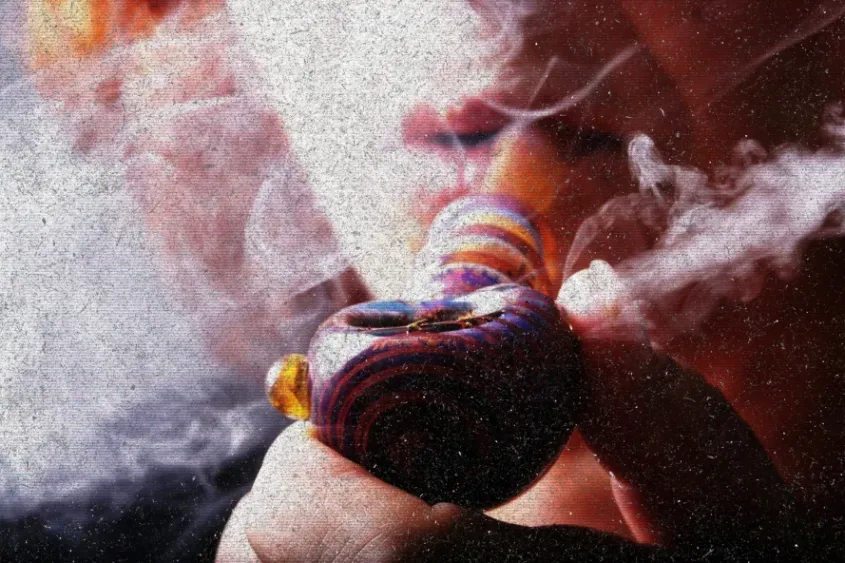
If you have an interest in smoking hash, you’ll need the right tool—and that tool is, as you might have guessed, the hash pipe.
As for the material concentrate, hash is surprisingly simple: it’s compressed trichomes. These are the glossy, hair-like outgrowths peppered across the surface of cannabis buds, structures in charge of the production and storage of compounds like THC (Delta-9-tetrahydrocannabinol).
Given its source, hash is exceptionally rich in THC with traces of other cannabinoids. It’s also loaded with terpenes, the compounds behind the hallmark flavor and aroma of cannabis.
While the “hash pipe” meaning is straightforward (it’s a pipe explicitly designed for smoking hash), these tools have evolved across centuries and cultures, with specialized features setting them apart from flower pipes.
Here’s our complete guide to hash pipe smoking, including maintenance, types of hash pipes, and more.
🔑 Key Takeaways
- The hash pipe is a smoking device engineered for hash. It features a deep, narrow bowl with side air holes.
- Hash, the material used in a hash pipe, is made from compressed trichomes.
- There are several kinds of hash pipes: traditional, glass, metal, one-hitters, and bubblers.
- Pro tips for making the most out of smoking through hash pipes are by starting small, using gentle heat, etc.
- Clean your hash pipes, makes a world of difference in terms of smoothness and effects.
What Is a Hash Pipe?
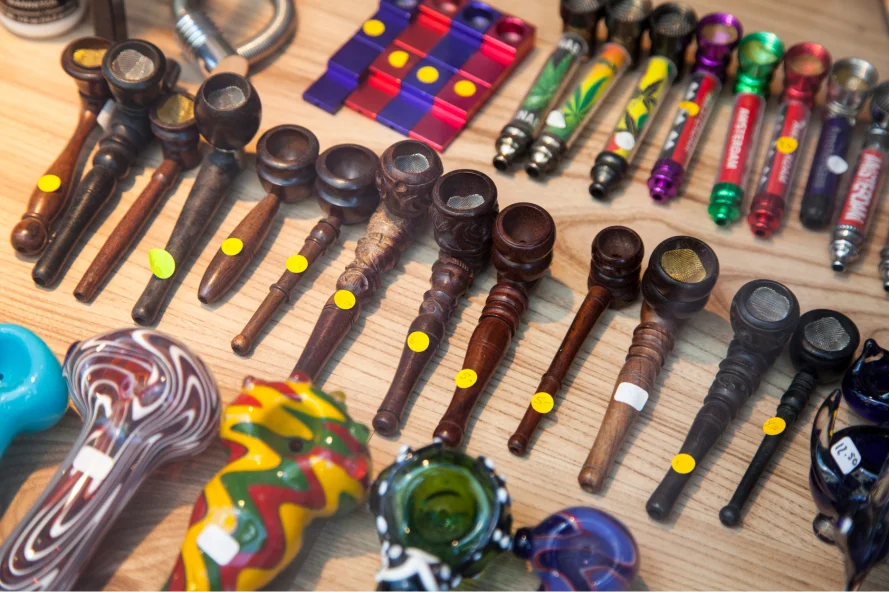
From bite-sized chillums to full-sized artistic pieces, pipes are a staple for smoking bud. Hash pipes, in particular, occupy a related yet distinct category. While hash pipes come in a wide range of shapes and sizes, like flower pipes, their design is unique—most notably, hash pipes have a smaller, deeper bowl specifically crafted for controlled heating. Hash requires steady, focused heat to combust effectively.
Hash pipes can be used to smoke both soft and hard hash preparations, including sticky, pliable resin and denser brick-style hash. More specifically, they can handle:
Bubble hash: Made using ice water extraction. This process agitates cannabis in cold water before filtering the mixture through increasingly fine mesh bags, separating the trichome heads from plant material along the way.
The final product is a granular or resinous hash testing around 40-60% THC. On the hemp market, THCA bubble hash is a great (and very powerful) option.
Dry sift: Produced by gently rubbing or sifting dried cannabis over fine screens so that trichome glands fall through, leaving behind most plant matter. The sifted trichomes, or kief, are then pressed into blocks or pucks to create hash.
Hash rosin: A solventless concentrate made by applying heat and pressure to cannabis flower or hash that’s already been produced. The blend of heat and pressure squeezes out resinous oils, allowing hash rosin to retain its natural terpene profile. Some hash rosins contain as much as 80% (or more) THC.
The History of Hash Pipes
Although there’s no universal consensus on when or by which culture hash was invented, it was first used in regions of the Middle East, North Africa, and Central Asia.
The term “hashish” was initially recorded in 1123 CE in an Egyptian pamphlet, during a period when eating hash was far more normal than smoking it. Smoking hash wasn’t a thing until the sixteenth century, when tobacco reached the aforementioned regions and began influencing local culture. Once smoking became common, traditional hash pipes arose, as well.
Hash arrived in Europe in the eighteenth century and gained prominence among certain literary groups of the 1800s. It wasn’t all recreation: in the late nineteenth century, hashish saw some medical use in Europe and the United States before being restricted by the United Nations in 1961. While hash could no longer be used in medicine, its recreational popularity kept growing.
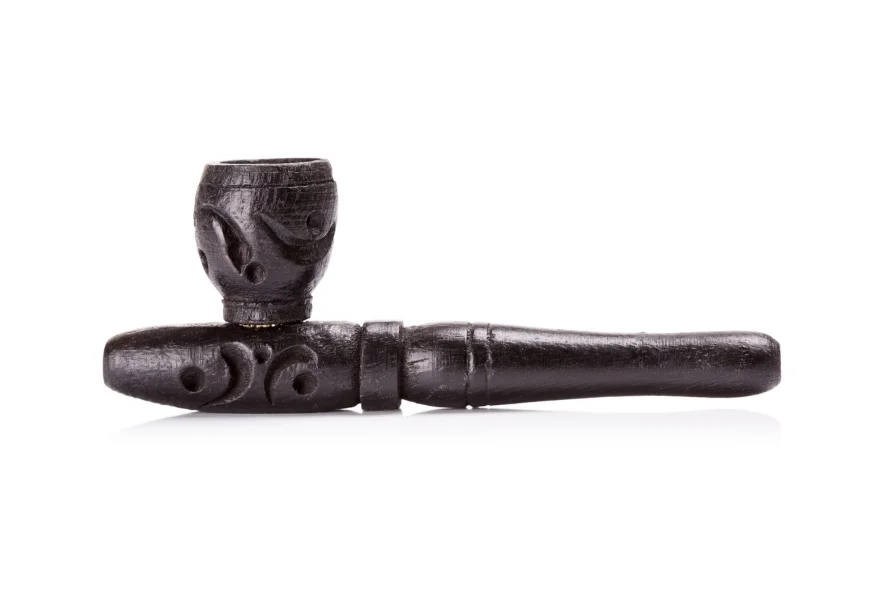
Traditional types of hash pipes include chillums, sebsi, and midwakh, with modern glass renditions emerging alongside the spread of Western cannabis culture. Clay and wood pipes were historically the norm, while glass, silicone, and metal are more standard in contemporary circles.
What Does a Hash Pipe Look Like?
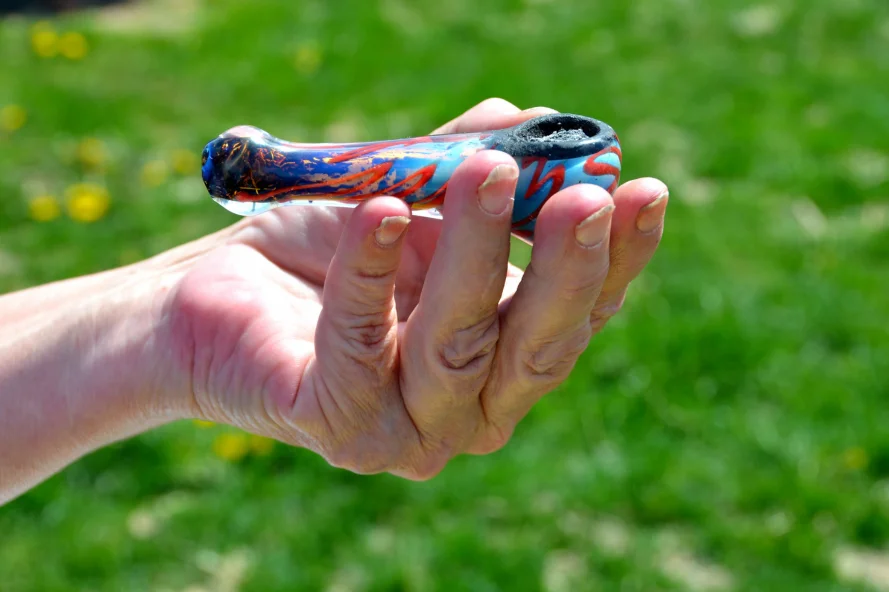
Hash pipes typically have a smaller, deeper bowl than those built for bud, and are often made from materials like borosilicate glass, metal, or ceramic. You’ll find one to three air intake holes on the sides of the bowl rather than the bottom.
Beyond the bowl itself, hash pipes look like standard cannabis pipes in structure, including a stem that connects to the mouthpiece. Glass designs tend to be compact and ergonomic, but can take the shape of anything from simple spoon pipes to hammer styles with thick-walled barrels. Traditional pipes like the Moroccan sebsi have elongated stems, while modern Western versions tend to be shorter and more portable, usually just three to six inches long.
Hash has a distinct look, texture, and strength compared to cannabis flower—and that’s exactly why it’s smoked with specialized tools. Depending on how it’s made, hash can appear as a firm brick, a soft ball of resin, or a fine powder-like kief. Its color varies from golden yellow to light brown, deep green, dark brown, or even nearly black.
What Are the Parts of a Hash Pipe?
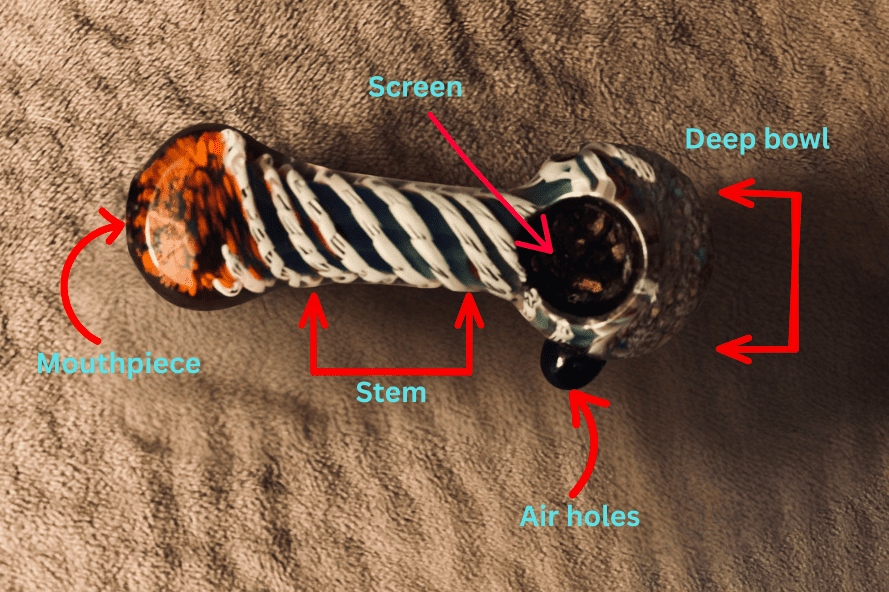
To appreciate just how effective hash pipes are, it’s worth understanding their design. Each component serves a specific purpose:
- Bowl: The pipe’s narrow, deep bowl keeps material close to the flame for even burning without overheating. That depth is what allows for proper heat distribution.
- Screen: Prevents melting hash from falling through the pipe. Some traditional pipes use a chillum stone instead, which does the same job while being easier to clean.
- Stem: Smoke passes through here on its way to your mouth. Length varies, with traditional styles like the Moroccan sebsi reaching up to 18 inches. Most modern pipes keep it shorter.
- Mouthpiece: Where you inhale from. The distance between the bowl and the mouthpiece helps cool the smoke naturally as it travels.
You might also find optional features such as heat-resistant inserts made from quartz or ceramic, all designed to support functionality and flavor.
How Does a Hash Pipe Work?
At their core, hash pipes work like those designed for flower: you pack the bowl, apply heat, and inhale through the mouthpiece.
That said, a hash pipe’s smaller bowl keeps material closer to the flame for precise combustion. You can apply heat and watch the hash melt and bubble before it ignites—this is where those side-positioned air holes earn their keep, catching the liquified material before it can escape. The screen (or chillum stone) plays an equally important role here, forming a barrier that prevents melted hash from flowing down the stem while still allowing smoke to pass through.
Remember, hash is a direct byproduct of trichomes rich in cannabinoids and terpenes, and those compounds tend to be heat-sensitive. You’re walking a fine line between effective combustion and harsh-tasting, scorched material, but fortunately, the specialized design of a hash pipe accounts for this.
Types of Hash Pipes
Hash pipes come in various styles, each with its own strengths:
Traditional Hash Pipes
Chillums, sebsi, and midwakh have been around for centuries and remain viable options today. Chillums (conical clay pipes from India) were used by Hindu monks as early as the 18th century.
The sebsi, with its long wooden stem and clay bowl, was traditionally used for smoking kief in Morocco. The midwakh represents yet another regional variation from the Middle East.
Basic Hash Pipes
Simple, Western-style glass pipes with screens. These are what you’ll find in most head shops, and it’s no surprise they’re so popular. Functionality, affordability, and reliability are all accounted for.
Metal Hash Pipes
Built for durability. These can handle brick hash and high heat without issue, making them ideal for travel or anyone averse to more breakable materials.
One-Hitters
Compact and discreet, perfect for smaller amounts of soft hash.
Mini Bubblers
Water filtration gives smoother hits because of the cooling of the smoke and filtering out harshness. The trade-off is that some terpenes may condense out as smoke cools, though the loss is minimal.
Multi-Purpose Concentrate Pipes
Modern designs that work with hash, wax, shatter, and other concentrates.
How to Use a Hash Pipe (Step-by-Step Guide)
Getting started with a hash pipe is simple enough, especially if you already know your way around flower pipes:
Step 1: Prepare your material
Materials you need:
- Hash
- Hash pipe
- Bowl screen
- Lighter or hemp wick
- Packing tool (optional — a dab tool, poker, or even a paperclip works)
Break your hash into smaller, manageable pieces. You’ll want to avoid overloading your bowl later on, so be careful not to overdo it.
Step 2: Add the screen
If your pipe uses one, place it now. Make sure the screen sits securely in the bowl so nothing falls through mid-session.
Step 3: Pack the bowl
Hash is potent, so a modest amount usually does the job (though tolerance varies). Pack loosely enough for airflow, firmly enough to stay put.
Step 4: Apply the flame
Keep it gentle. You want the hash to melt and begin smoking, not burn immediately. Hold a lighter or hemp wick just above the material, avoiding prolonged direct contact.
Step 5: Inhale through the mouthpiece
Once the hash starts burning and melting, pull the flame back and take a slow inhale. Hash produces dense smoke, so ease your way into it. If your pipe has a carb hole, release it near the end of your draw to clear the chamber. Stop heating once the hash glows and let it smolder as you inhale.
Pro Tips for Smoking Hash from a Hash Pipe
- Small amount in the beginning.
Start with less material than you think you need. Hash is considerably more potent than flower, and it’s easy to overdo it.
- Mix the hash with cannabis flower if it’s too harsh.
If the smoke feels too harsh, try mixing your hash with a small amount of flower or herbal tobacco—though some might argue against diluting the experience. Personal preference rules here.
- Temperature matters, as well.
Too hot, and you’ll get a burnt taste with degraded cannabinoids. Too cool, and the hash won’t fully combust, resulting in sparse smoke and dampened effects. Finding that sweet spot takes practice.
- Consider upgrading your heat source, too.
Butane lighters work in a pinch but can introduce unwanted flavors, while hemp wick provides a cleaner, more controlled flame. Some people prefer to use glass wands heated with a torch. Simply touch your wand to the hash for precise, flameless heat that preserves even the most subtle nuances of flavor.
How to Clean a Hash Pipe (Tips for Maintenance)
Sadly, dirty hash pipes deliver subpar experiences. The same can be said about all smoking and vaping devices. Melted hash leaves sticky residue that builds up quickly, however, so you’ll want to clean your hash pipe more often than a flower pipe.
Basic and Routine Hash Pipe Clean-Up
For routine cleaning, grab isopropyl alcohol (91% or higher) and coarse salt. Drop your pipe in a sealable bag, add both, shake vigorously, and let it soak for 15 to 30 minutes. Rinse thoroughly with hot water and air dry completely before your next session.
For Semi & Extremely Stubborn Hash Pipe BuildUp
Stubborn buildup calls for stronger measures. Let your pipe soak overnight in alcohol—that extended contact can work wonders on hardened resin.
For extremely stubborn buildup, you can try the boiling water method:
Step 1: Place your pipe in a pot of room temperature water, then gradually bring it to a boil.
Step 2: Let it simmer for 15 to 20 minutes before removing and cleaning with alcohol. “Gradually” is, of course, the keyword here.
Step 3: Never expose cold hash pipe glass to sudden heat or hot glass to cold water, as thermal shock will crack it.
Step 4: Clean screens and chillum stones separately. You’ll also want to replace screens when they’re too clogged to salvage, and keep spares on hand for quick swaps between sessions.
What to Look for Before Buying a Hash Pipe
With centuries of innovation and a huge range of styles to choose from, finding the right hash pipe boils down to your needs and preferences. You’ll want to consider:
- Material: Glass delivers the cleanest, purest flavor but demands careful handling. Some metal pipes trade flavor purity for near-indestructibility. Clay and ceramic bring traditional aesthetics and impeccable heat properties, though they’re fragile.
- Bowl size and design: Seek out deep, narrow bowls with side air holes that prevent melted hash from breaking free. Size depends on your typical consumption—that part’s personal.
- Cleaning difficulty: Simpler designs mean easier maintenance. Think about whether you can reach all the nooks and crannies (and consider how much effort you’re willing to put in to do so).
- Portability: If you travel, skip the delicate glass or large traditional pipes. One-hitters and metal options travel better.
- Cost: Quality hash pipes run from $15 to $30 for basic, functional designs to well over $100 for artisan glass. If you’re starting out, prioritize functionality over aesthetics until you know what you like.
- 60% Off

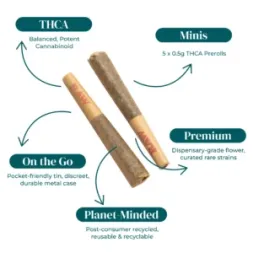
THCA SUGAR DIAMOND INFUSED PRE-ROLLS | 5-PACK TINS
$29.95Shop Now This product has multiple variants. The options may be chosen on the product page - Hot Seller


1376MG THCA SUGAR DIAMOND SAUCE | 2G
$49.95Shop Now This product has multiple variants. The options may be chosen on the product page
Final Puff
As cannabis culture has flourished over the past several centuries, so has the hash pipe in its many forms. These specialized tools have endured for a good reason: they’re designed to handle hash’s unique properties, from its melting point to its concentrated potency.
You’ll find everything from traditional chillums to sleek, modern glass designs, each offering distinct advantages. Take care of your pipe, learn the technique, and it’ll serve you well for years to come.
Ready to elevate your hash pipe setup? Check out The Hemp Doctor’s potent THCA concentrates collection, designed for clean, flavorful hits.
Get 4/20-Ready: Save Up to 80% on 4/20 Deals!
Wondering how people walk away with up to 80% off on their vape purchase during 4/20? Here’s how to get in on the action.
- Join the Lucky Joint Club – earn points, unlock exclusive discounts, and get early access to deals.
- Bookmark the Deals Page – where limited-time steals and huge discounts live.
- Shop at the Canteen – a Lucky Joint Club members-only store of secret deals and bundles you won’t find sitewide.
- Subscribe & Save – 25% off plus free shipping on recurring orders, or add a subscription item to unlock free shipping on your bulk order.
Setting this up before 4/20 arrives means more options, better product deals, and less scrambling when things sell out.