


What Are Liquid Diamonds? Potency, Experience, and How to Shop

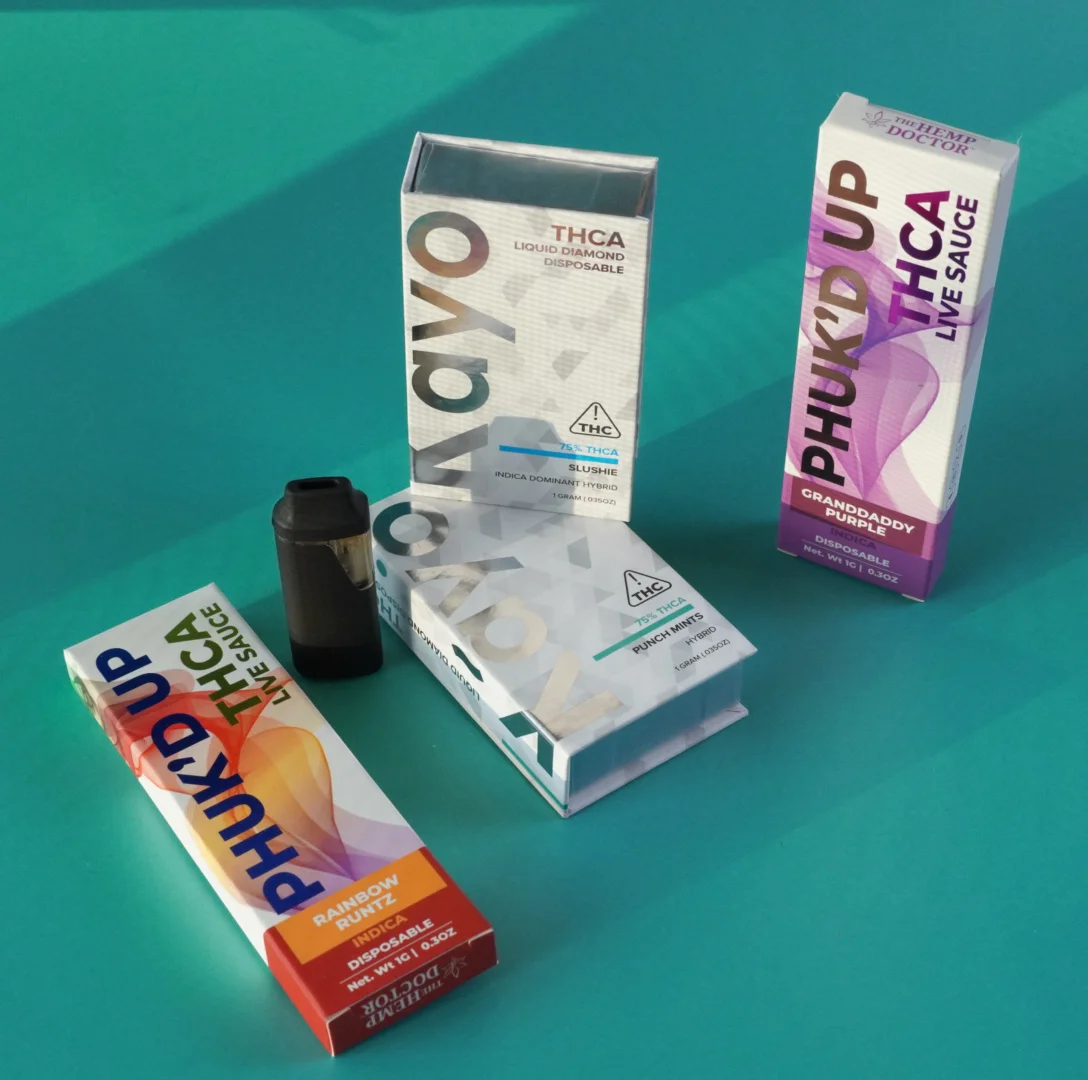
Quick Answer: Liquid diamonds are a vape-ready cannabis concentrate made by gently melting THCA diamonds and blending them back with the terpene-rich sauce they were originally mined from. The result is a thick, high-potency oil built for carts, disposables, and dab tools.
Here’s the catch. The name sounds precise, and it isn’t. Walk into three shops, and you may find three different products wearing the same label. Some hold real diamonds and their native sauce. Others are distillate with a splash of terpenes and a fancier name. The good news is you don’t need a chemistry degree to tell them apart.
This guide breaks down what liquid diamonds really are, how they’re made, how strong they get, and how to tell a real one from a marketing label. We’ll also cover the big federal hemp rule changes landing in late 2026 and what they mean for THCA-based products with liquid diamonds.
🔑 Key Takeaways:
- Liquid diamonds are THCA diamonds melted and blended back into the terpene-rich sauce they came from, which gives you a thick, flavorful oil that loads easily into carts and disposables.
- The name isn’t standardized. One cart may hold real diamonds and native sauce, while another is distillate with terpenes added, so the COA is the only reliable way to know what’s inside.
- Calculate potency from the lab report: total THC = delta-9 + (THCA × 0.877). Check the THCA and delta-9 lines separately.
- Hemp-market liquid diamonds often test lower than marijuana-market versions, around 70–80% vs. 90%+, which is a formulation and compliance choice, not a quality flaw.
What Are Liquid Diamonds?
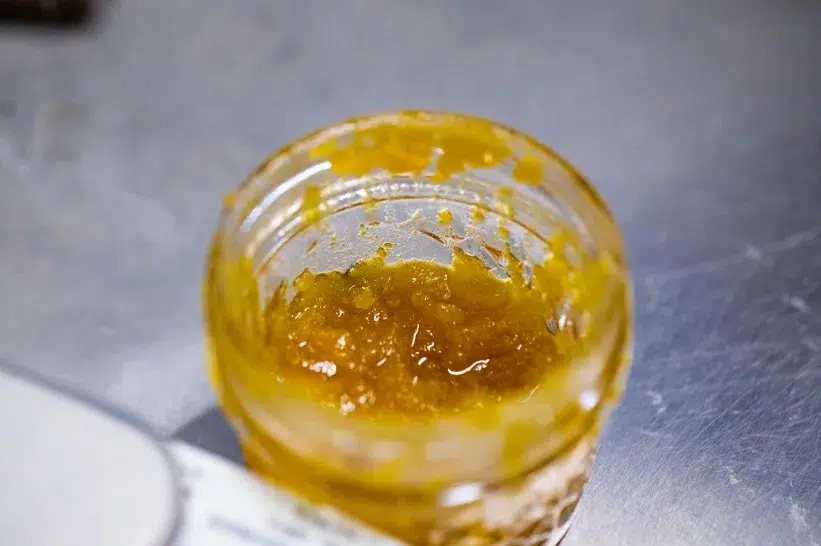
Liquid diamonds are a cannabis concentrate made by recombining refined THCA diamonds with terpene-rich sauce into one pourable oil. Thicker than distillate, far easier to load than loose crystals.
Here is where they sit in the concentrate family:
| Concentrate | What it is |
| Distillate | Refined cannabinoid oil with most natural terpenes stripped out |
| Live resin | Full-spectrum extract made from fresh-frozen plants |
| THCA diamonds | Pure crystalline THCA |
| Liquid diamonds | Crystals and sauce combined into one oil |
GoldDrop, a California brand, is credited with the first Liquid Diamonds. According to GreenState, the company introduced the product in 2020 as a wholesale item sold mostly to the California brand Jeeter, then launched it under its own name in 2021. GoldDrop’s own press materials name founder and CEO Joseph Encinosa as the inventor. GreenState reports the product went on to overtake distillate carts in popularity.
The label is where it gets slippery. Brands make this product differently, so what’s in the cart depends on who filled it. That’s why the composition section below matters more than the marketing.
-
THCA SUGAR DIAMOND INFUSED PRE-ROLLS | 5-PACK TINS
$29.95Shop Now This product has multiple variants. The options may be chosen on the product page -


ZOOTED | THCA LIVE RESIN DISPOSABLE VAPE | 1G
$34.95Shop Now This product has multiple variants. The options may be chosen on the product page -
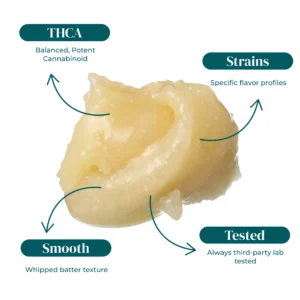
THCA BATTER | 2G
$49.95Shop Now This product has multiple variants. The options may be chosen on the product page
Composition: What’s Actually in a Liquid Diamonds Cart
Liquid diamonds have two ingredients:
- THCA diamonds. Solid crystals of tetrahydrocannabinolic acid (THCA), the raw form of THC.
- High-terpene extract (HTE). The thick, fragrant sauce left over when the diamonds crystallize out of a hydrocarbon extraction. It’s packed with terpenes, the aromatic compounds behind cannabis smell and taste.
The crystals bring the punch. The sauce brings the flavor.
Lauren Shade, Customer Service & Retail Warehouse Manager at The Hemp Doctor, explains the balance this way:
“The ratio we aim for keeps the sauce carrying the flavor and the diamonds carrying the punch. If you push too much crystal in without enough HTE, the cart gets harsh, and the strain character disappears.”
You may also see “liquid live diamonds” on a label. That means the extract started from fresh-frozen plant material instead of dried flower, which helps keep more of the plant’s original aroma.
Here’s the catch. No standard definition exists, so two carts with the same name can hold very different things. These are the three you’re most likely to find:
| On the box | What’s inside | On the COA | What to expect |
| THCA diamonds + HTE sauce | Diamonds blended back into their own sauce | High THCA, low delta-9, full terpene panel | Thick, slow-moving oil. Full, strain-specific flavor. |
| Converted diamond oil + terpenes | Diamonds heated into THC, terpenes added back | High delta-9, low THCA | Thinner, often very clear. Strong, with flavor depending on the terpenes added. |
| Distillate sold as “liquid diamonds” | Distillate with terpenes added, no diamonds | High delta-9, thin or missing terpene panel | Thin and very clear. Potent, with a generic taste. |
How Are Liquid Diamonds Made?
Making liquid diamonds is closer to a cooking process than a single extraction. Each stage changes the oil’s final character, and small differences in temperature or time show up later in the cart.
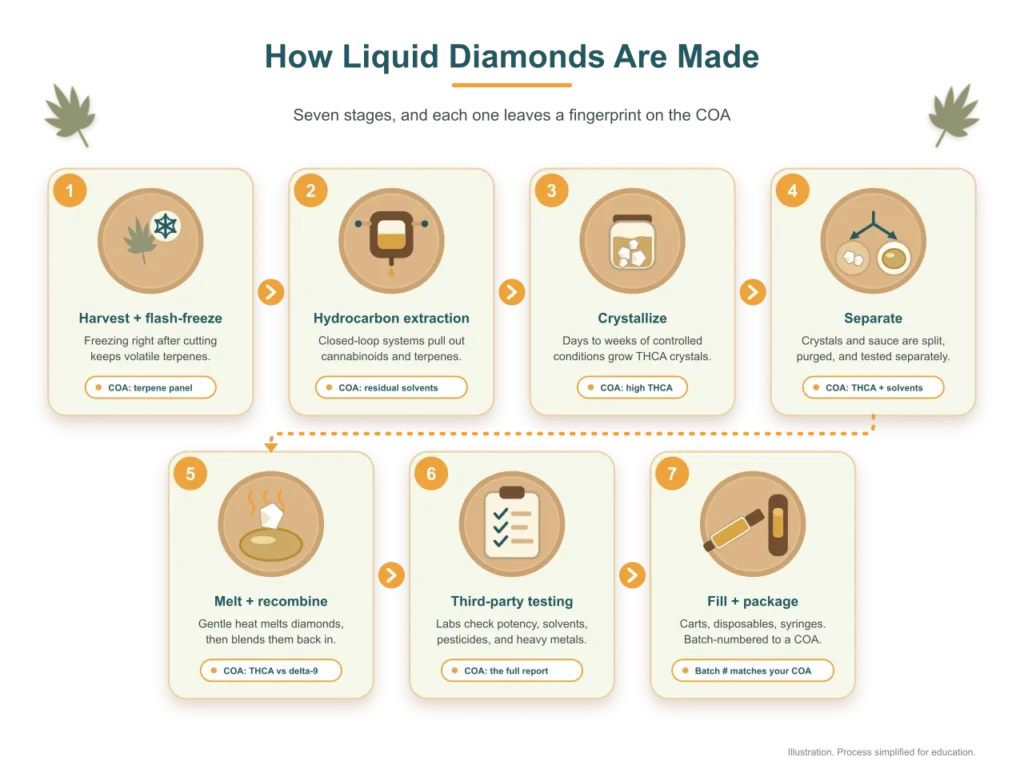
Step 1. Harvest and flash-freeze the plant material. Freezing right after cutting helps retain volatile terpenes that would otherwise evaporate during drying.
Step 2. Run a hydrocarbon extraction. Solvents pull cannabinoids and terpenes out of the frozen plant and leave behind a crude oil.
Step 3. Crystallize, or “diamond mine.” The oil sits under controlled pressure and temperature for days to weeks, and THCA crystals form inside the terpene sauce.
Step 4. Separate the crystals from the sauce. The two parts get pulled apart so each can be purged and tested on its own.
Step 5. Melt and recombine. The diamonds are gently heated until they liquefy, then blended back into the sauce at a target ratio.
Step 6. Third-party test the finished oil. Independent panels check potency, residual solvents, pesticides, and heavy metals before anything moves forward.
Step 7. Fill into carts, disposables, or syringes for packaging.
Can you make liquid diamonds at home?
We’d steer you away from it. Step 2 means working with flammable solvents like butane, which is why licensed producers use closed-loop equipment and why home attempts have caused explosions. A home setup also can’t offer the lab testing in Step 6, and unlicensed extraction is restricted or illegal in many states.
Liquid Diamonds Texture and Appearance
Real liquid diamonds pour like warm honey. The oil is golden to amber, thick enough that if you tip the cart on its side, the air bubble drifts slowly toward the top rather than racing. That slow bubble is the easiest at-home viscosity check.
You’ll sometimes see the search term “liquid diamond wax.” That’s a mix-up. Liquid diamonds are an oil, not a wax. The waxy or crystalline texture people are thinking of is the raw diamonds-in-sauce concentrate before it gets melted and blended for vapes.
Here’s how the main concentrates look side by side:
| Concentrate | What it looks like | How it moves |
| Liquid diamonds | Smooth, clear-to-golden oil, sometimes with tiny crystals | Thick and slow, like warm honey |
| Distillate | Clear, light golden oil | Thinner, flows faster |
| Live resin | Amber to golden, from viscous to granular or whipped | Ranges from sticky to crumbly |
| Diamonds in sauce | Crystals sitting in golden terpene liquid | Loaded with a dab tool, not poured |
Too thin and the oil may burn fast or leak. Too thick and it wicks poorly and clogs. Cold is the usual culprit when a cart that looked fine yesterday acts up today. It thickens the oil, and THCA is especially prone to crystallizing when concentrations run high. (Yes, that includes the cart that spent a night in your car.)
Quick Fix: warm the cart in your hand for a few minutes, give it a light roll, and look again.
Here’s how to read what you’re seeing:
| What you see | What it usually means | What to try |
| Clear to amber, moves slowly | Normal | Nothing. Enjoy it. |
| Cloudy or foggy after sitting somewhere cold | Cold exposure. Some compounds drop out of solution | Warm it in your hand, roll lightly, check again |
| Cloudy or murky at room temperature, straight from the box | A warning sign | Check the batch COA and ask the seller |
| Crystals or settling that mix back in once warmed | Normal separation of crystals and sauce | Warm gently and roll |
| Crystals that keep coming back or block airflow | The formula may not be stable | Contact the brand or retailer |
| Too thin, or too thick and chunky | Wrong viscosity for the hardware | Warm the mouthpiece with your hands and take shorter, gentler draws |
How Strong Are Liquid Diamonds?
Liquid diamonds typically test between about 60% and 96% total THC, depending on the market. Marijuana-market carts often reach 90% or more, and some brands push into the mid-90s.
Potency is where liquid diamonds get the most attention and the most confusion. Here’s the one formula worth remembering (don’t worry, it’s a single multiplication):
Total THC = Δ9-THC + (THCA × 0.877)
The 0.877 multiplier accounts for the mass lost when THCA converts into THC through heat.
Scenario: a COA lists 75% THCA and 1% delta-9. That’s 75 × 0.877 = 65.8, plus 1, for about 66.8% total THC.
Lauren Shade of The Hemp Doctor puts the COA tip this way:
“When you read a COA, look at the THCA line and the delta-9 line separately, then add them with the conversion factor. ‘ND’ next to pesticides, residual solvents, or heavy metals means non-detect, which is what you want.”
That math is also why hemp-market carts look lower on paper. They usually land in the 70s to low 80s on the THCA line, which works out to roughly 61 to 72% total THC. That isn’t a flaw. It reflects a different legal framework, different starting material, and often a higher terpene ratio, which naturally lowers the cannabinoid percentage.
Here’s how liquid diamonds stack up against other concentrates. Treat these as typical ranges, not promises. The COA for your batch is the final word.
| Concentrate | Typical range | Notes |
| Liquid diamonds, hemp market | 70 to 82% THCA (about 61 to 72% total THC) | High potency, compliant with hemp rules |
| Liquid diamonds, marijuana market | 90 to 96% total THC | Dispensary carts, out of state |
| Distillate | 85 to 95% THC | Refined, mostly terpene-stripped |
| Live resin | 65 to 85% total cannabinoids | Fresh-frozen, strain-true |
| Live rosin | 60 to 80% total cannabinoids | Solventless, premium tier |
Do Liquid Diamonds Get You High? Experience and Feel
Yes. When you heat liquid diamonds in a vape, the THCA converts into THC, and that’s what produces the high. The experience is usually noticeable within a minute or two of inhaling, and it is shaped as much by the strain’s terpenes as by the raw potency.
Adult consumers commonly describe liquid diamonds as euphoric, relaxing, giggly, flavor-forward, and appetite-friendly. At higher amounts, some people may feel uncomfortable, overstimulated, or more intensely affected than expected. Everyone responds to cannabinoids differently, so two people using the same cart can have very different experiences.
Because the effects arrive fast, pacing matters more than most people expect. Take one small pull, then wait a few minutes before deciding on another. (The cart that felt mild on the first puff has a way of catching up.) A concentrate this strong is not a beginner product, so if you’re new to THC or have a low tolerance, start with the smallest amount you can and keep it there.
Don’t drive or operate machinery afterward, keep your cart away from kids and pets, and keep in mind that THC can show up on a drug test. Individual experiences vary.
Liquid Diamonds Terpenes and Flavor
Liquid diamonds taste like the strain they came from because of the native sauce. HTE carries the same terpene profile the plant produced, so a Gelato-based cart smells like Gelato instead of a generic sweet vape.
That’s a meaningful distinction. Many carts on the shelf use botanical terpenes, which are terpenes extracted from non-cannabis plants like hops or citrus and then added back to distillate. Botanical terpenes can smell great, but they don’t match the cannabinoid profile of a specific strain. Liquid diamonds use cannabis-derived terpenes extracted from the same material as the cannabinoids, so the flavor profile and overall experience come from the same plant material.
| Strain | Dominant terpene(s) | Aroma / flavor | Commonly described as |
| Runtz | Caryophyllene, limonene | Sweet, candy, citrus | Balanced, social |
| Wedding Cake | Caryophyllene, myrcene | Vanilla, earthy, tangy | Relaxing, heavy |
| Sour Diesel | Caryophyllene, myrcene | Diesel, lemon, pungent | Uplifting, talkative |
Want more detail on a specific cultivar? Our strain guide breaks each one down.
Liquid Diamonds vs Live Resin, Distillate, and THCA Diamonds
Liquid diamonds share a shelf with three close relatives, and the labels don’t always make their differences obvious.
- Live resin starts from the same fresh-frozen plant material but keeps the whole extract together as a full-spectrum sauce or badder, instead of pulling the crystals out.
- Distillate is refined under vacuum into a clear, mostly terpene-free oil, with terpenes added back afterward rather than carried through from the plant.
- THCA diamonds are the nearly pure, low-flavor crystals that liquid diamonds are built from, before they’re blended back with sauce.
We’ll compare the two closest matches first, then put all four side by side.
Liquid Diamonds vs Live Resin
Both start the same way: fresh-frozen plant material, hydrocarbon extraction, terpene preservation. The split happens at crystallization. Live resin keeps everything together as a full-spectrum sauce or badder. Liquid diamonds pull the crystals out, then blend them back for a higher THC concentration while keeping the flavor.
That difference shows up in how you use them and how they feel. Live resin is a fit for dab rigs and concentrate vapes, and you’ll find it in carts and disposables too. Many people describe it as the more rounded, aroma-forward experience, while liquid diamonds tend to hit harder and faster. If live resin is your preferred style, our Kayo 1g Live Resin Disposable is a solid starting point.
Liquid Diamonds vs Distillate
Distillate is refined and clear. The process strips nearly everything but the target cannabinoid, which is why terpenes have to be added back afterward and often come from non-cannabis sources. Liquid diamonds keep the native terpenes that rode along with the crystals during extraction.
Distillate is also the most universal format. It fills standard 510 carts and disposables and works in nearly any vape battery, which is why it’s everywhere. Because it leans on the cannabinoid itself, its effects are often described as more straightforward, while liquid diamonds carry the strain’s own terpene character along with them.
For a deeper comparison of refined oils, see our breakdown of live resin vs distillate. If distillate fits your routine better, our Delta-9 vapes are worth a look.
Liquid Diamonds vs THCA Diamonds
They’re the same ingredient at different stages. THCA diamonds are the raw crystals: a solid, nearly pure THCA with very little flavor of its own. Liquid diamonds take those crystals, blend them back with terpene-rich sauce, and turn them into a pourable oil. That’s the whole trade.
Diamonds offer the highest purity, but they usually require a dab rig or a compatible loadable pen, and some people sprinkle them over flower. The effects are typically fast and intense, and since the crystals have almost no flavor, any aroma comes from the sauce. Liquid diamonds give up a little of that purity for flavor and a form that drops straight into a cart. If you want the easy, vape-ready version, start with liquid diamonds.
Here’s the full side-by-side.
| Liquid diamonds | THCA diamonds | Live resin | Distillate | |
| What it is | Melted diamonds + native sauce | Pure THCA crystals | Full-spectrum extract from fresh-frozen plants | Refined THC oil with terpenes added back |
| Form | Thick oil | Crystalline solid | Sauce, sugar, or badder | Thin, clear oil |
| Potency | High | Highest | Moderate to high | High |
| Flavor | Strain-true | Minimal on its own | Strain-true | Depends on added terpenes |
| Best for | Vapes with full flavor | Dabbing | Flavor-first users | Budget and consistency |
Are THCA Liquid Diamonds Legal? What Changed in 2026
Federal hemp law is actively shifting, so this section needs a careful read. Two laws matter here.
The first, signed November 12, 2025, redefined hemp by total THC, including THCA, with a 0.3% dry-weight cap and a 0.4 mg total-THC-per-container limit for finished products. The second, H.R. 6500, signed September 2, 2026, split the effective dates. The provision targeting cannabinoids the plant can’t naturally produce took effect November 12, 2026. The total-THC standard and the 0.4 mg per-container cap are scheduled to take effect December 11, 2026. Until that December date, the older delta-9-only definition still applies to THCA products.
What that means in plain terms: once the total-THC rule is live, THCA counts toward the federal hemp limit, which changes how hemp-derived THCA liquid diamonds can be made and sold. State laws vary and can be stricter than federal rules. Before you order, confirm the current rule on the date you’re shopping, check your state’s hemp statute, and look at the lab report for THCA, delta-9, and total THC separately. We don’t make absolute legal assurances, and we recommend treating any claim of “federally legal” as something that depends on both federal timing and your local law.
How Much Do Liquid Diamonds Cost?
Liquid diamonds cost more than distillate because the inputs are more expensive. Fresh-frozen flower yield less than dried material, the crystallization step takes days of controlled conditions, and the native-terpene approach costs more than buying botanical terpenes in bulk.
Expect hemp-market disposables to run roughly $35–$60 per gram, with 2g and 3g formats bringing the per-gram price down. Carts, with hardware sold separately, tend to land $25–$45 per gram. Loose concentrates in a syringe or jar vary widely based on strain, often $40–$80 per gram.
Ways to Use Liquid Diamonds
Liquid diamonds work in more than one format, and the right one depends on your gear and how much control you want.
- A disposable is the grab-and-go option.
- A cart pairs with a battery you can adjust.
- A dab rig is for people who like to fine-tune temperature.
Whichever you choose, the oil is potent, so start with a small amount. Here’s how each one works.
Liquid Diamond Disposable
A liquid diamond disposable is the simplest format. No separate battery, no voltage adjustment, no learning curve. Draw to activate, put it down, wait. It’s the easiest entry point for anyone new to cannabis concentrates.
Liquid Diamond Cart
A liquid diamond cart pairs with a 510-thread battery, which gives you control over voltage. Keep the setting low, around 2.5V to 3.3V, to protect the terpenes and get a smoother pull. If you want more cart options, our THC vape cartridges collection covers multiple cannabinoids and strain profiles.
Dabbing: Syringes and Jars
If you have a dab rig or e-rig, liquid diamonds work well at low temperatures, around 450°F to 550°F. Lower heat preserves flavor and can create a smoother pull. Browse our THCA concentrates for dab-friendly options, or see our liquid diamonds THC deep dive for more on this format.
How to Shop for Liquid Diamonds?
Shopping for liquid diamonds can feel like guesswork, because the name on the box doesn’t tell you what’s inside. The good news is you don’t need a chemistry degree. Most of the answers are on the lab report, and the checks below take only a few minutes. Work through them in order and you’ll know what you’re holding before you buy.
- Pull up the COA first. The label on the front of the box tells you less than you’d think, so shop the lab report instead. On our site, the lab results are linked from each product page. Elsewhere, look for a “Lab Results” or “COA” link on the product page, or scan the QR code on the packaging if there is one. Then check that the batch number on the report matches the one on your box. Once you have it open, check the THCA and delta-9 lines separately and use the formula above to work out total THC.
- Look for a full terpene panel. Confirm the COA lists the individual terpenes, not just a “terpene percentage.”
- Check the safety results. Residual solvents, pesticides, and heavy metals should all read “ND” or fall well within limits.
- Check the terpene source. You’ll find it in the product description. Cannabis-derived beats botanical if strain flavor matters to you.
- Look at the oil. Through the window of the cart, it should be amber and thick, not water-thin or murky.
- Check the hardware. Ceramic coils heat more evenly, which tends to be gentler on terpenes than older cotton wicks. And 510-thread compatibility means the cart works with most batteries.
How to Store Liquid Diamond Products?
Store liquid diamond products upright, somewhere cool and dark, away from heat, direct sun, and freezing temperatures. Keep disposables capped, take carts off the battery between sessions, and seal syringes and jars airtight.
Heat, light, and air are the three things that can change any cannabis oil over time, and liquid diamonds are no exception. Storage matters most for the terpenes, the part that gives the oil its flavor. They’re volatile, so they’re the first thing to fade when a product is mishandled. That’s worth protecting. As Clay Kramm of our wholesale team puts it, terpenes “have a lot more to do with the feel, the flavor, and the high you get than the actual THC percentage.”
| Product | How to store | Avoid |
| Disposable | Upright, room temperature, cap on when not in use | Hot cars, direct sun, freezing |
| Cartridge | Upright, cool and dark, remove from battery between sessions | Laying flat, prolonged heat |
| Syringe or jar | Airtight, cool and dark, fridge for long-term storage | Repeated warm-cold cycles, open air |
For anything you won’t finish in a month, a dark drawer at room temperature is fine. For longer storage, the fridge works, but let the product come back to room temperature before use so the oil flows properly.
Conclusion
Liquid diamonds is a name on a box, not a recipe. The real product is diamonds plus sauce, and the only reliable way to judge a cart is the COA sitting behind it. Check the THCA and delta-9 lines, confirm “ND” on the contaminants panel, look for cannabis-derived terpenes, and inspect the oil’s color and thickness.
If you’re ready to compare real options, explore our THCA vapes and use the published lab results to choose liquid diamonds with confidence.
FAQs
Do liquid diamonds get you high?
Yes. When heated in a vape or dab rig, the THCA in liquid diamonds converts into THC, which produces the familiar high within a minute or two of inhaling.
What’s stronger, liquid diamonds or live resin?
Liquid diamonds are usually stronger because they’re built around concentrated THCA crystals. Live resin keeps more of the original plant profile but typically tests at lower cannabinoid levels.
What does liquid diamond feel like?
Once heated, the THC in the oil is what creates the high. Some adult consumers describe the experience as euphoric, relaxing, giggly, appetite-friendly, or more immersive than a standard cart. Experiences vary, so start with a small amount and wait before using more.
Is “liquid diamond wax” the same as liquid diamonds?
Not exactly. Liquid diamonds are a pourable oil for vapes. The waxy or crystalline texture people search for is usually the pre-melted diamonds-in-sauce concentrate used for dabbing, not the vape-ready version.
How long does a liquid diamond disposable last?
A 1g disposable typically delivers around 200 to 300 draws, depending on puff length. Light consumers can stretch one to several weeks, while daily consumers may finish in under a week.