Is THCA Synthetic? How to Verify What You’re Actually Buying

Quick Answer: No, THCA is not synthetic. It is a naturally occurring cannabinoid produced inside live cannabis plants, and you can confirm whether a product is plant-derived by reading its third-party Certificate of Analysis (COA).
After the delta-8 wave brought lab-converted cannabinoids into everyday retail, it’s fair to side-eye anything with a chemistry-sounding name. THCA fits that pattern at first glance. The acronym looks technical, the percentages on the label look huge, and the product showed up on shelves seemingly overnight. So asking “Is THCA synthetic?” is a reasonable question.
Here’s the honest version. THCA, short for tetrahydrocannabinolic acid, is made by the cannabis plant itself, not in a beaker. The confusion is real, though, and it’s worth untangling. In this guide, you’ll see how the plant actually makes THCA, how it differs from lab-isomerized cannabinoids like some delta-8 and from non-plant synthetics like K2, and exactly which fields on a COA help show whether what you’re holding came from a real plant.
🔑 Key Takeaways
- THCA is a naturally occurring cannabinoid produced by cannabis plants through their own enzymes, not typically made in a lab for retail hemp products.
- It is not the same as semi-synthetic cannabinoids like converted delta-8, and it is not the same as non-plant synthetics like K2 or Spice.
- High-THCA hemp flower exists under the 2018 Farm Bill framework because federal hemp law measures delta-9 THC by dry weight, not total THC.
- A reputable third-party lab COA is one of the best tools for verifying whether your THCA product is plant-derived.
- State laws vary, and heated THCA may trigger a positive THC drug test, so buy carefully and consume accordingly.
What Is THCA?
THCA, or tetrahydrocannabinolic acid, is the raw, acidic form of THC that builds up inside living cannabis plants. If you picked a fresh bud off the plant and tested it, much of the “THC” content would usually appear as THCA. The plant does not make large amounts of delta-9 THC directly. It makes THCA, which sits in the trichomes until something converts it.
That “something” is heat. When you light a joint, hit a vape, or bake flower in the oven, the THCA loses a carboxyl group and becomes delta-9 THC, the psychoactive compound associated with the classic cannabis high. In its raw form, THCA is generally described as non-intoxicating. It is a plant compound in the truest sense, which already starts to answer the synthetic question before we even get to the chemistry.
Is THCA Synthetic or Natural? The Straight Answer
THCA is natural. It is produced by the cannabis plant through its own biosynthesis, the same way the plant makes many of its other cannabinoids. It is not considered a synthetic cannabinoid.
There is one nuance worth being upfront about. THCA can be produced in a lab setting for research or reference purposes, the same way scientists can synthesize plenty of natural compounds for study. That is not what is generally being sold as THCA flower, THCA vapes, or THCA concentrates in the United States retail hemp market. Commercial THCA products usually start as plant material. The catch is that you should not just take a brand’s word for it, which is why verification through lab testing matters so much, and why we’ll walk through reading a COA later in this article.
The Natural Process Behind THCA
To see why THCA is a naturally occurring cannabinoid, it helps to look at how the plant actually builds it. Many major cannabinoids in cannabis trace back to one molecule called CBGA, sometimes called “the mother cannabinoid.”
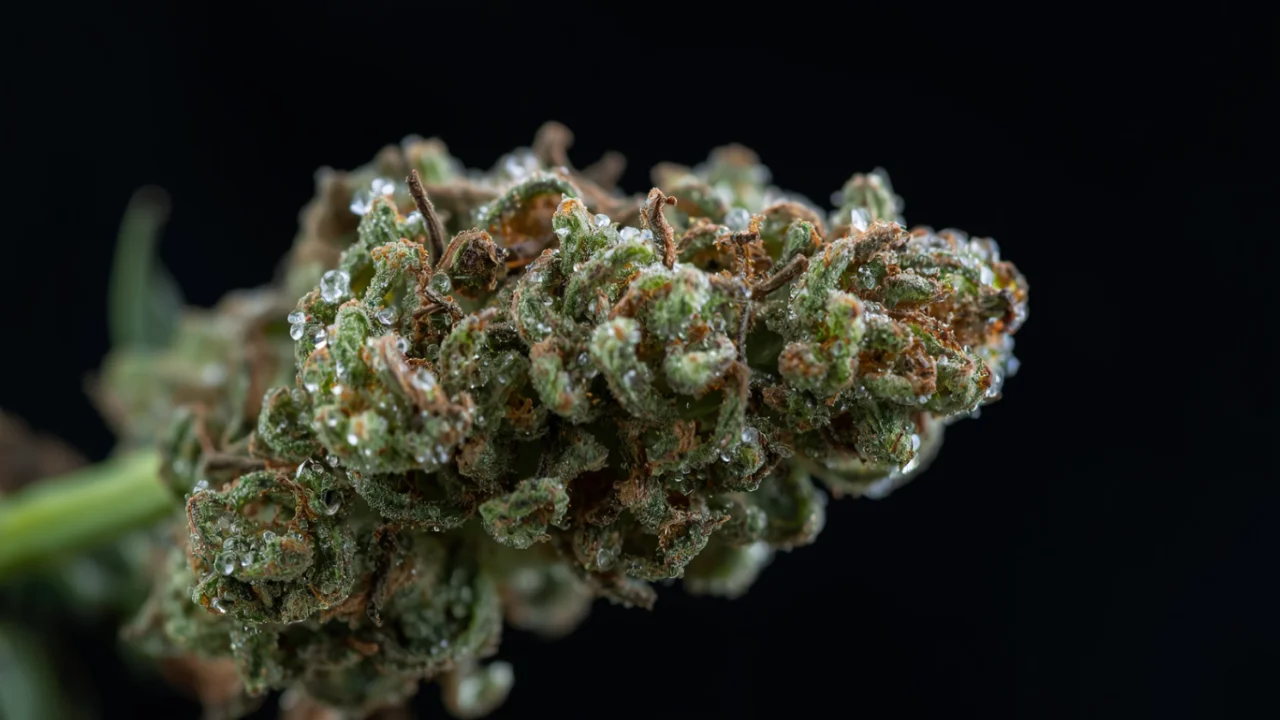
Inside the plant, specific enzymes act on CBGA and convert it into different acidic cannabinoids. THCA synthase produces THCA. CBDA synthase produces CBDA. CBCA synthase produces CBCA. Genetics influence which enzymes the plant expresses most strongly, which is why some cultivars naturally produce high levels of THCA, and others lean toward CBD. THCA then accumulates in the trichomes, the frosty resin glands on the flower. You can see more on those structures in our trichomes explainer.
From there, the main thing standing between THCA and THC is heat. That conversion, called decarboxylation, happens during smoking, vaping, or baking. No lab synthesis is involved in this natural plant-to-product chain. The plant grows, the trichomes load up with THCA, and a flame, oven, or coil completes the conversion at the moment of use.
Why Do People Think THCA Is Synthetic?
A few reasons, and they’re all understandable.
First, the name. “Tetrahydrocannabinolic acid” sounds like something you’d order from a chemical supplier, not something a plant grows. Second, guilt by association. Delta-8 is often produced by chemically converting CBD into delta-8, which is a semi-synthetic process, and a lot of buyers reasonably assume THCA works the same way. It doesn’t. Third, high-THCA hemp flower felt like it appeared overnight in 2022 and 2023, and the lack of regulation in the broader hemp market makes everything new feel a little suspicious.
The short answer to “Is THCA a synthetic cannabinoid?” is no. The longer answer, which actually clears up the conflation, is in the next section.
THCA vs. Non-Plant Synthetic Cannabinoids: Clearing Up the Confusion
When buyers worry about “synthetic” cannabinoids, they’re usually mixing three very different things into one bucket. Separating them out makes the whole picture click into place.
| Category | What It Actually Is | Example | Where THCA Fits |
| Plant-grown cannabinoid | Made by the cannabis plant through its own enzymes | THCA in hemp flower, CBD, CBGA | This is THCA |
| Semi-synthetic / lab-isomerized | Plant cannabinoid chemically converted into another cannabinoid in a lab | Most commercial delta-8 converted from CBD | Not THCA |
| Non-plant synthetic cannabinoid | Built from scratch in a lab with no plant involvement | K2, Spice, and similar products | Not THCA |
THCA flower is in the first row. It’s the raw bud, dried and cured, with the cannabinoids the plant grew on its own. So if you’ve seen the question “is THCA flower synthetic,” the answer is no. It is plant material.
What Are Examples of Prominent Non-Plant Synthetic Cannabinoids?
Non-plant synthetic cannabinoids include compounds sold under names like K2, Spice, and various “research chemicals.” These are engineered in labs, applied to inactive plant material, and sold as cannabis-like products. They are federally illegal in the United States and are categorically not the same as THCA, which is a molecule the cannabis plant naturally produces. If anyone tries to sell you “synthetic THCA” as a feature, that should be a red flag, not a selling point.
The Legal Backdrop: Why High-THCA Hemp Flower Even Exists
This is the piece most articles skip, and it’s the part that explains why the THCA category is on shelves at all.
The 2018 Farm Bill federally legalized hemp and defined it as any cannabis plant containing no more than 0.3% delta-9 THC by dry weight. Notice the specific wording. The threshold is delta-9 THC, not total THC. Because raw flower mostly contains THCA and only trace delta-9, a bud can test under 0.3% delta-9 by dry weight while still containing very high levels of THCA. Once you apply heat, the THCA converts into delta-9 and the user experiences an effect comparable to traditional cannabis.
That distinction between delta-9-only testing and total-THC testing is exactly why high-THCA hemp flower exists as a legal product category in the United States. Some states have changed their rules and require total-THC testing or have restricted THCA outright, so always check your state laws before buying. We never make absolute legal promises here. THCA may be federally compliant under current hemp law when it meets the applicable delta-9 THC threshold, but state rules vary and can change.
How Naturally-Derived THCA Becomes the Products You Buy
Once the plant has done its part, processing turns raw flower into the lineup of THCA products you see online. None of this is synthesis. It is extraction, refinement, and formulation, with quality control at every step.
The simplest path is the shortest. Flower is harvested, dried, cured, trimmed, tested, and packaged as smokable bud or pre-rolls. For THCA concentrates like bubble hash, sugar diamond sauce, or live resin, processors use solvent or solventless methods to separate the cannabinoid-rich trichomes from the rest of the plant. For THCA vapes, that concentrate is loaded into a cartridge or disposable device. For THCA gummies, the concentrate is infused into the gummy base, often after a controlled decarboxylation step, so the cannabinoid is converted before it is eaten.
What separates a quality product from a questionable one isn’t whether the cannabinoid is “natural.” It’s whether the source material was carefully grown, whether the extraction was done responsibly, whether residual solvents and unwanted contaminants were tested for, and whether all of that is documented. That documentation lives on the COA.
How to Verify Your THCA Is Plant-Derived: Reading a COA
A Certificate of Analysis is a lab report from a third-party lab that tests a specific batch of product. “Third-party” matters because the lab is independent from the brand, which makes the result much harder to manipulate. You can browse The Hemp Doctor’s lab results page and see real examples for the products on our store.
When you open a COA, here is what to look at, in order of importance.
The cannabinoid profile should show a full breakdown, not just one number. On plant-derived THCA flower, you’ll typically see a dominant THCA percentage, a small amount of delta-9 THC under 0.3% by dry weight for hemp compliance, and trace amounts of cannabinoids like CBGA, CBDA, CBC, and CBN. That mix is the fingerprint of an actual plant. A COA that shows almost nothing but one isolated cannabinoid and nothing else may suggest you’re looking at an isolate or a converted product, not flower in its natural state.
The total THC calculation should be present and use the standard formula: THCA times 0.877, plus delta-9 THC. That tells you the estimated THC potential after heating.
The screening panels are non-negotiable. A good COA checks for pesticides, heavy metals such as lead, arsenic, mercury, and cadmium, residual solvents, microbial content, and mycotoxins. If any of these fail or are missing, consider choosing a different product. These panels matter for product quality and have nothing to do with how strong the product is.
The batch and sample information should match what’s on your product label. If the batch number on the bottle doesn’t appear on the COA, the report isn’t actually for what you bought.
| COA Section | What You’re Confirming | Red Flag |
| Cannabinoid profile | Full plant fingerprint with minor cannabinoids present | Single cannabinoid with nothing else detected |
| Total THC | Delta-9 THC under 0.3% by dry weight for hemp compliance | Total THC reported but delta-9 THC omitted |
| Pesticides & heavy metals | All “pass” or “not detected” | Missing panel or any failed analyte |
| Residual solvents | Pass on concentrates and vapes | Not tested on an extract product |
| Batch ID & sample date | Matches your product label | Generic or undated report |
If you want to compare verified, plant-derived options for yourself, explore The Hemp Doctor’s lab-tested THCA flower and review the COAs before you buy.
Expert Insight from Our Cultivation Team
We asked our internal team why sourcing and testing matter so much in this category. The short version from our side: the THCA in a quality bud isn’t added, applied, or converted. It’s grown. The cultivator’s job is to give the plant the genetics, light, soil, and time to express its natural cannabinoid production.
Anything that shortcuts that process tends to show up later in a thin terpene profile, a flat smell, or a COA with a suspiciously narrow cannabinoid lineup. You can see that philosophy in practice with our living soil THCA flower program.
For more on how the actual production process works, our breakdown of how THCA flower is made walks through it from seed to jar.
THCA Effects, Product Quality, and Drug Tests
Raw THCA on its own is generally described as non-intoxicating, which is why some adults are curious about raw cannabis as part of a broader wellness routine. Some users report interest in THCA for general wellness reasons, but research is still developing, and this article does not make health-related claims about THCA or any hemp-derived product.
Always consult a healthcare professional before adding any new supplement to your routine.
Once you apply heat, the situation changes. Heated THCA becomes delta-9 THC, which produces psychoactive effects associated with cannabis. Common consumer-reported effects may include a noticeable high, dry mouth, dry eyes, a faster heartbeat sensation, uneasiness at higher amounts, and temporary changes in focus or memory. Plan accordingly, avoid driving, and start with a small amount if you are new to THC-producing hemp products.
On drug tests, the answer is straightforward. Any time you smoke, vape, dab, or eat decarboxylated THCA, your body is processing delta-9 THC and producing THC-related metabolites that standard drug tests are designed to detect. THCA use can result in a positive THC drug test under realistic use. There is no honest exception to this.
This is also where we want to push back on a piece of bad advice floating around online. Some pages have suggested that a “synthetic THCA vape” might be a better choice for someone facing a drug test. That claim is not reliable, and it is risky in two ways. First, anything labeled “synthetic THCA” is exactly the kind of product you should be avoiding from a quality-control standpoint, not seeking out. Second, no THCA product, whether the cannabinoid is plant-derived or otherwise, is going to reliably help you pass a drug test, because standard tests are looking for THC-related markers after consumption. If you are subject to testing, the safest move is to skip THC-producing products entirely. Our how long THCA stays in your system article goes deeper.
The Bottom Line
So, is THCA synthetic? No. It is a naturally occurring cannabinoid that the cannabis plant produces inside its own trichomes through enzyme-driven biosynthesis. The real concern in the hemp market isn’t whether THCA itself is synthetic. It’s whether the specific product you’re buying was grown carefully, processed responsibly, and tested by a credible third-party lab. The way you answer that question is by reading the COA, not by trusting the front of the bag.
Stick with brands that publish current, batch-matched lab reports and a full cannabinoid profile, and you’ve already filtered out many questionable products in this category.
If you want to compare verified, plant-derived options for yourself, explore The Hemp Doctor’s lab-tested THCA flower and review the COAs before you buy.