How Much THC Is in a Joint?

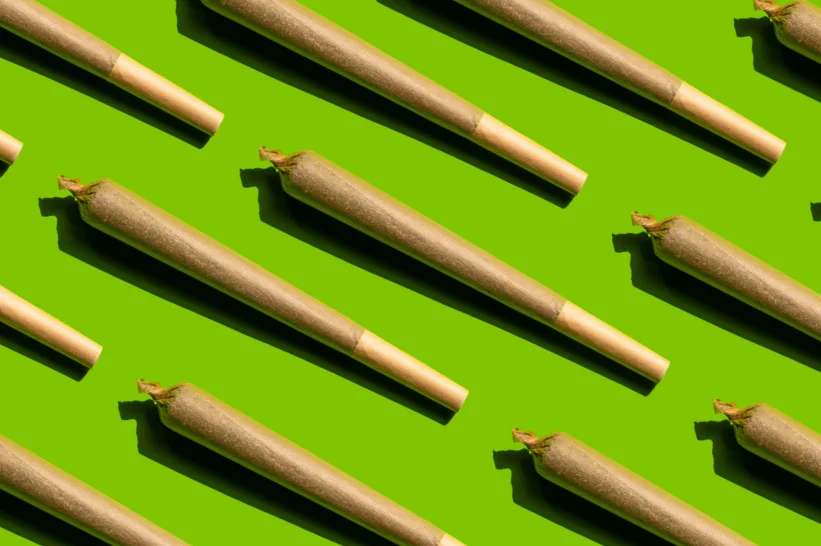
Deducing from the 2016 report by The New York Times, a typical 0.32-gram cannabis joint sold in the US with a 20% Delta-9-Tetrahydrocannabinol (THC) potency yields about 64 milligrams (mg) of THC.
And yet, this is not an exact estimation. Factors like bioavailability, joint size, strain, and the like significantly affect the actual THC content you’ll be getting high into and its effects.
This guide covers how several factors determine the amount of THC per joint, how you can calculate the level of THC yourself, the amount of actual THC your body is getting, and more.
🔑 Key Takeaways
- The average THC content in milligrams per joint is 16 mg to 64 mg.
- The Netherlands is the country with the highest average THC content per joint, which currently stands at 51 mg.
- The average marijuana rolled in a joint weighs 0.32 grams.
What is the Average THC Per Joint in the US?
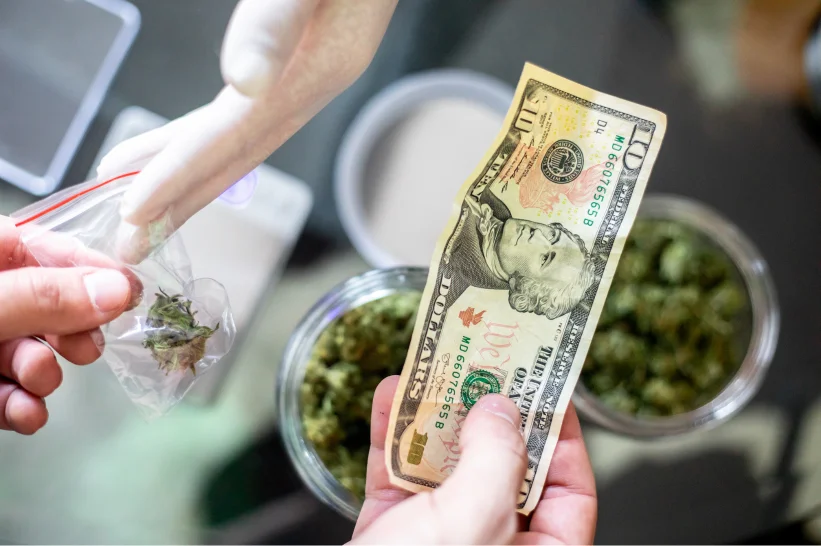
The New York Times reported that the White House Office of National Drug Control Policy estimated in 2014 that marijuana’s average THC potency among products like joints was roughly around 5% in 2000 and 8% in 2010. This number is hypothesized to be rising as new years unfold. Today, you can purchase joints with a sterling-high potency range of 15%-20%.
Meanwhile, when it comes to the average weight of weed per joint in the US, Casual and scientific analyses have several guesses.
One study published in 2015 estimates that a typical joint weighs at least 0.66 grams. An informal survey conducted by High Times among pot smokers says one gram of weed per joint. The actual weed amount may be much less, according to an analysis published in the journal Drug and Alcohol Dependence, which found the average marijuana weight to be only 0.32 grams per joint.
Together, what these data tell us is a glaring fact of how THC in milligrams in a joint can widely vary among any given dispensary or US-based cannabis brand. But concerning data, you can say that a joint sold in the US will generally contain 64 mg of THC at its peak and 16 mg of THC at the minimum.
What is the Average Milligram of THC Per Joint in Other Countries?
If you’re traveling in countries where weed is legal, you might be interested to know the typical milligrams of THC per joint sold there. Here’s a table listing the amount of THC in a joint for countries with the highest annual prevalence of cannabis use:
| Top Countries Where Has Been Legalized | Average THC In a Joint (mg) | Average THC Potency (%) |
| Europe | 38 mg | 12 % |
| Uruguay | 32 mg | 10 % |
| Canada | 58 mg | 18 % |
| Chile | 38 mg | 12 % |
| Czech Republic | 32 mg | 10 % |
| Spain | 48 mg | 15 % |
| Netherlands | 51 mg | 16 % |
| Italy | 32 mg | 10 % |
| Argentina | 32 mg | 10 % |
| Luxembourg | 38 mg | 12 % |
| Portugal | 38 mg | 12 % |
| South Africa | 32 mg | 10 % |
| Georgia | 32 mg | 10 % |
| Colombia | 38 mg | 12 % |
| Malta | 38 mg | 12 % |
| Mexico | 38 mg | 12 % |
| Thailand | 48 mg | 15 % |
| Ecuador | 32 mg | 10 % |
How to Calculate THC in Your Joint?
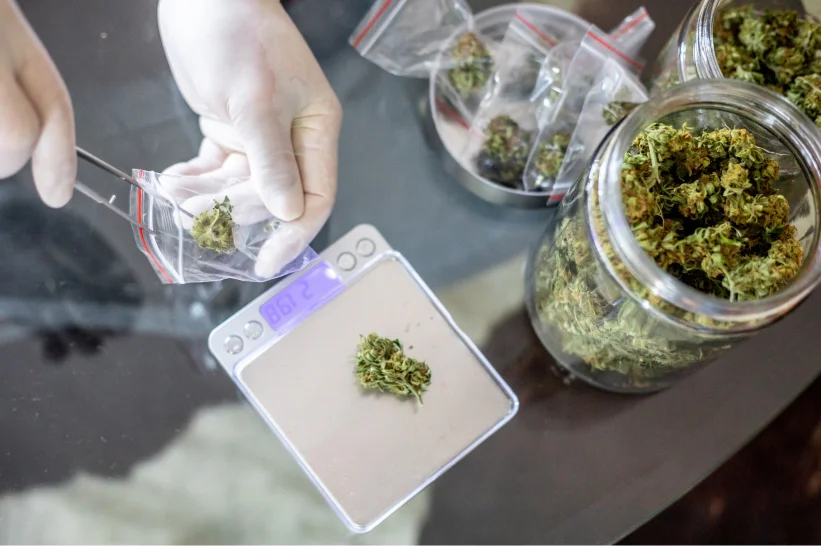
Say you’re rolling your own joint, and you want to adjust the dosage of THC in your joint. Well, for starters, you will need to know how many THC milligrams you are rolling in a joint. To measure, here’s a simple step-by-step instruction on how to calculate the exact THC in your joint.
Step 1: Gather the Following Tools
- Pen
- Paper
- Calculator
- Small weighing scale
- Rolling paper
- Filter (and/or other joint accessories)
- Weed
- COA (Certificate of Analysis) or packaging of the weed
Step 2: Weigh the Rolling Paper and Filter
Start by weighing the rolling paper you’ll use and its filter (if it has one) in one single reading. Write down the weight reading on a paper (in milligrams).
Step 3: Weigh the Newly Rolled Joint
Now, roll your joint with weed as usual. Then, place the rolled joint on the weighing scale and take note of the reading in milligrams.
Minus the sum of the weight of your rolling paper and its accessories (like the filter) from the total weight of your joint with the weed inside, and take note of the reading. The final reading is the total weight of weed you filled the rolling paper with.
Step 4: Find Out the THC Potency of Your Weed
Find the THC potency of the weed you’ve just rolled into a joint. It’s indicated chiefly as a percentage (%). This number can be found in the packaging of the weed, the COA document attached to the product’s online description, or the product description page itself found online.
Step 5: Calculate the Amount of THC in the Joint
List down all of the data you’ve just gathered.
- Weight of the weed rolled inside the rolling paper.
- THC potency of the weed used (convert into decimal).
Now, it’s time to calculate the amount of THC in the joint you’ve just rolled using a simple math formula:
| Weight of joint in milligrams x THC percentage in decimal = total milligrams of THC in a joint |
Here’s a sample calculation:
- Weight of the weed rolled inside the rolling paper = 320 milligrams
- THC potency of the weed used = 15%
| 320 (weight of joint in milligrams) x 0.15 (THC percentage in decimal) = 48 mg (total milligrams of THC in a joint) |
What if your weed’s strain potency is indicated as THCA?
We know that THCA converts into THC once heated, but not ALL of THCA transforms into THC. Only 87.7% of THCA converts into THC. This is why the standard conversion rate of THCA to THC is 87.7% or 0.877.
Having said that, to know how many milligrams of THC would a rolled THCA flower yield, you have to calculate how much THC converts into THCA first.
Let’s say your weed has 20% THCA on it. To calculate, here’s the formula:
20 (numerical value of the THCA potency) x 0.877 (standard conversion rate) = 17.54% (total THC converted from THCA)
Now, convert the extracted THC value of 17.54% into decimal.
Answer = 0.1754
Apply 0.1754 to the formula for calculating the total milligrams of THC rolled in a joint.
How Much THC From a Joint Goes Into Your Bloodstream? (Affecting Factors)
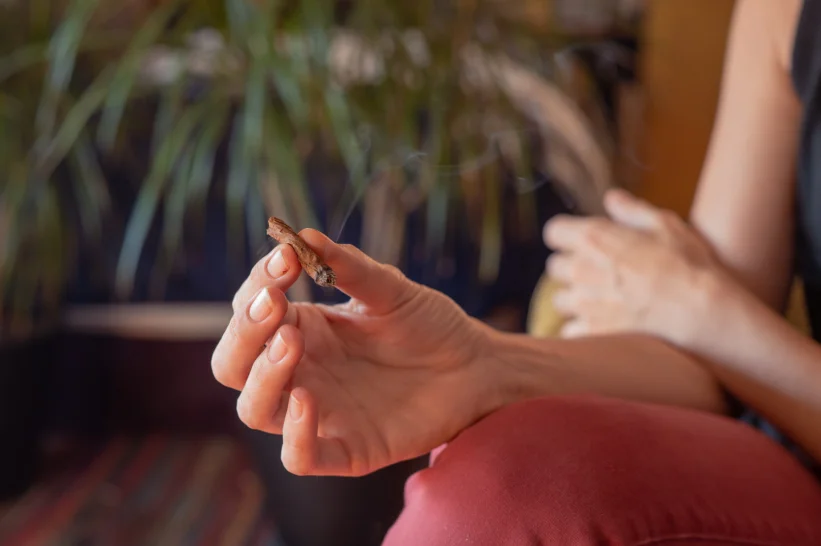
While applying the mathematical formula gives you a rough estimate of how much THC is in a joint, it’s not the exact amount that you will get. Variables like your smoking technique, combustion loss, strain, joint size, rolling method, and bioavailability play a big role in how much THC goes into your bloodstream.
Hence, the straightforward answer to the question is unknown.
For the effort of getting closer to the truth, let’s explore how these factors affect how much THC you’re getting.
Bioavailability
When you take your medicine, only a certain amount of it will be absorbed by the body. The remaining amount will be converted into waste excreted as feces or urine. The same mechanism applies to THC in cannabis joints. Only a portion of the total THC milligrams gets absorbed into the bloodstream.
This concept is called bioavailability.
| Bioavailability Oxford Definition: The proportion of a drug or other substance that enters the circulation when introduced into the body and so is able to have an active effect. |
Since we are all unique physiologically, we process THC differently. Thus, the bioavailability of THC in humans varies. However, it’s possible to ascertain the average range of THC’s bioavailability in humans.
According to an article published in the Journal of Chemistry & Biodiversity, cannabis smokers have a THC bioavailability ranging from 2% to 56%. So, if a joint initially has 64 mg of THC, you’ll probably be only getting 32 mg or less, not to mention the other factors that significantly lessen that dosage.
Smoking Technique
How you smoke your cannabis joint determines how much THC enters and is processed by the body. If your technique leans on too much combusting, you might end up with an inefficient way of consuming THC.
To ensure you’re smoking efficiently, wait for the joint to light evenly before inhaling. Avoid taking uneven, sharp breaths. Take a deep inhale, wait for the effects, and enjoy the moment.
Related Post: How to Smoke a Joint Like a Pro
Combustion Loss
You naturally combust the joint and its content when you’re smoking. Through combustion, a substantial amount of the total THC (roughly 40%) is lost due to high heat, sidestream smoke, continuously lit burning end, and incomplete inhalation.
Strain
Weed is categorized into Indica or Sativa, with the former having a downer effect and the latter stimulating. Even further, cannabis is broken down into strains or breeds. Cannabis strains differ from each other in terms of genetics and cannabinoid content. Some strains will have considerably lower THC levels compared to others.
Joint Size
A smaller joint will naturally contain lesser THC content compared to a much bigger joint. However, the irony is bigger joints will burn less efficiently because of their susceptibility to uneven airflow, resulting in a less controlled smoking experience. To combat this, when smoking from a fat joint, do it inside. This will reduce air resistance and allow for a more consistent burn.
Rolling Method
Believe it or not. Your rolling method impacts how much THC gets processed in your body. For example, tightly rolled joints restrict airflow, making inhalation harder and resulting in incomplete combustion or sidestream smoke.
In reverse, loosely rolled joints burn too quickly, leading to more THC loss and inefficient smoking.
Other factors include the addition of accessories such as a filter and the shape of the joint.
How THC Dosage Affects Your High?
THC, or tetrahydrocannabinol, is the primary psychoactive compound found in cannabis. It’s what gives users the signature ‘high.’ The amount or dosage of THC affects how your body reacts to the compound. Generally, the higher the THC dosage, the more intense the effects will be.
At very low doses (often around 5-10 mg of THC), users may feel a combination of mild relaxation, improved focus, and a lifted mood. Middle-ground doses of 15-20 mg will start producing a euphoric-like high, while 50 mg THC and up offer intense high and tangible physical effects such as “couch-lock.”
In addition to THC dosage level and their standard set of effects, factors like personal tolerance to weed, body weight, age, and unique metabolism rates determine how individuals experience the THC high.
Part of responsibly smoking and enjoying the highs of cannabis joints is finding your “sweet spot” THC dosage. Experimenting with different THC milligrams is key, but it’s important to start with the lowest THC dose possible, increasing slowly until you find the dosage that achieves your desired effects.
Beginner-Friendly Techniques for Adjusting THC Dosage in Joints
Now that you know the average THC in a joint and the method to determine it, let’s discuss how you can attempt to control or adjust the THC dosage in a joint. This knowledge is a must for beginners, as finding the correct dosage involves experimenting with different joint sizes and THC levels.
In reality, there are only six ways to adjust the THC dosage in a joint. These are:
1. Rolling a joint with 250 mg or less of weed or purchasing mini pre-rolled joints.
2. Consciously choosing high or low-THC strains according to preference.
3. Blending THC-dominant cannabis flower with other cannabinoid-rich ones like CBD flowers.
4. Controlling the puff frequency.
5. Using a filter tip to ensure even burning and prevent you from inhaling too much THC.
Get 4/20-Ready: Save Up to 80% on 4/20 Deals!
Wondering how people walk away with up to 80% off on their D9 products during 4/20? Here’s how to get in on the action.
- Join the Lucky Joint Club – earn points, unlock exclusive discounts, and get early access to deals.
- Bookmark the Deals Page – where limited-time steals and huge discounts live.
- Shop at the Canteen – a Lucky Joint Club members-only store of secret deals and bundles you won’t find sitewide.
- Subscribe & Save – 25% off plus free shipping on recurring orders, or add a subscription item to unlock free shipping on your bulk order.
Setting this up before 4/20 arrives means more options, better Delta 9 product deals, and less scrambling when things sell out.
Comparing THC Content in Joints to Other Cannabis Products
THC content varies across different cannabis products, with each method of consumption delivering THC differently into the bloodstream. Here’s how joints stack up against popular cannabis products in terms of THC content.
| Cannabis Products | THC Content | Method of Consumption |
| Joint | 16 to 64 mg | Inhalation |
| Edible | 5 to 50 mg | Oral |
| Vape | 3-10 mg THC per puff | Inhalation |
| Oils and Tinctures | 5 to 100 mg | Sublingual (under the tongue) |
| Concentrates (Dabs, Wax, Shatter) | 50-90% THC per gram | Inhalation |
| Topicals | 2-10 mg per application | Localized application to the skin |
If you’re comparing joints to larger smoking formats, read our guide on How Much THC is in a Blunt? Complete Potency Guide to see how potency can scale with size and flower amount.
Are You Ready to Roll?
With all these variables affecting the THC content in a joint, it’s essential to approach cannabis consumption with mindfulness. Knowing what influences THC levels can help you make informed decisions and enjoy your experience in a more controlled and enjoyable way. As always, remember that responsible use is key to a positive cannabis journey.
If you’re ready to roll a joint, visit our trove of THCA flower collections with a wide range of THCA percentages. From the most mellow of THCA content to the insanely highest, a strain will surely catch your eye.
-
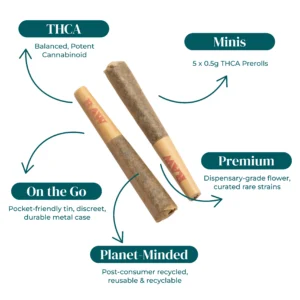
THCA SUGAR DIAMOND INFUSED PRE-ROLLS | 5-PACK TINS
$29.95Shop Now This product has multiple variants. The options may be chosen on the product page -
Hot Seller
1376MG THCA SUGAR DIAMOND SAUCE | 2G
$49.95Shop Now This product has multiple variants. The options may be chosen on the product page