
White Widow Strain: Complete Profile Breakdown
White Widow
THC
15% to 25%
CBD
Usually less than 1%
Flowering time
8 to 9 weeks
Intensity
Moderate to strong
Strain class
Sativa-dominant
Grow difficulty
Beginner to intermediate
Dominant terpenes
Primary effects
Side effects
Lineage
Best for
White Widow Strain Information

“Those who have been around the cannabis game long enough know what White Widow brings to the table. The energetic buzz that precedes the soothing physical relaxation just takes the cake for herb-lovers all around.”
The Hemp Doctor CEO
White Widow is one of the most recognizable cannabis strains in the world. It sits in the “classic strain” category alongside famous strains worldwide like Jack Herer, Northern Lights, Sour Diesel, and OG Kush. If someone asks, “What is White Widow strain?” the simplest answer is this: White Widow is a hybrid strain known for frosty buds, uplifting cerebral effects, and a grounded physical finish.
The White Widow Strain first became famous in Amsterdam coffee shops during the 1990s. Its name comes from the heavy white trichome coating that can make mature buds look dusted in crystals. This frosty look helped make the White Widow cannabis strain one of the most memorable strains in the world, even before modern exotic genetics took over dispensary menus.
White Widow is a hybrid, but it usually leans slightly sativa. Most sources list it as a 60/40 sativa-dominant hybrid, though many adult consumers describe the effect of White Widow as balanced. It can feel bright enough for daytime use, but not as racy as some pure sativa flower options.
The white widow weed strain is popular because it offers a dependable mix of mental lift and light body ease. It is often associated with uplifted, creative, talkative, relaxed, energetic, and euphoric effects. As always, individual experiences vary based on the product, dose, tolerance, terpene content, and setting.
Is White Widow Sativa or Indica?
White Widow is usually classified as a 60/40 sativa-dominant hybrid. Its Brazilian sativa genetics contribute uplifting, creative, and social effects, while its South Indian indica side adds body relaxation and resin-heavy bud structure. Because the effects are balanced, some sources call it a balanced hybrid rather than a strongly sativa strain.
This is where the “white widow strain indica or sativa” question gets confusing. Different breeders, phenotypes, seed lines, and dispensary labels do not always describe the same cut in the same way. Some retailers may list White Widow as balanced. A few may even flip the ratio or describe it as indica-dominant, especially if their version expresses more body-heavy traits.
The better way to understand White Widow is to look at the combination of indica and sativa genetics. The Brazilian sativa landrace side is usually linked to the brighter head effect. The South Indian indica side is associated with resin production, denser flowers, and a calmer body feel.
If you are comparing White Widow to modern sativa-heavy strains, it may feel more grounded. If you are comparing it to classic indica strains, it may feel more energetic and social.
For more help choosing between strain types, read The Hemp Doctor’s guide to sativa, hybrid, or indica flower.
White Widow Strain Genetics & Origin
The most widely accepted White Widow strain lineage is a cross between a Brazilian sativa landrace and a South Indian indica landrace. Landrace strains are traditional cannabis varieties that developed in specific regions over time, before being heavily hybridized for the modern market.
White Widow was developed in the Netherlands and became a staple of Amsterdam coffee shops in the 1990s. It is commonly associated with Green House Seed Company, sometimes written as Green House Seeds, which played a major role in bringing the strain to global attention.
White Widow won the High Times Cannabis Cup in 1995, helping cement its reputation as one of the most influential legacy hybrids. That award matters because the Cannabis Cup was one of the major strain-recognition platforms of that era. A win could turn a coffee shop favorite into an international name almost overnight.
Some cannabis history sources also note that White Widow may have been connected to the name “Arnhem’s Wonder” before becoming known internationally as White Widow. As with many older cannabis stories, documentation is not always clean.
White Widow strain genetics
The Shantibaba vs. Ingemar Origin Debate
The origin story of White Widow is debated because many legacy strains were created before today’s seed-bank records, lab testing standards, and genetic databases. That leaves room for overlapping claims and different versions of the story.
Shantibaba, also known as Scott Blakey, is widely credited in many cannabis circles for creating or developing White Widow while working with Green House Seed Company. Ingemar is also frequently mentioned in discussions around the strain’s early development and commercialization.
The safest editorial stance is this: White Widow emerged from the Dutch cannabis scene of the 1990s, and Green House Seed Company played a major role in its global rise. The exact breeder credit depends on which legacy account you trust.
Why Is It Called White Widow?
White Widow gets its name from its heavy trichome coating. Trichomes are the tiny resin glands on cannabis flower that contain cannabinoids, terpenes, and aromatic compounds.
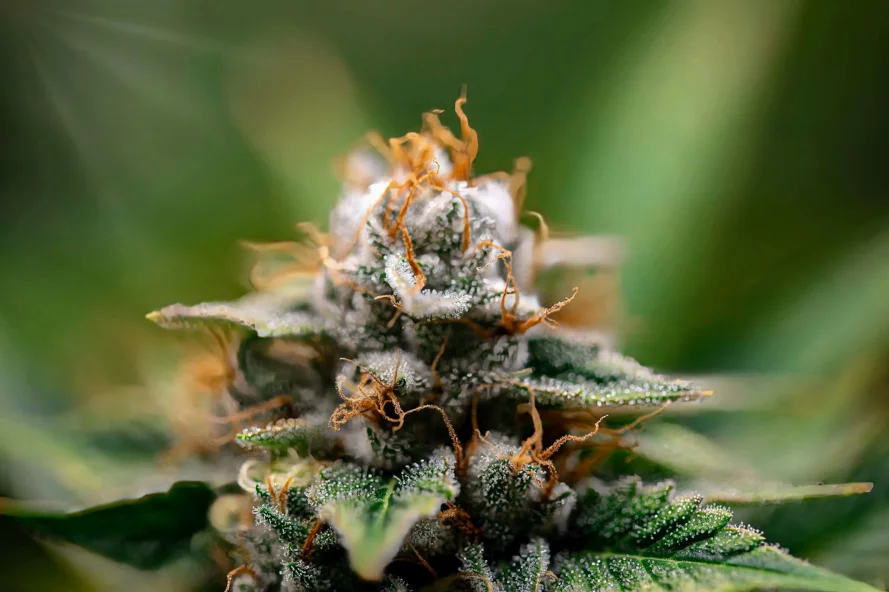
Mature White Widow buds often look covered in white crystals, almost like they were rolled in sugar. The “white” part of the name refers to resin coverage, not pale flower color. The flower itself is usually green, with orange pistils and a frosted surface.
-

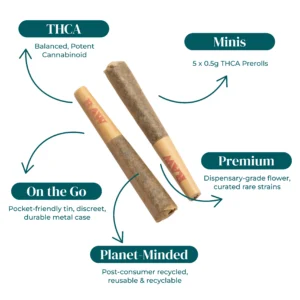
THCA SUGAR DIAMOND INFUSED PRE-ROLLS | 5-PACK TINS
$29.95Shop Now This product has multiple variants. The options may be chosen on the product page
User-Reported White Widow Strain Effects
Commonly reported White Widow strain effects include feeling uplifted, creative, talkative, relaxed, energetic, and euphoric.
White Widow is often described as a “best of both worlds” hybrid. The first wave tends to feel cerebral, social, and mood-lifting. Many adult consumers report more energy, easier conversation, and a creative mental buzz.
As the experience settles in, the indica side may bring a calmer body feel without immediately becoming couch-locking. That is why White Widow typically works better for daytime, afternoon, and social use than immediately before bed.
How Does White Widow Make You Feel?
White Widow usually makes adult consumers feel uplifted, talkative, creative, and lightly relaxed. It can feel mentally stimulating at first, followed by a smoother body calm. At higher doses, it may feel more intense and could cause anxiety or dizziness for sensitive consumers.
The effect of White Widow can vary based on the batch. A terpene-rich, well-cured flower may feel more complete than a dry, low-aroma batch with a similar THC number.
Is White Widow a Strong Strain?
White Widow is best described as moderate to strong. The White Widow strain THC level commonly ranges from 15% to 25%, depending on phenotype, grower, harvest timing, and lab results.
Older strain databases often place White Widow closer to moderate strength by today’s standards. Some modern dispensary or breeder cuts test higher, especially when grown for potency. If you are asking, “Is White Widow strong?” the answer is yes, it can be, but it is not usually considered extreme compared to newer high-THC strains.
The phrase “potent effects” fits White Widow when the flower is well-grown and consumed in the right amount. THC percentage still does not tell the whole story. Terpenes, freshness, cure quality, and your tolerance all matter.
Best Time To Use White Widow
White Widow is usually better suited for daytime or afternoon use. It also fits social settings, creative sessions, light outdoor activities, and situations where you want a hybrid that feels lifted without becoming too sleepy.
It may not be ideal immediately before bed for people who are sensitive to sativa-leaning strains. If stimulating strains keep your mind active, save White Widow for earlier in the day.
What Adult Consumers Say In Online Discussions
White Widow delivers a classic cerebral high that some adult consumers say hits quickly and noticeably. In one Reddit discussion, several people described effects lasting around 2 to 3 hours, even among those with established tolerance. Many also mentioned its nostalgic appeal as a legendary strain, though experiences varied depending on product quality and individual sensitivity.
A few themes came up repeatedly in the discussion:
Some described heady, cerebral effects with couch-lock potential. In their experience, White Widow had a strong mental high paired with some physical heaviness, creating a balanced experience that could range from mild to intense depending on tolerance and consumption method.
Several people noted that onset and duration depend heavily on tolerance. First-time or moderate consumers reported noticeable effects from a single dose, while those with higher tolerance sometimes needed multiple applications to feel significant effects.
Flavor and aroma also mattered more than THC percentage for many commenters. Even when THC was around 20%, people said the terpene profile and cure quality shaped the actual experience. Poorly cured or low-terp versions underperformed compared to properly cultivated batches.
Long-time smokers also mentioned nostalgic appeal with mixed modern performance. Some valued White Widow for its classic profile and distinctive “crisp sweet stink,” while others felt modern versions do not always match the intensity or terpene richness of older cuts.
A few commenters suggested that concentrates, hash oil, or similar formats may better capture White Widow’s full expression compared to flower. That does not mean concentrates are automatically “better,” only that some consumers prefer how the profile translates in those forms.
Read the full discussion here: Reddit White Widow discussion.
This discussion covers state-licensed marijuana products, not hemp-derived equivalents. Individual experiences vary, and none of this is medical advice.
White Widow Side Effects
White Widow’s most common side effects are dry mouth, dry eyes, dizziness, mild anxiety, paranoia at higher doses, and coughing from dense smoke or vapor.
Like many THC-rich hybrids, White Widow can feel uncomfortable if you consume more than your tolerance allows. Because it has a stimulating cerebral side, people who are sensitive to sativa-leaning strains may experience anxiousness or racing thoughts from higher servings.
If you are new to THC, start with one small puff and wait 10 to 15 minutes before consuming more. For edibles or hemp-derived THC products, start low and wait at least two hours before increasing. The timing is different because inhaled products act faster, while edibles take longer to fully show their strength.
Hydrate before and after use. Avoid mixing with alcohol. Choose a comfortable setting, especially if you are new to THC or trying a new batch for the first time.
Do not drive or operate machinery after using intoxicating hemp-derived or cannabis products. Effects vary by product, dose, tolerance, and local laws.
Why White Widow Can Make Some Consumers Cough
White Widow is known for resin-heavy, trichome-dense buds. Dense smoke or vapor can feel “expansive” in the lungs, especially when the flower is strong, dry, or inhaled too deeply.
Coughing can also be influenced by terpene intensity, combustion temperature, moisture level, and consumption method. A lower-temperature vaporizer setting may feel smoother than hot smoke, though the experience still depends on the product and your sensitivity.
Flavor and Aroma
White Widow has a classic old-school cannabis profile. It is not as candy-sweet as many newer dessert strains. It also does not usually carry the heavy gas profile of modern fuel-forward hybrids.
Instead, the aroma leans earthy, woody, piney, and herbal. Caryophyllene adds a peppery edge, while limonene may bring a light citrus or lemon-peel note in some phenotypes. Myrcene helps create the musky, earthy base.
The white widows strain taste is usually straightforward and nostalgic. Think earthy cannabis, dry wood, pine needles, pepper, and a slight sweetness on the finish. Some batches are sharper and more herbal. Others are smoother and faintly citrusy.
What Does White Widow Taste Like?
White Widow usually tastes earthy, woody, spicy, and herbal, with pine and occasional citrus notes. Some batches may have a mildly sweet finish, but the dominant flavor is classic earthy cannabis rather than fruit, candy, or dessert.
Dominant White Widow Strain Terpenes
White Widow’s dominant terpenes are most often reported as myrcene, caryophyllene, and limonene, with pinene, linalool, alpha-bisabolol, and geraniol appearing in some analyses or phenotypes. Terpene levels vary widely by grower, seed line, storage, and batch.
Myrcene
Myrcene has an earthy, herbal, musky aroma. In White Widow, it helps explain why the strain can feel balanced rather than purely energizing.
This terpene is common in many cannabis varieties and is often associated with heavier, more grounded aromatic profiles. In White Widow, it works alongside the sativa lean instead of completely overpowering it.
Caryophyllene
Caryophyllene brings a peppery, spicy aroma. It is common in many classic hybrids and helps support the warm, sharp edge in White Widow’s flavor.
If a batch smells like black pepper, dry herbs, and earth, caryophyllene is likely part of that experience.
Limonene
Limonene has a citrus or lemon-peel aroma. In some White Widow phenotypes, it adds a brighter top note that cuts through the earthy base.
This terpene may also contribute to why many adult consumers describe White Widow as uplifting and social, though effects always depend on the full product profile.
Pinene
Pinene has a pine and evergreen aroma. It can support the fresh, sharp top note in White Widow’s scent and fits the strain’s reputation for mental clarity.
Pinene is not always one of the top terpenes in every batch, but when present, it gives White Widow a crisp, forest-like edge.
Minor Terpenes Worth Mentioning
Linalool, alpha-bisabolol, and geraniol may appear in some White Widow terpene reports or seed-bank descriptions. These minor terpenes can add floral, soft, sweet, or lightly herbal notes.
Terpene labels should be treated as batch-specific information. Always check a product’s certificate of analysis, also called a COA, when available.
Cannabinoid Profile: THC, CBD, and CBN
White Widow is not typically a CBD-rich strain. Its main cannabinoid is usually THC, with CBD often below 1%. CBN is usually present only in trace amounts, though it can increase as flower ages.
| Cannabinoid | Typical Range / Reported Level | What It Means |
| THC | 15% to 25% | Main intoxicating compound; drives potency and euphoric effects |
| CBD | Usually below 1% | Not typically a CBD-rich strain |
| CBN | Usually trace amounts | May increase slightly as flower ages |
| THCA | Varies by hemp/cannabis product | Non-intoxicating precursor that converts to THC when heated |
THC varies by batch, grower, curing process, harvest timing, and testing method. Two White Widow products with the same label can feel different if one is fresher, more terpene-rich, or better cured.
For The Hemp Doctor customers, this matters when comparing hemp-derived THCA flower to state-licensed marijuana flower. THCA is the acidic precursor to THC. When heated through smoking, vaping, or baking, THCA converts into THC.
Hemp-derived THCA products should be lab-tested and compliant under applicable hemp rules. Customers should also check local laws before ordering, because cannabinoid rules vary by state and can change.
Browse lab-tested THCA flower and review each product’s COA before choosing the right fit.
Physical Characteristics
White Widow’s appearance is one of the main reasons it became iconic. The buds are often coated in a thick blanket of milky trichomes, giving them a frosted, almost sugar-dusted look.
The flower is usually bright green to medium green, with orange pistils and a resin-heavy finish. Buds are often chunky and conical, though some phenotypes can look fluffier rather than rock-dense.
The “white” visual effect comes from resin, not from pale flower. A well-grown batch should look frosty, sticky, and aromatic. If the flower looks dull and smells flat, it may not represent the classic White Widow experience well.
Cultivation and Growing Tips
Growing White Widow strain is generally considered beginner to intermediate. It is popular with home growers where cultivation is legal because it can grow indoors or outdoors, has reliable resin production, and often produces dependable yields.
White Widow prefers mild, warm, stable climates. It can handle some variation, but it performs best when temperature, humidity, airflow, and feeding are controlled. Dense, resinous buds can be vulnerable to mold if humidity stays too high during the flowering stage.
If you plan to grow White Widow, check your local laws first. Seed possession, germination, and cultivation rules vary by location.
Environmental Needs
White Widow usually performs well around 70°F to 80°F. In soil, a pH range of 6.0 to 6.5 is a good target.
Humidity should be moderate during vegetative growth and lower in flower. Good airflow is essential because White Widow’s resin-heavy buds can trap moisture. Avoid major temperature swings late in flower, especially if humidity is also high.
Flowering Time and Harvesting
Indoor flowering time is usually 8 to 9 weeks. Outdoor harvest often falls between late September and October in suitable Northern Hemisphere climates.
Growers typically harvest when trichomes are mostly cloudy with some amber. More cloudy trichomes may preserve a brighter effect, while more amber may create a heavier body feel.
Yields
White Widow is known for reliable yields under optimized conditions. Indoor yields are often estimated at around 400 to 600 grams per square meter. Outdoor plants may produce around 500 to 700 grams per plant, depending on climate, plant size, genetics, and grower skill.
Actual yield depends on lighting, nutrients, training, container size, pest management, and environmental control. Seed-bank numbers are best treated as estimates, not guarantees.
Common Grower Challenges
The most common challenges include mold or mildew in humid environments, odor control during flowering, nutrient burn from overfeeding, pest pressure outdoors, and phenotype variation between seed banks.
If you are growing White Widow indoors, prioritize airflow and humidity control before chasing maximum nutrients. A healthy environment usually does more for final flower quality than aggressive feeding.
White Widow Awards and Cultural Legacy
White Widow won the High Times Cannabis Cup in 1995, a major moment that helped turn it into one of the most famous strains worldwide. In the 1990s, the Cannabis Cup was a major stage for Dutch genetics, Amsterdam coffee shop culture, and international strain recognition.
White Widow became a staple because it had the full package: memorable name, frosty look, balanced effects, manageable grow traits, and enough potency to stand out in its era. It also helped define the “white” strain family, a group of resin-heavy cultivars that became known for thick trichome coverage.
The strain has been referenced in cannabis culture, music, and television over the years. It has also been used as a parent or inspiration for many later hybrids. That is part of why people still ask, “What happened to White Widow strain?” The short answer is that it never really disappeared. It became a legacy strain, but modern versions vary widely by breeder and market.
What You Might Not Know About White Widow Strain
- White Widow may have originally been connected to the name Arnhem’s Wonder before becoming internationally famous.
- Its origin story is debated, with both Shantibaba and Ingemar appearing in legacy cannabis discussions.
- White Widow helped inspire a full family of “White” strains and crosses.
- Despite being sativa-dominant, many adult consumers describe it as balanced because the body relaxation is noticeable.
- Autoflowering and high-CBD White Widow versions exist, though they may differ from the classic photoperiod version.
- Modern White Widow can vary more than people expect. A Green House Seeds version, a Black Widow version, and a dispensary’s in-house White Widow may not feel identical.
Related Strains of White Widow
White Widow’s genetics have been used in several well-known hybrids. Some preserve their frosty resin production, while others push the effects toward heavier indica relaxation or stronger sativa energy.
| Strain | Genetics | Usually Best For |
| White Widow | Brazilian sativa x South Indian indica | Balanced energy and relaxation |
| Black Widow | Often associated with Shantibaba’s later version of the original genetics | Classic White Widow-style traits under a different name |
| White Russian | White Widow x AK-47 | Potency and cerebral effects |
| White Rhino | White Widow x indica genetics | Heavier body effects |
| Blue Widow | White Widow x Blueberry | Fruity flavor and balanced effects |
| Moby Dick | White Widow x Haze | Sativa energy and creativity |
| Critical Widow | White Widow x Critical genetics | Yield and potency |
White Rhino is usually the better fit if you want a heavier body profile. Moby Dick or White Widow Haze may be better if you want more sativa energy. Blue Widow is worth exploring if you like the White Widow structure but prefer sweeter berry notes.
Looking for more strain comparisons? Browse The Hemp Doctor’s full strain guide.
Is White Widow Good For Beginners?
White Widow can be good for experienced beginners who already have some THC familiarity. True first-time consumers should approach it slowly because the THC range can climb into the 20%+ range, and the cerebral side may feel intense if overconsumed.
If you are prone to anxiousness from sativa-leaning strains, choose a lower-THC batch when available. Start with a small amount and wait before taking more.
So, is White Widow a good strain? For many people, yes. It has earned its reputation because it offers a balanced hybrid experience with strong bag appeal, classic flavor, and flexible effects. It is simply not a strain to overdo, especially if you are sensitive to THC.
Where Can You Find White Widow Strain Near You?
White Widow flower, seeds, and derivative products may be available through licensed dispensaries, seed banks, or hemp retailers, depending on local law. Availability varies by state, market, and product type.
If you are shopping for White Widow or a similar uplifting hybrid profile, always check lab reports and COAs. A COA can help you confirm cannabinoid potency, terpene information when available, and compliance details.
The Hemp Doctor carries a rotating selection of hemp-derived flower and pre-roll options, including hybrid flower strains,sativa flower, and lab-tested THCA flower. Inventory changes, so check the latest product pages for available strains and COAs.
Want to explore strains with a similar uplifting hybrid profile? Browse The Hemp Doctor’s lab-tested flower collection and check each product’s COA before choosing the right fit.