What Is Live Sauce? A Complete Guide


Live sauce is a terpene-rich hemp concentrate made from flash-frozen plant material, with a thin, runny, “saucy” texture that pours more like honey than it stacks like wax. The “live” refers to how the plant was handled after harvest, not how fresh the product is on the shelf.
This guide walks through what makes a concentrate “live,” the key characteristics that define live sauce, a side-by-side look at live sauce vs. live resin, how it stacks up against rosin and distillate, and the most common ways adults use it.
🔑 Key Takeaways
- Live sauce is a hemp concentrate made from fresh frozen flower, prized for keeping terpenes and cannabinoids close to the living plant.
- The “sauce” name refers to the runny, syrupy texture left behind after cannabinoid crystals, like THCA diamonds, separate out.
- Live sauce vs. live resin comes down to texture and crystal formation, not strength. Both start fresh frozen, and both are known for bold flavor.
- Potency is set by the cannabinoid percentage on the COA, not by whether a product looks like sauce, resin, or something else.
- Live sauce fits vapes and dabs best. In a bowl or joint, it gets sticky and burns off fast.
What Is Live Sauce?
Live sauce is a hemp concentrate made from fresh, frozen cannabis material, extracted at low temperatures to help maintain the plant’s natural aromatic profile. The result is a glossy, pourable concentrate that looks golden to deep amber, often with small sugar-like crystals suspended in a thick liquid.
The “sauce” part of the name describes what you can see. During processing, cannabinoid-rich crystals, such as THCA diamonds, separate from the heavier terpene fraction. What remains is a terpene-rich liquid that coats and surrounds those crystals. Together, the two make up a product with a high terpene content and a very expressive flavor.
The appeal is simple. Live sauce holds onto the aroma and taste of the original strain better than many other formats. You get the citrus, gas, berry, or dessert notes the plant produced, instead of the flatter flavor profile common to heavily refined extracts.
In the hemp space, THCA is the most common cannabinoid base for live sauce. You’ll see it in THCA concentrates, dabs, and especially vape cartridges and disposables, where the thin consistency makes it easy to work with. The combined terpene and cannabinoid profiles set live sauce apart from distillate-based vapes, which deliver potency but often lack flavor depth.
-

PHUK’D UP | THCA LIVE SAUCE DISPOSABLE VAPE | 1G
$15.00Shop Now This product has multiple variants. The options may be chosen on the product page -
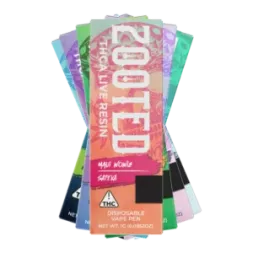
ZOOTED | THCA LIVE RESIN DISPOSABLE VAPE | 1G
$34.95 — or subscribe to save 25%Shop Now This product has multiple variants. The options may be chosen on the product page - Hot Seller


1376MG THCA SUGAR DIAMOND SAUCE | 2G
$49.95Shop Now This product has multiple variants. The options may be chosen on the product page
What Makes Live Sauce “Live”?
The word “live” is the most misunderstood term in the category. It has nothing to do with freshness on the shelf and everything to do with how the plant was handled after it was cut down.
Fresh Frozen Starting Material
In traditional cannabis processing, cannabis flower is harvested, hung, dried for a week or two, then cured in jars for weeks or months before extraction. Fresh frozen skips all of that. The plant is cut and then flash-frozen within hours, often within minutes, preserving the flower in the state it was in while still rooted in the ground.
That freezer step is the heart of the word “live.” The material remains frozen during transport and storage, right up until it reaches the extraction equipment. Nothing dries. Nothing cures. Nothing has time to change in the usual post-harvest way.
For a deeper look at the texture differences this creates in a finished vape, our breakdown of what live resin vape is covers the same starting point from a different angle.
Why Freezing Helps Maintain Terpenes
Terpenes are the aromatic compounds responsible for a strain’s smell and taste. They are also delicate. Heat, light, and oxygen can cause them to evaporate or change over time, which is why dried, cured flowers rarely smell as strongly as fresh flowers.
Flash-freezing helps pause those post-harvest changes. The volatile terpenes remain in the plant’s trichomes, and acidic cannabinoids like THCA remain in their original form rather than slowly converting to other compounds. When the material finally undergoes extraction, the terpenes and cannabinoids come out together, giving the finished sauce a flavor profile closer to that of the living plant.
“Live” vs. Cured Material
Concentrates made from cured flower can still be excellent, but their terpene content is typically lower than that of comparable fresh-frozen material. Weeks of drying and curing can change the plant’s lighter, more volatile aromatics. Live products are made to keep more of that original aromatic profile.
This matters to many shoppers because terpenes and cannabinoids together help shape the overall character, including its flavor, aroma, and session feel.
Research and consumer interest around terpene-cannabinoid combinations are still developing, and no reputable brand should make disease-related or medical claims about them. Still, this is one reason “live” products command premium shelf space.
How Live Sauce Is Made
Commercial live sauce is made in controlled labs by trained extraction technicians. The general process looks like this:
Step 1. Harvest and flash-freeze fresh flower within hours of cutting.
Step 2. Run a low-temperature hydrocarbon extraction, usually with butane or a butane-propane blend, to pull terpenes and cannabinoids off the frozen material.
Step 3. Purge residual solvents in a vacuum oven at controlled temperatures to protect the terpene layer.
Step 4. Allow the extract to separate naturally, with cannabinoid crystals forming on the bottom and a terpene-rich sauce layer on top.
Step 5. Combine, jar, and send batches to a third-party lab for cannabinoid and contaminant testing.
Hydrocarbon extraction is standard for sauce because it better preserves terpene content than ethanol or CO2 at scale. The purge step is where quality separates from mediocrity. Rushing it leaves solvent residue; dragging it out at high heat strips the flavor the process was designed to protect.
Any finished product worth buying ships with a Certificate of Analysis showing the full cannabinoid profile, terpene breakdown, and solvent and contaminant results. If a brand cannot show you one, treat that as a red flag, not a minor inconvenience.
Key Characteristics of Live Sauce
A few traits show up across almost every well-made live sauce product on the market. Together, they explain why the format has a dedicated following.
Texture and appearance. Live sauce is thin and glossy, usually golden to amber, sometimes with visible sugar-like crystals floating or settling. It is less stable than solid concentrates like shatter or badder, which means it moves in the jar and clings to tools.
Aroma and flavor. This is the headline feature. A good live sauce smells and tastes almost identical to the cannabis strain it came from, whether that’s loud citrus, sharp diesel, or sweet berry. The flavor hits early in the draw and stays through the exhale.
High terpene content. This is the defining trait. Where distillate commonly tests in the single digits for terpenes, if at all, live sauce often lands in the 10 to 15 percent range or higher by weight. That high terpene load is what gives the format its reputation for strong strain character.
Clay Kramm, Wholesale Sales, The Hemp Doctor, makes the case plainly:
“I wish we would market it more around terpene profile. Terpenes have more to do with the actual feel and flavor and high that you get than actual THC percentage.”
Cannabinoid profile. Most hemp-derived live sauce is THCA- or THC-dominant, with minor cannabinoids like CBG, CBN, and CBC carried through from the plant.
Where you’ll find it. Live sauce is available in three main formats: traditional dab jars, vape cartridges, and disposables. THCA vapes built around live sauce are especially popular because they deliver the flavor payoff without needing a rig.
Live Sauce vs. Live Resin
This is the comparison that trips most people up, because the two share more than they differ. Both start from fresh-frozen material, aim to preserve terpenes and cannabinoids, and sit in the same retail price tier.
What They Share
Both live sauce and live resin are solvent-extracted, usually with hydrocarbons, from flash-frozen flower. Both carry noticeably more terpenes than distillate or cured concentrates. Both are commonly sold in dab jars, carts, and disposables.
Naming makes this messier. Some brands label a sauce-style product as “live resin sauce” because sauce is technically a textural variation of live resin. If you see “live resin sauce” on a jar, it usually means a sauce-consistency extract that still falls under the live resin umbrella.
Key Differences
The real split is textural and structural. Live resin is typically whipped or stirred to a uniform consistency, while live sauce is allowed to separate into crystals and a terpene-rich liquid.
| Attribute | Live Sauce | Live Resin |
| Texture | Thin, runny, pourable | Thicker, often whipped; sometimes buttery |
| Consistency | Non-uniform, can separate | Uniform, stable |
| Cannabinoid state | Visible crystals in liquid | Blended throughout |
| Typical formats | Dabs, carts, disposables | Dabs, carts, disposables, badders |
| Best for | Flavor-forward, terpene-heavy sessions | Easy-to-handle vape sessions |
Which Is Stronger?
Neither format is automatically stronger. Potency is determined by the total cannabinoid percentage on the COA, not by whether a product looks like sauce or resin. A 78% total cannabinoid live sauce is stronger than a 72% live resin, and the opposite is just as common.
To compare two products fairly, pull up both COAs, look at the total active cannabinoid line, typically THCA plus delta-9 THC for hemp products, and compare those numbers directly. Ignore the texture when you’re measuring strength. Texture tells you how a product will feel on the dab tool or in a cart, not how strong the product is.
What to Check on a COA
Which Is Better?
That depends on what you’re after. Choose live sauce if flavor is the main event, if you want a terpene-heavy experience, and if you don’t mind a product that moves around in the jar. Choose live resin if you want something more stable, easier to measure out, and consistent across longer sessions.
If you want to try a cart-based version first, our KAYO 1g Live Resin Disposable is a straightforward place to start, and the PHUK’D UP Live Sauce Disposable gives you the sauce side of the house in the same format.
Live Sauce vs. Other Concentrates
Live sauce doesn’t exist in a vacuum. Here is how it compares to the other formats you’ll see on the same menu.
Live sauce vs. live rosin. Live rosin is solventless, made by applying heat and pressure to fresh, frozen ice hash. No butane, no propane, no purge. The tradeoff is cost. Rosin takes more time, more material, and more labor to produce, which typically shows up as a higher price per gram.
Sauce is solvent-based and more widely available at a lower cost. Our deeper comparison of live rosin vs. other extracts walks through the production side in more detail.
Live sauce vs. distillate. Distillate sits at the opposite end of the spectrum. It’s refined down to near-pure cannabinoid content, often above 90%, and the native terpenes are usually removed during the process. Many distillate carts add terpenes back in afterward, sometimes botanical, sometimes cannabis-derived.
Live sauce preserves the plant’s original terpene profile rather than rebuilding it after the fact.
Here’s a table that provides an overview of the differences among types of concentrates, including live sauce.
| Format | Extraction | Texture | Terpene Retention | Best Use |
| Live Sauce | Solvent, fresh frozen | Runny, crystals in liquid | High | Flavor-forward vaping and dabbing |
| Live Resin | Solvent, fresh frozen | Thicker, uniform | High | Easy-to-handle vaping and dabbing |
| Live Rosin | Solventless, heat and pressure | Varies: badder, jam, cold cure | High | Solventless dabs, premium carts |
| Distillate | Solvent, heavily refined | Thick, honey-like | Low, often re-added | High-potency carts, Delta 8 vapes, Delta 9 vapes, edibles |
How to Use Live Sauce
Live sauce can be used in three main ways, but one is clearly easier for most adults.
Vape Cartridges and Disposables
This is the simplest route. A sauce live resin disposable or sauce-filled cart handles the mess for you, puts a consistent amount in a draw-activated or button-activated device, and lets you focus on the flavor.
Start with one gentle three-second draw, wait a few minutes, and judge from there before taking another. If you’re new to carts in general, our walkthrough of how vape cartridges work covers the basics.
Dabbing
Dabbing gives you the loudest flavor expression, but it requires specific equipment:
- Dab rig
- Banger
- Torch or e-nail
- Dab tool
Keep temperatures low, typically 500 to 550°F, to protect the terpenes. Use a very small amount, roughly the size of a grain of rice, for your first attempt. High-temp dabs scorch the terpenes you paid extra to get.
Adding to Flower
Technically possible, practically awkward. Live sauce is sticky, slow to light, and burns off faster than it integrates with the surrounding flower in a bowl or joint. If you want to infuse flower, something like THCA bubble hash or an infused pre-roll handles the format better.
Age minimums for hemp-derived products are 18 or 21 depending on your state. Hemp-derived THC can trigger a positive on a standard drug test. And no matter the format, do not drive after use.
How to Choose High-Quality Live Sauce
The gap between high-quality live sauce and poorly made sauce is wide, and the label alone doesn’t tell you much. Here is what actually matters when you’re comparing products.
Start with the COA. A current, batch-matched Certificate of Analysis should show a terpene panel with specific compounds and percentages, a full cannabinoid breakdown, and residual solvent and contaminant results free of pesticides, heavy metals, and microbials. If the brand only shows a potency screenshot and nothing else, you’re missing the bigger picture.
Look at where the terpenes came from. Cannabis-derived or hemp-derived terpenes mean the plant’s natural aromatic compounds carried through extraction. Added “botanical” or “food-grade” flavorings usually mean the terpene content on the COA came from a bottle, not the plant. A clear, fresh-frozen statement on the product page is another trust signal. If a brand uses the word “live” but can’t say what was frozen or when, something is off.
Transparency is the final piece. Reputable brands publish batch numbers, keep an accessible lab results page, and update it as new batches come in. The Hemp Doctor publishes every product’s COA available for public viewing on the Lab Results page.
Curious to try live sauce for yourself? Browse The Hemp Doctor’s THCA vapes.