Blue Dream Strain: Effects, THC, Terpenes & Complete Profile
Blue Dream
THC
17% to 24%
CBD
Less than 1%
Flowering time
About 9-10 weeks
Intensity
Moderate to strong
Strain class
Sativa-dominant
Grow difficulty
Moderate
Dominant terpenes
Flavor profile
Primary effects
Side effects
Lineage
Best for
Blue Dream Strain Description
Blue Dream is a sativa-dominant hybrid that has held its ground at the top of dispensary menus for well over a decade and shows no signs of stepping aside.
Blue Dream was bred on the West Coast, likely in California, by crossing a Blueberry indica with a Haze sativa. The result landed somewhere in the middle in the best possible way. Not too heavy, not too wired. Blue Dream gave experienced consumers a reliable daytime option and gave newcomers a recognizable flavor that made the strain approachable without being one-dimensional.
Blue Dream’s terpene profile centers on Myrcene, Pinene, and Beta-Caryophyllene. That combination delivers the “balanced daytime hybrid” character that made it famous: earthy sweetness on the inhale, a clean blueberry finish, and effects that run uplifting and focused before they settle into a warm, relaxed plateau.
If you are looking at THC numbers, expect THCA content between 17% and 24% depending on the phenotype and how the batch was grown and cured. Blue Dream tests high enough to be effective for experienced users while remaining manageable for consumers who know their limit.
- Buy More Save More


THCA SUGAR DIAMOND INFUSED PRE-ROLLS | 5-PACK TINS
$29.95Shop Now This product has multiple variants. The options may be chosen on the product page - Best Seller

KAYO | THC BLEND LIVE RESIN DISPOSABLE VAPE | 1G
$15.00Shop Now This product has multiple variants. The options may be chosen on the product page - Customer Favorite


THCA SUGAR DIAMOND CAVIAR BLUNTS | 2G
$19.95Shop Now This product has multiple variants. The options may be chosen on the product page
Blue Dream Strain Information
Blue Dream was developed in Santa Cruz, California, sometime in the early 2000s. Its parentage is technically disputed (we will get to that in the genetics section), but the dominant story places DJ Short’s Blueberry and a West Coast Haze cultivar at the center of its creation.
Blue Dream won early acclaim in California dispensaries and spread quickly through the West Coast market. By the mid-2010s, Blue Dream was routinely appearing at the top of state dispensary bestseller lists. The strain’s combination of recognizable flavor, balanced effects, and moderate growing difficulty made it a reliable commercial choice for cultivators and a trusted pick for consumers who wanted something well-documented over something unpredictable.
Today, Blue Dream exists in the hemp THCA market with the same profile that built her reputation: sativa-leaning effects, Blueberry-forward flavor, and a THCA range that qualifies as genuinely potent without chasing the 30%+ numbers that newer genetics are competing for.

“Blue Dream has earned its place at the top of our bestseller list by doing exactly what a good hybrid should: delivering a predictable, enjoyable experience that brings customers back. We source it with the same COA transparency we apply to everything in our catalog.”
The Hemp Doctor CEO
Is Blue Dream Indica or Sativa?
Blue Dream is a sativa-dominant hybrid. The most commonly cited ratio is approximately 60% sativa and 40% indica, though phenotype variation means that ratio shifts depending on the specific batch, breeder, and growing conditions.
Blue Dream reads as a sativa in its effects: uplifting, creative, energetic, and mood-forward. The indica contribution from the Blueberry parent softens the edges without pulling the experience toward sedation. You get the uplift without the anxiety spike that sometimes accompanies purer sativa strains. That balance is what kept Blue Dream relevant through multiple cycles of cannabis market trends.
Does Blue Dream Feel More Like a Sativa or Indica?
For most users, Blue Dream feels closer to a sativa. The initial experience is typically energetic and euphoric, with a creative mental shift that is more motivating than sedating. As the session progresses, the indica genetics from Blueberry come through as a gentle physical relaxation, not couch-lock, but a comfortable settling that makes a long afternoon more enjoyable.
The sativa-to-indica ratio does not tell the full story. Terpene content, THCA percentage, and individual body chemistry all interact with those genetics in ways that make the same strain feel different from person to person. Use the ratio as a starting point, not a guarantee.
Blue Dream Strain Genetics and Origin
The genetic story of Blue Dream is one of the more entertaining debates in cannabis history. The dominant version credits DJ Short, a legendary Oregon-based breeder known for creating the Blueberry strain, as the indica parent. On the sativa side, most accounts point to either Super Silver Haze or a Santa Cruz Haze variant. Some breeders claim a different Haze entirely. No one version has been universally confirmed, which is part of how “phenotype chaos” became the defining challenge of this strain.
Blueberry Parent
The Blueberry parent is what gives Blue Dream its signature flavor. DJ Short’s Blueberry is known for its berry sweetness, purple-leaning appearance under cool conditions, and indica-forward character. When crossed with a high-energy sativa, those traits softened the Haze edge and added the fruity, approachable quality that became Blue Dream’s calling card. The Blueberry contribution is also responsible for the physical relaxation that anchors the later part of the strain’s effect profile.
Haze Parent
The Haze parent is where Blue Dream picks up the sativa character. Haze genetics are known for cerebral, energetic effects that pair with complex, earthy-spicy terpene profiles. The specific Haze cultivar in Blue Dream’s lineage is disputed, which is part of why the market carries so many versions of this strain with noticeably different terpene expressions and effect profiles.
| Blue Dream Lineage Debate | ||
| Theory | Indica Parent | Sativa Parent |
| Most Cited Origin | DJ Short Blueberry | Super Silver Haze |
| Alternative California Cut | OG Blueberry (unknown cut) | Santa Cruz Haze |
| Some West Coast Accounts | Blueberry (undisclosed) | Haze Brothers Haze |
Whatever the exact lineage, the result is consistent enough that “Blue Dream” has become a flavor and effect category of its own. If you are browsing hybrid THCA flower, a well-grown Blue Dream represents one of the best-documented options available.
Browse The Hemp Doctor’s THCA hybrid flower and sativa THCA flower collections for current Blue Dream availability.
Blue Dream strain genetics
Cannabinoid Profile: How Much THC Does Blue Dream Have?
How Much THC Does Blue Dream Have?
Blue Dream’s THCA content typically ranges from 17% to 24%, with most quality phenotypes landing between 19% and 22%. When THCA is heated, it converts to active THC at roughly 87% efficiency, meaning a meaningful portion of the THCA figure is lost in the process.
Scenario: A Blue Dream jar testing at 22% THCA delivers approximately 19% THC equivalent when smoked or vaped, after conversion. That puts her in the same functional potency range as licensed adult-use marijuana flower in most U.S. states. The conversion is not a flaw in the product; it is simply the chemistry of THCA-to-THC decarboxylation.
(Translation: the label shows what is in the flower before you consume it. The COA tells you what you are actually starting with. Both numbers matter.)
For a deeper comparison of how THCA and THC relate, see The Hemp Doctor’s THCA vs. THC guide.
Is Blue Dream Strong?
At 17% to 24% THCA, Blue Dream qualifies as moderately to strongly potent. It is not in the 30%+ range of today’s ultra-high-THCA exotics, but it delivers a reliable, consistent experience that most users consider substantial. First-time cannabis consumers should approach it with the same caution they would any potent flower: start small, wait for onset, and give the session room to develop before evaluating whether to consume more.
What About CBD and CBN in Blue Dream?
Blue Dream is not a CBD-forward strain. Standard phenotypes carry under 1% CBD, and CBN is typically trace-level, a minor oxidation byproduct that becomes more detectable in older or improperly stored flower.
(Translation: unless the label specifically says “Blue Dream CBD,” assume the CBD content is trace or absent. The active cannabinoid here is THCA, which converts to THC when consumed.)
How to Read a Blue Dream COA
A current Certificate of Analysis for any Blue Dream batch should include: THCA percentage, Delta-9 THC percentage (must be under 0.3% by dry weight for legal hemp), a full cannabinoid panel, terpene percentages if terpene testing was performed, moisture content, and a pesticide and residual solvent panel. The COA date matters. A COA from 18 months ago does not tell you what is in the jar today.
| Blue Dream Cannabinoid Profile | ||
| Cannabinoid | Typical Range | Notes |
| THCA | 17% to 24% | Converts to THC when heated; primary active cannabinoid |
| Delta-9 THC | Under 0.3% | Must remain under 0.3% by dry weight for legal hemp compliance |
| CBD | Under 1% | Trace in standard phenotypes; seek CBD-labeled versions for higher CBD |
| CBN | Trace | Minor oxidation byproduct; increases in improperly stored flower |
| CBGA | Trace | Cannabigerolic acid, a minor precursor cannabinoid |
| Total Cannabinoids | Varies by batch | Request current COA for exact figures per batch |
Pro Tip: Always view a current COA before purchasing any THCA flower, including Blue Dream. Check the lab results page before you order, not after.
View The Hemp Doctor’s current lab results for all THCA flower products.
Dominant Blue Dream Terpenes
| Blue Dream Terpene Profile | ||
| Terpene | Aroma / Flavor | Character Notes |
| Myrcene | Earthy, musky, herbal | Dominant base note; grounding quality |
| Alpha-Pinene | Pine, fresh, slightly sharp | Clarity and brightness in the profile |
| Beta-Pinene | Pine, woody, light green | Supports alpha-pinene; adds freshness |
| Beta-Caryophyllene | Spicy, peppery, woody | Calming anchor; interacts with CB2 receptors |
| Ocimene | Sweet, herbal, floral | Adds sweetness to the terpene stack |
| Terpinolene | Floral, piney, herbaceous | Light, complex finish on quality phenotypes |
Myrcene: Blue Dream’s Base Note
Myrcene is the dominant terpene in most Blue Dream phenotypes. It carries an earthy, musky, herbal character that grounds the berry sweetness from the Blueberry genetics. Myrcene is the most common terpene in cannabis overall, but in Blue Dream it contributes to the soft, round baseline that keeps her from reading as harsh or sharp. The interplay between Myrcene and the strain’s Pinene content is part of what gives it a profile that is simultaneously sweet and fresh.
Alpha-Pinene (and Beta-Pinene)
The Pinene content in Blue Dream contributes to Blue Dream’s clean, bright quality on the inhale. Alpha-Pinene carries a fresh pine character that reads as crisp and clear alongside the Myrcene base. It is associated with mental alertness and clarity, which lines up with the strain’s reputation as a daytime-functional cultivar. Beta-Pinene adds a slightly woodier dimension to the same profile.
Beta-Caryophyllene
Beta-Caryophyllene brings a spicy, peppery note that balances the sweetness from Myrcene and the brightness from Pinene. It is the only common cannabis terpene that also binds to CB2 receptors, which has made it a subject of ongoing research into the entourage effect and the interplay between cannabinoids and terpenes. In Blue Dream, it serves as the anchoring complexity that keeps the flavor from being one-dimensional.
The Entourage Effect in Blue Dream
The interplay between Myrcene, Pinene, and Beta-Caryophyllene is part of what makes Blue Dream’s experience feel more layered than a plain THC number suggests. The terpenes appear to modify the overall character of the session in ways that pure THC isolate does not replicate. This is not unique to Blue Dream, but this strain is among the best-documented examples of a strain where terpene diversity contributes meaningfully to the reported experience.
For a grounding perspective on why terpenes matter as much as percentage, here is what one of our wholesale team members told us directly:
“Terpenes have more to do with the actual feel and flavor and the high that you get than actual THC percentage. A terpene-rich flower, in my opinion, trumps high THC all day, every day.”
– Clay Kramm, Wholesale Sales, The Hemp Doctor
Blue Dream Strain Effects: What to Expect
How Does Blue Dream Make You Feel?
Blue Dream opens with an uplifting, euphoric head shift that typically arrives within 5 to 15 minutes when smoked. The mood elevation is pronounced but not jarring. It does not typically launch users into a wired, anxious headspace the way some strong sativas can. Instead, the Blueberry genetics soften the onset into something more pleasant and manageable. Think of it as a mood lift rather than a jolt.
From there, a creative and focused quality tends to build over the next 15 to 30 minutes. Many users describe a sense of motivation and mental clarity that makes the Blue Dream strain well-suited for creative tasks, outdoor activities, or social settings. The indica base begins to emerge as a gentle physical relaxation in the final portion of the session, not sedating, but comfortable. Blue Dream earns the “balanced daytime hybrid” reputation by landing in that zone reliably.
How Long Does the Blue Dream High Last?
Most users report effects lasting 2 to 3 hours when smoked or vaped. Potent phenotypes at 22%+ THCA may extend that toward 3 to 4 hours. The plateau typically arrives around 30 to 60 minutes in, with a gradual wind-down rather than an abrupt drop. Individual metabolism, tolerance, and serving size all affect the timeline.
| Blue Dream Effects Timeline (Smoked / Vaped) | |
| Time Frame | What to Expect |
| 0 to 5 minutes | Initial onset, mild warm shift in mood and perception |
| 5 to 15 minutes | Euphoria builds, mood lifts noticeably, mental clarity increases |
| 15 to 45 minutes | Peak effects: creative energy, relaxed focus, uplifted headspace |
| 45 to 90 minutes | Plateau phase, sustained uplift with gentle physical relaxation |
| 90 to 150 minutes | Gradual wind-down, body relaxation becomes more prominent |
| 150 to 240 minutes | Effects typically resolve for most users at standard servings |
User-Reported Blue Dream Effects
The following table reflects commonly reported Blue Dream experiences from consumer reviews and community forums, including discussions on r/trees, where Blue Dream is among the most frequently discussed cultivars.
| User-Reported Blue Dream Effects | |
| Effect | Approximate % of User Reports |
| Euphoric | Approximately 90% |
| Uplifted / Happy | Approximately 88% |
| Creative | Approximately 75% |
| Relaxed | Approximately 70% |
| Energetic | Approximately 65% |
| Focused | Approximately 60% |
| Talkative | Approximately 45% |
| Sleepy (high dose) | Approximately 15% |
Note: Individual experiences vary significantly based on THCA percentage, terpene content, consumption method, and personal tolerance. These figures reflect reported trends across a wide consumer base, not guaranteed outcomes for any individual user.
User-Reported Blue Dream Benefits
| Blue Dream Reported Benefits by Category | |
| Category | Common Reports |
| Mood | Mood uplift, reduced tension, sense of motivation |
| Cognitive | Creative focus, mental clarity, idea generation, reduced mental fatigue |
| Physical | Mild tension relief, light body relaxation |
| Social | Increased sociability, conversational ease, and positive social mindset |
| Functional | Sustained energy for creative or light physical tasks |
Will Blue Dream Make Me Sleepy?
Not typically. Blue Dream is the opposite of a sedating strain for most users. Her effects tend to be energizing and uplifting, with physical relaxation that arrives in the later portion of the session rather than at the onset.
Consumers looking primarily for sleep support generally find better options in indica-dominant cultivars or products specifically formulated for evening use. Blue Dream, at a normal serving, is more likely to extend an active afternoon than to end one early.
Blue Dream Side Effects
In moderate to high servings, any potent sativa-leaning strain, including Blue Dream, can trigger paranoia or heightened anxiety, particularly in users who are sensitive to THC or who are new to cannabis. The risk scales with the serving size, the consumption method, and the user’s baseline tolerance.
Potent phenotypes at 22%+ THCA deliver a more intense experience than lower-testing batches, and fast-onset methods like dabs compress the timeline in ways that increase the chance of overconsumption.
How to Manage Blue Dream Side Effects
The most effective approach is starting with a small serving, consuming in a comfortable and familiar environment, and waiting the full onset period before considering more. Staying hydrated, having food available, and choosing a social setting you trust all reduce the risk of an uncomfortable experience. If dry mouth or dry eyes occur (common with any potent cannabis), water and over-the-counter eye drops address both effectively.
Starting Amount Guide by Consumption Method
| Blue Dream Dosage Guide | ||||
| Method | Starting Dose | Wait Time | Onset | Duration |
| Flower (smoked) | 1 small puff | Wait 15 min | 5 to 15 min | 1 to 3 hours |
| Pre-Roll | 1 to 2 puffs | Wait 10 min | 5 to 15 min | 1 to 3 hours |
| Dry Herb Vape | 1 to 2 draws | Wait 10 min | 5 to 10 min | 1 to 2 hours |
| Concentrate | Microdose first | Wait 10 min | 1 to 5 min | 2 to 4 hours |
| Edibles (THCA) | 5mg to 10mg | Wait 90 min | 30 to 90 min | 3 to 6 hours |
Is Blue Dream Good for Beginners?
Blue Dream is more approachable than many sativa strains, but it is not a true beginner’s strain. Blue Dream’s 17% to 24% THCA range is substantial, and first-time users should treat any single puff as a full starting serving. The uplifting effects can feel overwhelming if overconsumption happens early.
Blue Dream is well-documented enough that experienced consumers know what to expect. Newcomers who want a similar profile should consider starting with a lower-THCA cultivar first.
Flower, Vape, Edible, or Concentrate: What Is Best for Blue Dream?
For Blue Dream specifically, most experienced consumers recommend starting with flower or a dry herb vaporizer. These methods give the most control over onset timing and serving size. The terpene profile that makes Blue Dream recognizable comes through most clearly in flower form, where the full terpene stack has not been isolated or concentrated.
Edibles in Blue Dream strain option extend the timeline significantly, and the flavor profile changes considerably in edible form. Concentrates deliver a compressed, intense version of the same profile that is better suited for experienced consumers who already know how Blue Dream affects them.
Browse The Hemp Doctor’s THCA pre-rolls and full THCA flower collection for current Blue Dream inventory.
Blue Dream Flavor and Aroma
What Does Blue Dream Taste Like?
Blue Dream tastes as its name suggests: blueberry-forward, sweet, with vanilla undertones and a light citrus finish on the exhale.
The Myrcene-heavy terpene profile creates an earthy base that keeps the sweetness grounded. This is not candy-level sweetness but something closer to that of a real berry. Quality-cured flower holds its flavor throughout the entire session. A well-produced Blue Dream jar should smell unmistakably fruity before you even break it open.
Why Does Blue Dream Smell Like Blueberries?
The blueberry aroma is driven by the Blueberry parent genetics and the interaction between Myrcene and the strain’s complementary terpene stack. This is not a synthetic flavoring or an additive; it is a terpene-driven character that varies in intensity by phenotype and cure quality.
A well-cured batch will have a stronger, more complex berry aroma than a rushed or improperly stored batch.
Physical Characteristics: What Quality Blue Dream Flower Looks Like
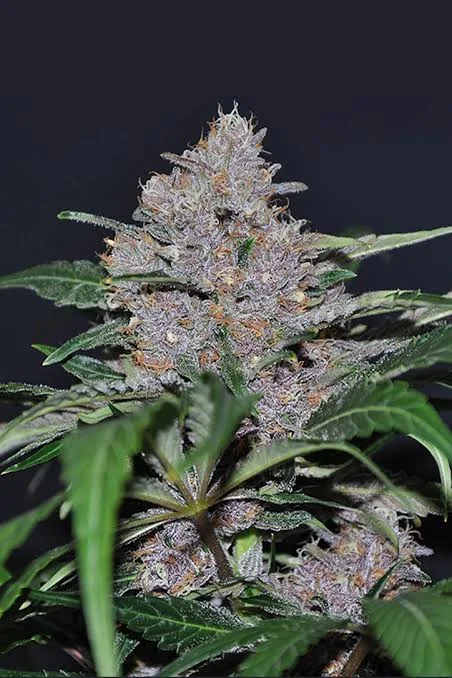
Quality Blue Dream flower carries visible trichome coverage across the buds, with green tones ranging from light sage to deep forest green. Some phenotypes pick up subtle blue and purple hues in the calyx structure, a nod to the Blueberry parent genetics. Look for dense, well-formed nugs with intact trichomes, vivid orange pistils, and no visible signs of mold, pest damage, or stem-heavy trim work.
- Aroma should be pronounced and berry-forward when the jar is opened
- Trichomes should be visible on dense nugs, ideally with a loupe for full evaluation
- Moisture should be appropriate: the bud should have some give, not crumble dry or feel damp
- A current COA should match the product in hand, including batch number where available
- Trim quality reflects overall care: heavy stem content suggests rushed processing
Best Time to Use Blue Dream
Blue Dream is primarily a daytime and early afternoon strain. Her effects land in a zone that supports productive use, creative work, and social settings without the sedation that would pull an afternoon off-course.
| Blue Dream Activity Pairing Guide | ||
| Time of Day | Activity | Why It Works |
| Morning | Creative work, writing, art projects | Uplifting onset supports focus without heavy sedation |
| Mid-Morning | Exercise, outdoor activities, hiking | Energy and mood boost pair well with physical movement |
| Afternoon | Social gatherings, conversations | Euphoria and sociability enhance connection naturally |
| Late Afternoon | Music, light tasks, casual entertainment | Relaxed creative energy without couch-lock risk |
| Evening (rare) | Winding down slowly after a full day | Higher servings may shift toward relaxation territory |
Who Should Choose Blue Dream?
Blue Dream is a reliable fit for experienced cannabis consumers who want a well-documented, daytime-friendly strain with a recognizable flavor profile and predictable effects.
It is also a reasonable choice for cannabis-curious consumers who want to start with something that has decades of documented user data rather than a newer, less-tested cultivar.
Blue Dream is a strong fit for:
- Experienced consumers seeking a reliable sativa-dominant hybrid with a documented track record
- Creative professionals using cannabis during non-driving, non-machinery-operating daytime hours
- Social consumers who want an uplifting, conversation-friendly experience
- Consumers who prioritize flavor and want a recognizable, berry-forward terpene profile
- Cultivators looking for a moderate-difficulty strain with high yield potential
Blue Dream may not be the right fit for:
- Consumers primarily seeking heavy sedation or sleep support
- First-time cannabis consumers with no prior experience with potent flower
- Consumers highly sensitive to THC-related anxiety at moderate to high servings
- Consumers seeking high CBD content with minimal THC intoxication
Cultivation and Growing Tips
Legal Note: Hemp-derived THCA flower is grown and sold under the 2018 Farm Bill, which requires hemp plants contain no more than 0.3% Delta-9 THC by dry weight at harvest. State laws vary significantly. Verify your state’s regulations before growing, purchasing, or possessing hemp-derived THCA products. See usda.gov for current federal hemp program guidelines.
Federal hemp regulations: USDA Agricultural Marketing Service hemp program
Is Blue Dream Easy to Grow?
Blue Dream is rated moderate difficulty for home growers. It is responsive to training techniques like LST (low-stress training) and ScrOG (screen of green), which help manage Blue Dream’s sativa structure and stretch.
It is not the most forgiving strain for absolute beginners, but Blue Dream is more predictable than many high-maintenance exotic cultivars. Its documented cultivation history means a lot of grow knowledge is publicly available, which helps newer growers troubleshoot common issues.
Flowering Time
Flowering time runs 9 to 10 weeks indoors. Outdoor growers in temperate climates typically target a mid-October harvest in the Northern Hemisphere. Blue Dream’s sativa genetics mean it stretches considerably during the first two to three weeks of the flowering phase. Expect Blue Dream to double or approach triple its vegetative height during that window. Indoor growers who do not top or train early may find its approaching the lights.
Yield Expectations
Blue Dream is a high-yield strain. Well-managed indoor grows can produce up to 21 ounces per square meter. Outdoor plants in optimal conditions can reach similar or higher yields, with large outdoor specimens in warm climates occasionally producing significantly more. Its yield potential was part of what made it commercially appealing to cultivators early in its history, and that characteristic has carried over into modern hemp-grown varieties.
Plant Structure
Blue Dream grows tall. Sativa genetics mean the strain stretches aggressively in early flowering. Indoor growers typically top or train early and use ScrOG setups to manage canopy height and maximize light penetration. Without training, Blue Dream can easily become the tallest plant in any tent or grow room. The tall structure is not a defect; it is a natural expression of the Haze genetics in her lineage.
Common Grow Problems
Blue Dream is susceptible to powdery mildew if humidity is not managed properly. Its dense buds hold moisture and can develop bud rot in high-humidity conditions, particularly in the final two weeks before harvest.
Keep relative humidity under 50% during the flowering phase and maintain adequate airflow through the canopy. Overwatering is a common mistake with sativa-leaning plants that have deep root systems. Let the medium dry down between watering cycles.
Harvest and Cure Tips
Harvest when trichomes show a mix of cloudy and amber: fully cloudy trichomes indicate peak potency, and the onset of amber signals the beginning of THC degradation.
A two-week dry in a controlled environment (60 to 65 degrees Fahrenheit, 55 to 60% relative humidity) followed by a minimum four-week cure in sealed glass jars will develop the full terpene profile.
Burp jars daily for the first two weeks. Curing improves flavor and smoke quality significantly, particularly for a terpene-forward cultivar like Blue Dream. A rushed or skipped cure is often the difference between a flat, grassy jar and a pronounced berry-forward experience.
Blue Dream Phenotypes, Variations, and Similar Strains
| Blue Dream Phenotypes and Variations | ||
| Variation | Profile | Notes |
| Classic Blue Dream | 60/40 Sativa, 17% to 22% THCA | The baseline most buyers recognize; blueberry dominant |
| Blue Dream OG | More indica lean, 18% to 24% THCA | Heavier body feel, more sedating finish |
| Blue Dream CBD | High CBD (10:1 ratio or similar) | Minimal intoxication; for those avoiding THC effects |
| Santa Cruz Blue Dream | Original California cut | Rarer, sought by collectors; true lineage uncertain |
| Blue Dream Auto | Autoflowering genetics | Shorter grow cycle, reduced yield, less stretch |
Strains Similar to Blue Dream
| Strains Similar to Blue Dream | ||
| Strain | Profile | Best For |
| Super Silver Haze | Parent candidate, sativa-dominant | High-energy focus, daytime productivity |
| Green Crack | Sativa, sharp focused energy | Very high-focus tasks, mental stimulation |
| Strawberry Cough | Sativa, sweet and uplifting | Social settings, conversation, mood lift |
| Durban Poison | Pure sativa, clean energetic | Active daytime use, exercise, outdoors |
| Purple Dream | Blue Dream x Purple Kush cross | Evening wind-down with Blue Dream character |
| Sour Diesel | Sativa, fuel-forward aroma | Creative and energetic daytime sessions |
Is Blue Dream Top Shelf?
Whether Blue Dream qualifies as “top shelf” depends almost entirely on who grew it, how it was cured, and what you see on the COA. The strain name has been applied broadly for decades, which means the quality range in the marketplace is enormous. A properly grown, carefully cured Blue Dream with a current COA and a terpene panel showing Myrcene, Pinene, and Beta-Caryophyllene at meaningful concentrations can compete with any cultivar for the right consumer.
The challenge is the “phenotype chaos” problem. Because the name has been used by so many breeders for so long, two “Blue Dream” products at different retailers may have meaningfully different genetic origins, terpene profiles, and THCA levels. The name alone is not a quality guarantee.
What defines top-shelf Blue Dream specifically:
- Current COA, not expired, with batch number matching the product
- Visible trichome coverage on well-formed, properly trimmed buds
- Pronounced blueberry terpene aroma from the jar, not grassy or flat
- THCA in the 20%+ range with a complete cannabinoid panel
- Cure quality that holds flavor and smoothness through the full session
Why Is Blue Dream So Popular?
Blue Dream is popular because it works. Not in a cutting-edge, exotic, limited-drop way, in a reliable, repeatable, “I know what I am getting” way. Blue Dream was one of the first modern hybrid strains to demonstrate that a recognizable flavor profile combined with predictable, balanced effects could carry a cannabis brand to national recognition. It helped write the playbook that boutique cannabis brands still use today.
The flavor is a significant part of it. In a category where most products at the time had a functional-but-harsh profile, Blue Dream offered something consumers could look forward to. The berry sweetness made her approachable for newcomers, and the reliable sativa-forward effects kept experienced users coming back. That combination is harder to build than it sounds.
Is Blue Dream Still Good in 2026?
Blue Dream is still in active rotation at quality hemp retailers in 2026. It is not the rarest cultivar on the menu, and that works in her favor. With decades of data on genetics, terpene profile, and reported effects, Blue Dream is one of the best-documented strains available to hemp-derived flower consumers. For experienced buyers who have moved toward exotics, Blue Dream may feel familiar. For consumers discovering premium THCA flower for the first time, it is one of the strongest starting recommendations in the category.
Blue Dream Awards, Reputation, and Cultural History
Blue Dream has won multiple cannabis awards over her documented history, including High Times Cannabis Cup recognition in the sativa category. Blue Dream has been featured in mainstream media coverage of the legal cannabis industry, referenced in popular culture, and remains one of the most-searched strain names on cannabis retail and review platforms.
Blue Dream’s cultural impact extends beyond the dispensary menu. Blue Dream was among the strains that helped normalize the idea of cannabis as a functional daytime option rather than a purely recreational, couch-oriented experience. It helped introduce the concept of a “balanced daytime hybrid” to a generation of consumers who had previously been told that cannabis was either a daytime sativa or a nighttime indica. The reality, as Blue Dream demonstrated, was more nuanced and more interesting than that binary.
Blue Dream’s reputation was built before the hemp-derived THCA market existed. Blue Dream arrived in the legal hemp space with a built-in audience, a documented track record, and a name that most consumers already recognized. That recognition is still unusual in a market that is, in most meaningful ways, still quite young.
Final Verdict: Is Blue Dream a Good Strain?
Blue Dream is one of the most reliable, well-documented sativa-dominant hybrids available on the hemp THCA market. It is not the highest-THCA cultivar, not the rarest phenotype, and it does not carry the mystique of a limited exotic drop. What Blue Dream does carry is a proven track record, a recognizable and genuinely enjoyable flavor profile, consistent terpene expression in quality batches, and decades of consumer data confirming that its effects land where expected.
For consumers who want a well-studied, daytime-friendly hybrid with blueberry character and uplifting effects, Blue Dream remains one of the strongest recommendations in the category in 2026. Buy from a retailer with a current COA on file. Verify the terpene panel. Give her the space that a sativa-forward strain deserves, and she will deliver.
Browse The Hemp Doctor’s current THCA flower inventory and current deals to find Blue Dream and other premium strains with COAs on file.