
THC-M Explained: Effects, Benefits, and Is It Worth Trying?


Ever heard of THC M, THC-M, or THCM? It sounds foreign, yet it has started to appear in some lab reports and early cannabis discussions. Discovered in cannabis smoke in 1977, THC M, or tetrahydrocannabinol monomethyl ether, stands out for its molecular structure and how it interacts with the body.
In August 2025, Mothers Against Addiction dropped a headline claiming THCM to be 29 times stronger than THC. But as you’ll soon read, that information is not quite right. New cannabis research shows THCM doesn’t really bind well to the body’s receptor that gives the classic marijuana high—CB1 receptor.
So, is THC-M still worth trying? Let’s break down the facts and find out.
🔑 Key Takeaways
- THC-M was first detected in cannabis smoke in 1977.
- Is THC-M 29 times stronger than THC? This is a Myth.
- THC-M stands for tetrahydrocannabinol monomethyl ether.
- Most THC-M today is semi-synthetic and partly made in a lab.
- THC-M works best in the company of other cannabinoids.
What Is THC M?
Tetrahydrocannabinol monomethyl ether, or THCM, is one of the lesser-known cannabinoids. While it sounds similar to THC, the main psychoactive compound in cannabis, THCM is actually quite different in how it’s formed and how it works in the body.
Here’s what’s surprising. THCM doesn’t naturally exist in cannabis flower. It was first found in cannabis smoke back in 1977, even in some CBD e-liquids after they degrade, and has since been known as a byproduct of THC. That means THCM only shows up after THC is heated and broken down, like during smoking.
It’s also been used as a marker for cannabis exposure during pregnancy for up to five months before birth.
Because it’s not present in the raw plant, THCM is considered “semi-synthetic.” This means it’s made in a laboratory using a chemical process rather than directly extracting from the plant.
Most of the THCM available in the market today is blended with other psychoactive cannabinoids such as THCA, Delta-8. This is because THC-M works best in conjunction with other cannabinoids.
11-Nor-Delta-9-Tetrahydrocannabinol-9-Carboxylic Acid {Carboxy-THC} is not the real name of THCM. This is a metabolite of THC, not an active cannabinoid. The more accurate, complete name of THCM is tetrahydrocannabinol monomethyl ether.
What’s the Structure of THC-M?
The structure of THCM closely resembles THC but with an extra methyl ether group (–O—CH₃) attached to the phenolic oxygen. In short, a methyl replaces the –OH group on the phenolic ring. This is what makes THCM a monomethyl ether of THC, an isomer of THC-H, and gives it unique properties and a different way of interacting with the body.
THCM is created through a process called “methylation.” This involves adding a methyl group (a chemical group made of one carbon and three hydrogen atoms) to THC in a lab.
Check out this comparison table between THC and THCM’s molecular characteristics.
| Feature | THC (Delta-9-THC) | THC- M (Tetrahydrocannabinol Monomethyl Ether) |
| Formula | C₂₁H₃₀O₂ | C₂₂H₃₂O₂ |
| Key Group | –OH (phenolic) | –O–CH₃ (methyl ether) |
| Receptor Affinity | CB1 (brain) | CB2 (immune system, in early studies) |
How is THC-M Made?
Because THC-M is not naturally occurring in cannabis and mostly appears in smoke or as a degradation product, it’s usually made in a lab through a semi-synthetic process.
To synthesize THC-M, laboratories begin with the extraction of CBD from high-quality, organically grown hemp. The process can be summarized as follows:
- Extraction of CBD: The step involves extracting CBD from hemp, typically done using CO2 or ethanol extraction, which preserve the integrity of the cannabinoids and terpenes.
- Conversion to THC: Once CBD is obtained, it undergoes a series of chemical transformations to convert it into THC.
- Methylation: The final step involves the addition of a methyl group (a simple carbon-hydrogen structure) to the THC molecule. This process, known as methylation, alters the chemical structure of THC, resulting in the formation of THC- M.
How Does THC-M Work?
The exact mechanism of how THC-M works remains unknown, as very few studies have been conducted in this area. However, one study found that cannabinoid ethers like THCM interact with the endocannabinoid system (ECS) by binding to the CB2 receptors.
CB2 receptors are mainly found scattered in the immune system and other parts of the body, suggesting that THC-M may help with various bodily functions without getting you high.
What makes THC-M even more interesting is how it works alongside other cannabinoids. When combined with cannabinoids like THC and CBD, THCM enhances the overall effect by balancing or counteracting some of THC’s more intense properties.
-
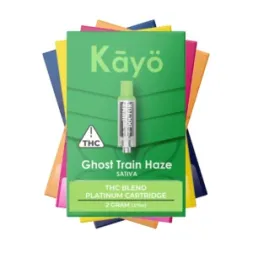
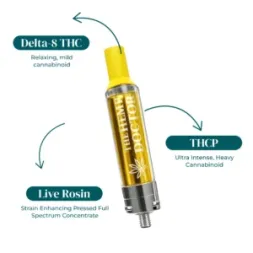
KAYO | THC BLEND VAPE CARTRIDGE | 2G
$15.00Shop Now This product has multiple variants. The options may be chosen on the product page
Does THC-M Get You High
Unfortunately, there is a lack of scientific consensus about THCM having psychoactive effects or the lack thereof. However, this is what we found out.
Unlike THC, which binds strongly to the CB1 receptors in the brain and causes psychoactive effects, THC-M has a very low affinity for CB1 receptors. This difference in interaction is largely due to THCM’s unique chemical structure.
THC-M is a methylated version of THC, meaning it has an added methyl group that changes how it fits into the body’s receptor sites, especially the CB1 receptors responsible for the “high” typically associated with cannabis.
THC-M cannabinoid doesn’t activate CB1 receptors in the same way THC does. Instead, it has a higher affinity for CB2 receptors, which are found mostly in the immune system and peripheral tissues. These receptors are not linked to psychoactive properties.
So, while THC-M may offer benefits such as mood support, it won’t deliver the traditional cannabis “high.” This makes THCM an appealing option for people who want the potential wellness effects of cannabinoids without getting high.
What Are the Effects of THC-M?
The effects of THC-M can vary, but it is generally not associated with the psychoactive high that THC produces. Many users report feelings of relaxation and mild euphoria, but these effects are often less intense than those associated with THC.
THC-M may also enhance the effects of other cannabinoids when used in combination, contributing to the entourage effect. This synergy can lead to a more balanced experience, where the benefits of multiple cannabinoids are felt without overwhelming psychoactivity.
Additionally, some users have noted improved focus and clarity. However, individual responses can vary widely, and more research is needed to determine the range of effects THC-M may offer factually.
While THC-M may provide some positive effects, it is not likely to produce the strong high associated with THC, making it a unique option for those looking for a milder experience.
Is THC-M Strong
When people talk about a cannabinoid being “strong,” they usually mean its ability to get you high or produce noticeable psychoactive effects. THC-M, however, is not strong in this traditional sense. Its structure includes a methyl group, which changes how it interacts with your body’s cannabinoid receptors.
Because of this modification, THC-M has a very low affinity for CB1 receptors—the ones in your brain responsible for the classic cannabis high. That means THC-M is unlikely to get you high, even if you consume it in significant amounts.
Instead, THC-M is more interested in CB2 receptors, which are found mostly in your immune system. This makes THC-M more about supporting wellness and less about mind-altering effects.
You might have seen claims, such as one from Women Against Addiction, that THC-M is “29 times more potent than THC.” This is not true. Scientific research shows that THC-M does have some activity, but it’s not stronger than THC, especially not when it comes to psychoactive effects. In fact, THC-M is considered milder and more subtle compared to THC.
What does this all mean?
THC-M is not strong in the way most people expect from cannabis. It won’t get you high. Always be cautious with claims about potency, and remember that more research is needed to fully understand THC-M’s effects.
So, What Is the Use of THC-M?
THC-M is used for its calming, body-focused effects without causing a high, mental fog, or intoxication that comes with THC. Since it mainly deals with CB2 receptors, THC-M is more about physical relaxation than mental stimulation. Users often say it helps them feel clear, relaxed, and balanced.
It also works well in blends with other cannabinoids like THCA, CBD, or CBG. That’s why you’ll often see THCM-formulated vapes in the market combined with stronger cannabinoids such as THC, THCP, and the like.
THC-M Products and How to Use Them
While not as widely available as THC or CBD, you can find THC-M in forms like vape cartridges, tinctures, and edibles from select brands and online retailers.
To use THC-M products, follow the same guidelines as you would for other cannabinoids, such as starting with a low dose to see how your body reacts, especially since THC-M is a rare and less-studied compound.
Vape cartridges are popular for quick effects, while tinctures are taken under the tongue for slower, more controlled absorption. Edibles offer a discreet option and provide longer-lasting effects.
Always check product labels for dosage instructions and third-party lab testing to ensure quality and safety. As with any new supplement, consult with a healthcare professional if you have concerns or underlying health conditions.
Where Can You Buy THC-M?
THC-M is a rare cannabinoid not widely available anywhere. However, it is still being sold mainly as a distillate for vape pens, disposables, etc., by a few key online retailers (“THCM products” on Google will yield several brands).
For brands looking to manufacture THCM-based products, your best bet is to check with specialized cannabinoid research suppliers or boutique online stores that focus on minor cannabinoids. However, always exercise caution and verify product authenticity, as THC-M is not yet regulated or widely tested for safety and efficacy.
How to Check the Authenticity of THC-M in Products?
Here’s the truth—THCM is hard to find and more difficult to produce. Hence, not all products labeled THCM actually have THC in them (let’s learn from the Johns Hopkins survey about the widespread mislabeling of CBD products).
Checking the authenticity of THC-M in products is important due to its rarity and limited market presence. Here’s a step-by-step guide to help verify if a product truly contains THC-M:
1. Review Product Labels and Claims
Check the label: Look for a clear mention of “tetrahydrocannabinol monomethyl ether” or “THC-M.”
Check for third-party testing: Reputable brands provide certificates of analysis (COAs) from independent labs.
2. Request or Download a Certificate of Analysis (COA)
Find the COA: The product’s website or packaging should link to a lab report.
Read the COA: Look for THC-M listed in the cannabinoid profile, with specific quantification (e.g., mg or %).
3. Verify the Testing Laboratory
Check lab credentials: Ensure the lab is accredited and recognized in cannabis or hemp testing.
Look for advanced techniques: Authentic THC-M detection requires methods like HPLC (High-Performance Liquid Chromatography) or GC-MS (Gas Chromatography-Mass Spectrometry), which are standard for cannabinoid analysis.
4. Contact the Manufacturer for Details
Ask questions: If details are unclear, contact the manufacturer for more information about sourcing, production, and testing.
What Is the Difference Between THC-M and Other Cannabinoids?
THC-M is a rare and understudied cannabinoid. While it shares structural similarities with alternative cannabinoids, it possesses unique characteristics that distinguish it from its counterparts.
Below is a comparative overview:
THC-M- M Vs THC
THC (delta-9-tetrahydrocannabinol) is the most famous cannabinoid, responsible for the classic cannabis “high.” It binds strongly to CB1 receptors in the brain, producing euphoria, altered perception, and relaxation.
THC-M, on the other hand, is a modified version of THC with an extra methyl group. This small change means THC-M doesn’t bind well to CB1 receptors, so it doesn’t cause psychoactive effects.
While THC is widely available and studied, THC-M is rare and not as well understood.
THC-M Vs THCA
THCA (tetrahydrocannabinolic acid) is the non-psychoactive precursor to THC found in raw cannabis. Like THC-M, THCA doesn’t get you high. However, THCA converts to THC when heated, while THC-M does not. Hence, THCA can get you high, but THC-M cannot.
THC-M Vs Delta 8
Delta 8 THC is another THC variant, but it’s less potent than Delta-9 THC and produces a milder, more relaxed high.
Delta 8 is popular for its calming effects and is widely available in many markets. THC-M, in contrast, is not psychoactive and is much harder to find. While Delta 8 targets CB1 receptors (though less strongly than delta-9 THC), THC-M is more drawn to CB2 receptors, which are linked to immune function.
THC-M Vs THCP
THCP (tetrahydrocannabiphorol) is a rare cannabinoid known for its extreme potency, reportedly up to 30 times stronger than delta-9 THC in some studies. THCP binds very strongly to CB1 receptors, making it highly psychoactive. THC-M, however, is not psychoactive and does not produce a high. Both are rare, but THCP is more understood compared to THC-M.
THC-M Vs THCV
THCV (tetrahydrocannabivarin) is a minor cannabinoid that acts in two opposing ways, depending on the dose. At low doses, THCV can reduce the psychoactive effects of THC, while at higher doses, it may produce mild psychoactive effects.
THCV is sometimes called “diet weed” for its potential to suppress appetite. THC-M, again, is not psychoactive and does not have these appetite-modulating effects.
THC-M Vs Delta 10
Delta 10 THC is another THC isomer that is less common and less studied. It is reported to produce a mild, clear-headed high, often described as uplifting and energizing. Like Delta 8, it is psychoactive but less potent than Delta-9 THC. THC-M, in contrast, is not psychoactive and is not associated with these energizing effects.
THC-M Vs CBD
CBD (cannabidiol) is the most widely used non-psychoactive cannabinoid. Both CBD and THC-M do not cause a high, but CBD is well-studied and widely available, while THC-M is rare and not as well understood.
CBD works by interacting with various receptors in the body, while THC-M is thought to have more affinity for CB2 receptors, which are linked to immune function.
THC-M Vs Other Cannabinoids Table
| Cannabinoid | Psychoactivity | Receptor Activity | Research Status |
| THC- M | None | CB2 Affinity | Very Limited |
| THC | High | CB1 Affinity | Extensive |
| THCA | None | Information not available | Moderate |
| Delta 8 | Mild | CB1 low-affinity | Growing |
| THCP | Very High | CB1 Affinity | Growing |
| THCV | Low to Moderate | CB1 Affinity | Moderate |
| Delta 10 | Moderate | B1 affinity | Growing |
| CBD | None | CB2 Affinity | Extensive |
Is THC-M Safe?
THC-M is generally considered not toxic, as it has been found in cannabis smoke. However, due to the lack of extensive studies, its overall safety for consumption remains uncertain. Always choose products with available lab results to ensure quality and authenticity.
Research Available About THC-M
Research on THC-M is very limited, but recent studies have begun to shed light on its potential effects. For a long time, people thought THC-M was inactive, just a chemical leftover with no real effects. However, more recent ongoing research has shown that’s not the case.
A 1991 study on cannabinoid analogues found that THC- M actually does have activity, meaning it can interact with your body’s cannabinoid receptors and produce effects. Another study showed that THC- M has a greater affinity for the CB2 receptor than for the CB1 receptor.
CB2 receptors are mostly found in the immune system, while CB1 receptors are linked to the brain and are responsible for the “high” from THC.
Is THC-M Legal?
THC-M’s legal status is not clearly defined in any state, as no state has specifically addressed tetrahydrocannabinol monomethyl ether by name. Under federal law, hemp-derived product contains less than 0.3 Delta 9 THC, are generally considered legal as long as they comply with the 2018 Farm Bill.
This means that hemp-derived THC-M should technically be federally legal, assuming it is made from compliant hemp.
However, some states have laws restricting or banning synthetic cannabinoids or chemically derived cannabinoids, and THC-M, being a semi-synthetic compound, could fall under these restrictions in those jurisdictions.
As of now, there is no official list of states that have specifically outlawed THC-M, but the following states have enacted laws that broadly restrict or prohibit chemically derived or synthetic cannabinoids, which could include THC-M:
- Alaska
- Colorado
- Delaware
- Hawaii
- Idaho
- Iowa
- Mississippi
- Montana
- Nevada
- North Dakota
- Oregon
- Rhode Island
- South Dakota
- Utah
- Vermont
- Virginia
- Washington
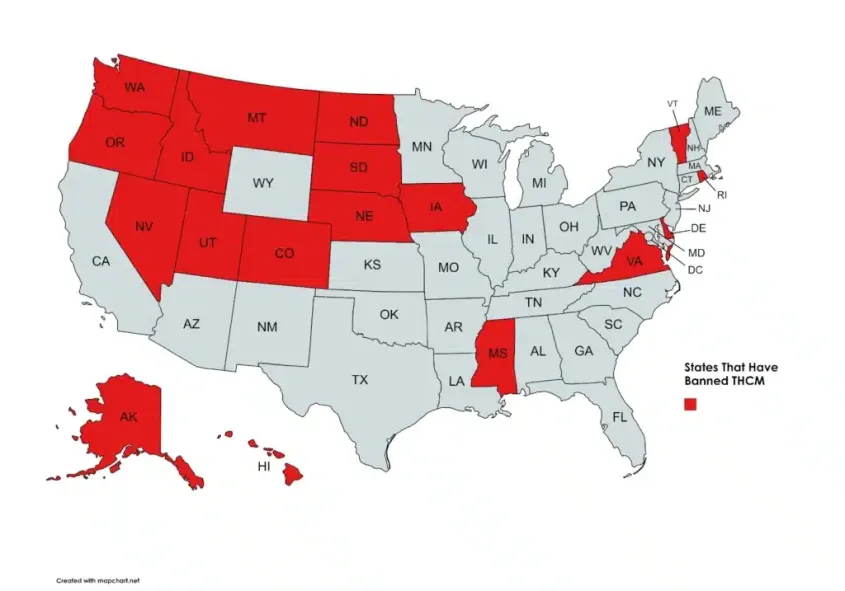
In these states, THC-M could be considered illegal under current synthetic cannabinoid laws. Check local laws before purchasing or using THC-M products within the vicinity.
So, is THCM Worth Trying?
THC-M is a rare cannabinoid that’s slowly but steadily finding its way to dispensary shelves. However, it is still largely uncharted territory. There’s very little research available and most of what has been said are theories, not facts.
If you’re fully committed to trying THCM vapes and similar products, you’re essentially experimenting with a compound we don’t know yet. If you value transparency and proven effects, you’re better off with familiar compounds like THC or CBD.
Ready to explore authentic, legal hemp-derived cannabinoids? Visit The Hemp Doctor to discover a wide range of premium hemp-derived US-made products backed by transparency and third-party testing.