Can You Fly With THCA? (Vapes, Buds, Gummies & More)

The simple answer to, “can you fly with THCA?” is: you shouldn’t. Sure, people on Reddit say they’ve done it, splitting up their carts and batteries, little tricks here and there, but it’s still a gamble you don’t want to take.
Tetrahydrocannabinolic acid (THCA) is a natural compound found in raw cannabis. Unlike delta-9-tetrahydrocannabinol (Delta 9 THC), THCA does not cause a high unless heated. Because hemp-derived THCA products under 0.3% THC are federally legal under the 2018 Farm Bill, many travelers assume it is safe to fly with them.
Here’s the catch: airports and airplanes operate under federal law, where all cannabis, hemp-derived or not, is treated as a controlled substance.
While the TSA (Transportation Security Administration) is not actively scanning for cannabis, if they come across THCA (especially in flower or vape form), they will treat it as a potential violation and refer it to local law enforcement.
This can be a big hassle for you.
While you might eventually prove it’s legal THCA, the process could take hours or days.
This is where product type matters. THCA flower looks and smells like marijuana, making it the riskiest. Edibles and vapes are more discreet, but they are not exempt from the same legal uncertainty.
Toying with the idea of carrying THCA from Denver to Boston, or from Seattle to Miami? This blog breaks down the real risks of such a plan, no matter how well-crafted. Stick around until the end to discover alternative ways to still enjoy THCA flower at your destination without the legal headaches.
🔑 Key Takeaways
- Unsealed or half-used products often draw more attention than sealed packages.
- If you are to pick a lesser evil, go with an edible instead of flower.
- Using an airport amnesty bin is safer than getting stopped at the checkpoint.
- Once you land, the laws of that state or country apply.
THCA vs. THC: Why the Difference Matters
Right off the bat, THCA is different from THC.
Raw cannabis has an abundance of THCA and less THC. Over time, THCA goes through a chemical process known as decarboxylation, where it loses its acidic group and becomes THC. This can happen due to exposure to direct heat or just long storage in a warm place.
Any THCA heated between 200-245ºF chemically converts into THC automatically. Light a THCA joint, fire up a THCA vape, or bake a THCA-infused edible, and THCA converts into THC. As a result, something hemp-legal turns into something treated as marijuana under federal law.
Here’s the catch: U.S. federal law defines legal hemp as cannabis containing no more than 0.3% delta-9 THC on a dry weight basis. Raw hemp-derived THCA that meets this threshold is legal, but because it converts into THC, it falls into a legal gray area.
Some states (such as California) calculate “total THC” (THC + potential THC from THCA) when regulating hemp products, while others only measure Delta-9 THC percentage exclusively.
When flying, however, legal nuances often take a back seat. If airport security or local police treat THCA as THC, travelers could face problems, even if their THCA product is compliant. In some states, you might be lucky to go unscathed if law enforcement determines that what you have is THCA and not THC.
While you might win the legal argument later, it’s hardly worth the risk of being detained or missing a flight.
TSA Guidelines for Flying With THCA
1. Marijuana and cannabis-infused products remain illegal under federal law, except for hemp items that contain no more than 0.3% THC on a dry weight basis or that are approved by the FDA.
2. TSA officers must report any suspected violations of law to local, state, or federal authorities.
3. TSA screening is focused on security threats. Officers are not actively looking for marijuana, but if they find it during screening, they will refer it to law enforcement.
4. The final decision on whether an item is allowed through rests with the TSA officer at the checkpoint.
Here’s what the official stance of TSA translates to when flying with THCA:
At the airport, the Transportation Security Administration (TSA) has a primary mission: to detect threats to aviation security. In short, they are looking for bombs, knives, guns, and anything that threatens passenger safety. They’re not out to hunt down weed, THCA, or vape pens.
In reality, however, if TSA’s X-ray scanners chance upon something that looks like cannabis, they might inspect it and, if necessary, refer it to local law enforcement. In many cases, they let travelers pass once it’s clear there’s no security risk, but this is not guaranteed because TSA’s policy stands to turn over anything that looks like marijuana to the local police.
Here’s where caution matters. Cannabis is still illegal under federal law, and airports are federal property. Some states, like California, even count THCA as total THC, which means what you think is hemp may be treated as marijuana under the law.
If the TSA decides to hand you over, the outcome depends on local enforcement. That could mean fines, delays, or losing your stash. Even if charges don’t stick, you’ll have wasted hours in questioning and possibly missed your flight.
However, that’s not all.
The amount you carry also matters. A single disposable pen or a few gummies probably won’t raise eyebrows. But show up with jars of flower, multiple vape cartridges, or bulk edibles, and it starts looking like intent to distribute. That’s when law enforcement might take things more seriously, even if you had no such plan.
Another thing to consider.
When you fly, federal law takes priority over state law. That means even if both your departure and arrival states allow THCA or recreational cannabis, TSA will treat your THCA flower (and other product formats) as federally illegal marijuana until tested.
Also, destination states vary in how strictly they enforce cannabis rules.
Some legal states may choose to confiscate your products and let you go, while others could pursue charges. South Dakota, for example, counts THCA toward total THC content, which can turn what you thought was hemp into marijuana under state law.
This clash between state allowances and federal bans is why traveling with THCA always carries risk, no matter how legal it seems locally.
While plenty of people slip through without issue, it’s always a gamble. The safest approach is to avoid traveling with THCA altogether and buy fresh when you land.
Flying With Different THCA Products
While THCA is the same compound in every product, not all forms attract the same level of scrutiny. Items that look like cannabis or give off a strong odor are more likely to raise questions at security. Liquids bring another challenge since you can only carry up to 3.4 ounces in your hand luggage.
Here’s a breakdown of the scrutiny level each THCA product type may receive at airports:
Can You Fly with THCA Vapes and Carts?
Not without risk. Although TSA recently updated its policy on flying with cannabis (exempting hemp products containing no more than 0.3% THC, in line with the 2018 Farm Bill), flying with THCA vapes and cartridges remains a gray area.
Different state laws and varying interpretations by TSA agents about flying policies, not to mention drug-sniffing dogs, create problems.
What about empty vaping devices like dry herb vaporizers? Flying with them locally is usually fine, as long as they’re completely empty of any residue. If you’re concerned that drug-sniffing dogs might detect cannabis in your vaping devices, it’s safer to leave them at home.
How about flying with vapes internationally?
In many countries, cannabis (hemp or marijuana) is still very much illegal in all forms. Even arriving with paraphernalia like an empty vape or dry herb vaporizer can result in fines, confiscation, or even arrest.
Can You Fly With THCA Flower and Pre-Rolls?
In case you plan to carry THCA flower or pre-rolls, remember these get the most attention. They look, smell, and even feel like marijuana, which is enough to trigger extra checks. So, flying with them is a hard no.
Can You Fly With THCA Gummies, Edibles, and Drinks?
THCA gummies and edibles usually look just like food, so they are generally less conspicuous than flower or vapes. However, flying with them isn’t exactly risk-free. If they are labelled with THC, found in unusually large quantities, or have a strong, distinct marijuana odor, it can draw scrutiny.
Here’s a tricky one. Let’s say you have a half-eaten cookie you don’t want to toss. What should you do? Don’t carry it through security, as half-used edibles look suspicious and will almost always get pulled.
With THCA-infused drinks, they will be treated like any other liquid, meaning that if they exceed 3.4 ounces, they are not allowed in your carry-on. Even then, they also fall into a gray area where TSA officers may inspect them.
THCA Concentrates and Tinctures
Concentrates, regardless of content, are one of the most problematic THCA products to fly with because, second to flower, they most closely resemble controlled substances. For example, THCA concentrates in jars, unmarked vials, and similar containers are often associated with cannabis extracts.
Tinctures, while more discreet than concentrates, can still be misconstrued by TSA agents as substances.
THCA Topicals
Topicals are the least problematic type of THCA product to fly with. Most travelers have flown with topicals for years without issue because they don’t resemble anything associated with controlled substances. THCA topicals are treated more as personal care items than cannabis products. They are still considered liquids, though, so containers must be 3.4 ounces (100 milliliters) or less if carried in your carry-on.
States & Airlines With Stricter Rules
Some states treat THCA as marijuana, no matter what the label says. In these places, even hemp-derived products that test under 0.3 percent THC are considered illegal. So be particularly extra cautious (leave your THCA stash at home) when these places are your destination states.
Idaho
Idaho has some of the toughest hemp laws in the country. Any product that contains detectable THC or THCA is illegal. Even hemp-derived items that meet federal standards are not allowed. Flying to Idaho with THCA is one of the highest-risk moves you can make.
South Dakota
South Dakota applies the total THC rule under Codified Law 38-35. This means both THC and THCA are added together in testing. Most THCA flower will test above the 0.3 percent threshold once converted. As a result, nearly all THCA products are treated as marijuana.
Hawaii
Hawaii also measures total THC according to the Hawaii Administrative Rules (HAR) Chapter 11-37. THCA content is counted toward the legal limit, which restricts hemp flower that might look compliant elsewhere. Tourists carrying THCA in or out of Hawaii airports risk seizure and possible charges.
Kansas
Kansas bans THCA outright. Hemp-derived products are only legal if they contain no THC and no THCA. This makes THCA flower, carts, or edibles illegal. Carrying them through an airport in Kansas is treated as possession of marijuana.
Rhode Island
Rhode Island law does not separate THCA from THC. Anything that looks or tests like cannabis is regulated as marijuana. There is no exception for hemp-based THCA products.
Utah
Utah allows hemp extracts that do not intoxicate. THCA flower and concentrates fall outside that scope. Travelers leaving Utah with THCA face the risk of confiscation and possible arrest.
Vermont
Vermont hemp rules include THCA in total THC. Hemp products must remain under 0.3 percent combined THC and THCA. Flower with even moderate THCA levels fails the test.
Arizona
Arizona also measures total THC. THCA counts toward the final limit, making most flower non-compliant. THCA items are treated like marijuana under state law.
Arkansas
Arkansas has moved to block intoxicating hemp derivatives. THCA flower, concentrates, and infused products are included. Travelers caught with THCA products may face charges the same as marijuana possession.
Flying with THCA through these states is risky. Even if your product looks compliant, state laws decide how police respond once TSA makes a referral. At best, your products may be thrown away. At worst, you may face charges, delays, and missed flights. If you are departing from or connecting through one of these states, the safest choice is to leave THCA behind.
Airlines With Tighter Rules
Airlines do not have THCA-specific policies, but they treat cannabis products as prohibited. The level of enforcement depends on the departure location.
Some carriers have been stricter about checking for vapes, carts, and labeled cannabis products. Others rely on TSA and local police to make the call. Always check the airline’s rules before you fly.
For the complete list of how airlines handle flying with cannabis and its product types, visit the section “Airline Regulations” of our Flying with Delta 8: Essential 2024 Rules & Protocols article.
Safer Alternatives to Flying With THCA
Flying with THCA is always a gamble. If you want to avoid the risk, there are safer ways to get your products without carrying THCA on a plane.
Order THCA online
One option is to order THCA online. Licensed hemp companies ship to all 50 states as long as the product meets the federal standard of less than 0.3 THC on a dry weight basis.
Reputable vendors provide third-party lab results, discreet packaging, and compliance labels. This lets you get what you need delivered to your door instead of carrying it with you through an airport.
Mailing Your Own Stash
Another alternative is mailing your own stash legally. USPS allows hemp products that meet the federal definition. They only mail within the US, except military addresses. Make sure your package meets the following requirements:
- You must keep documentation that shows the source, testing results, and compliance with the Farm Bill.
- Packages should be sealed and labeled correctly.
Buy THCA in Your Destination (Most Popular Way!)
You can also purchase THCA upon arrival. Many legal states have dispensaries or hemp shops with THCA flower, vapes, and edibles. This option saves you the stress of checkpoints or questioning. It also ensures the product is fresh and compliant with local rules.
-
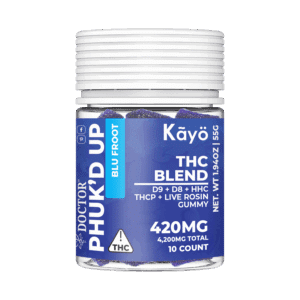
PHUK’D UP | THC BLEND GUMMIES | 420MG
Price range: $5.95 through $39.95 — or subscribe to save 25%Shop Now This product has multiple variants. The options may be chosen on the product page -
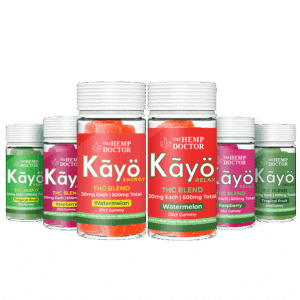
KAYO | RAPID RELEASE THC BLEND GUMMIES | 30MG
Price range: $5.95 through $39.95 — or subscribe to save 25%Shop Now This product has multiple variants. The options may be chosen on the product page -
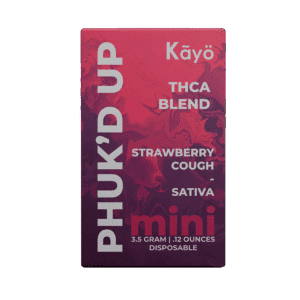
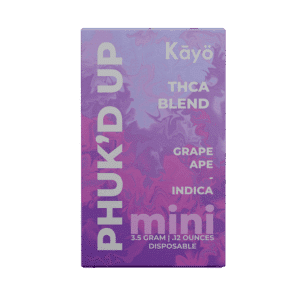
PHUK’D UP | THC BLEND DISPOSABLE VAPE | MINI 3.5G
$54.95 — or subscribe to save 25%Shop Now This product has multiple variants. The options may be chosen on the product page
Traveling With THCA Cheat Sheet
Avoid Flying With THCA, Buy in Your Destination
Traveling with THCA is never risk-free. Airports and airplanes fall under federal law, and cannabis remains illegal at that level. TSA officers do not actively search for cannabis, but if they find it, they must pass the case to law enforcement. The outcome may be as simple as confiscation or as serious as arrest, fines, and missed flights.
Certain products attract attention faster. Anything that looks or smells like marijuana is more likely to trigger extra checks (think flower). Liquids over 3.4 ounces are always flagged, and large amounts are often treated as trafficking rather than personal use.
Lastly, international flights pose even greater risks, with penalties that can include lengthy prison terms.
The best option is to avoid flying with THCA altogether. Order legally from online vendors, ship through approved channels, or buy what you need at your destination. When in doubt, do not risk it; your time and freedom are worth more, yeah?