Is THCP Natural or Synthetic? Where It Really Comes From

Quick Answer: THCP is a naturally occurring cannabinoid found in the cannabis plant, but the THCP in almost every product on the market is made through semi-synthetic conversion from hemp-derived CBD. Both facts are true at the same time, and the distinction matters when you are deciding what to buy.
If you have been looking into THCP, you have probably run into two different answers to the same question. One article tells you THCP exists naturally in cannabis. The next one calls it a synthetic cannabinoid you should avoid. Neither answer is wrong on its own, but neither tells the full story either. The reality lives in the gap between the molecule, which is natural, and the product, which is usually made in a lab from a natural starting material.
This guide walks through that gap honestly. You will learn where THCP comes from in nature, why companies do not just extract it directly from plants, how it compares to other hemp-derived cannabinoids on the natural-to-synthetic spectrum, and what to look for so you can shop with confidence rather than guesswork.
🔑 Key Takeaways
- THCP occurs naturally in cannabis, but only in trace amounts, typically less than 0.1% of the plant’s cannabinoid content.
- The THCP in your gummy or vape is almost certainly produced through semi-synthetic conversion from hemp-derived CBD, not extracted directly from flower.
- THCP has a unique molecular structure with a longer 7-carbon side chain, which is one reason many consumers describe it as strong.
- Semi-synthetic does not mean fully synthetic. THCP sits alongside Delta-8 on the spectrum, not alongside K2 or Spice.
- A current third-party Certificate of Analysis, or COA, is the most reliable way to confirm what is actually inside any THCP product.
Is THCP Natural? The Honest Two-Part Answer
Here is the part that many competing articles get wrong. They pick a side and stick with it when the accurate answer requires holding two ideas at once.
The molecule is natural. THCP, short for tetrahydrocannabiphorol, was identified in cannabis in 2019 by a team of Italian researchers led by Cinzio Citti and Giuseppe Cannazza at the University of Modena and Reggio Emilia. They confirmed THCP exists naturally in cannabis plants as a real, plant-produced phytocannabinoid.
The product is usually semi-synthetic. The THCP you find in a gummy, tincture, or THC vape cartridge was almost never extracted directly from cannabis. Instead, it was made in a lab by converting hemp-derived CBD into THCP through a chemical process. The molecule that ends up in the product matches the one the plant makes. The path it took to get there is different.
So is THCP natural or synthetic? The cannabinoid is naturally occurring. The commercial supply is semi-synthetic. Anyone who tells you only one of those things is leaving out information you need.
Natural Origins vs. Commercial Production
Where THCP Exists Naturally in Cannabis
When the Italian research team examined an Italian cannabis variety known as FM2, they found THCP present at a concentration of roughly 0.0029% by dry weight. Other varieties tested showed similarly low levels. That is well below 0.1%, and in many samples it is closer to a rounding error than a practical harvest yield.
For comparison, a strong cannabis flower might test at 20% to 30% Delta-9 THC or THCA. THCP exists naturally in the same plant, just at a fraction of a fraction of that concentration. The cannabinoid is real. The quantity is the problem.
This is why “THCP-rich strains” do not really exist in the way “high-THC strains” do. No cultivar has been bred to produce commercially useful levels of THCP. The plant simply does not make enough of it.
How Commercial THCP Is Actually Made
Because the cannabis plant produces THCP only in trace amounts, extracting it directly is not economically practical. You would need a warehouse full of biomass to recover a gram of finished THCP, and the process would be wildly expensive. So manufacturers take a different route.
Commercial THCP is produced from hemp-derived CBD using a multi-step laboratory process. CBD is isolated from federally compliant hemp, then chemically modified to extend its side chain and rearrange the molecular structure into THCP. The finished molecule matches the compound the plant makes naturally. The starting material, CBD, is just easier to obtain in bulk.
This is the same pathway used for many other hemp-derived cannabinoids, including Delta-8 THC. If you want a deeper look at the chemistry itself, our breakdown of how THCP is made walks through the conversion in plain language.
Where THCP Fits on the Natural-to-Synthetic Spectrum
The phrase “natural versus synthetic” sounds like a binary. In cannabinoid chemistry, it is really a spectrum. Placing THCP on that spectrum is the easiest way to understand what you are actually buying.
| Category | What It Means | Examples |
| Fully natural, directly extracted | Pulled from cannabis flower without chemical conversion | Delta-9 THC and CBD from cannabis flower, THCA from raw hemp |
| Naturally derived but isolated | Refined or purified from plant material without converting it into something else | CBD isolate, Delta-9 distillate |
| Semi-synthetic from hemp-derived CBD | Starts as a natural plant compound, then chemically converted into a different cannabinoid | Delta-8 THC, THCP, THCH, THCB, Delta-10 THC |
| Fully synthetic, no plant material | Designed and built from non-cannabis chemical starting materials | Spice/K2, JWH compounds, which are not legal hemp products |
This is where the conversation gets clearer. THCP sits firmly in the third category. It comes from a hemp plant compound that was modified in a lab, but it was not invented from scratch like Spice or K2. Lumping THCP in with those research chemicals is inaccurate, and any article doing so is either uninformed or deliberately scaring you.
Semi-synthesis itself is not unusual outside of cannabis. Plenty of everyday products follow a similar pattern, where a natural compound or natural reference point is recreated, refined, or modified through a manufacturing process. The phrase “semi-synthetic” describes a process, not a quality grade.
Is Semi-Synthetic THCP Safe?
This is the question buried under all the others, and it deserves a direct answer. Current research on THCP is still developing because the cannabinoid was only identified in 2019. What is commonly discussed about THCP is that its molecular structure differs from that of Delta-9 THC, including a longer side chain. That structural difference is one reason many adult consumers describe THCP as noticeably strong in small serving sizes.
That perceived strength is why serving size matters. A standard THC serving may not feel standard with THCP, and edibles in particular can feel more pronounced than expected. Our guide on how strong THCP is covers this in more detail, along with suggestions for starting with a small amount.
The semi-synthetic process itself is not automatically a mark against the product when it is done carefully. The concern comes from poorly executed conversions, leftover solvents, unwanted byproducts, or inaccurate potency labeling. Those are not unique to THCP as a compound. They are manufacturing and quality-control issues. That is also why a verified Certificate of Analysis matters more for THCP than for many other cannabinoids.
How to Tell If Your THCP Product Is Quality
If the conversion process is the main quality concern, then verifying the process is the source of confidence. A quality THCP product, whether a gummy, tincture, or THCP vape, leaves a clear paper trail. You should be able to find a current third-party Certificate of Analysis matching the batch on the package, with potency results showing the actual milligrams of THCP and any other cannabinoids in the product.
Look for residual solvent testing, heavy metals testing, and pesticide testing on the same COA. These panels help identify issues from the semi-synthetic conversion or from the source material. A potency-only COA is a red flag. A full panel from an accredited lab is the standard you want.
| What to Check on a THCP Product | Why It Matters |
| Current batch-specific COA | Confirms the lab result matches the product in your hand |
| Potency for THCP and other cannabinoids | Tells you the actual serving strength, not just a marketing claim |
| Residual solvents panel | Checks for leftover chemicals from the CBD-to-THCP conversion |
| Heavy metals and pesticides panel | Helps verify the quality of the hemp source material |
| Manufacturer transparency and contact info | Quality producers stand behind their products publicly |
If a brand cannot or will not show you any of this, that is your answer. Move on.
A Note on “THCP Flower”
Here is something worth clearing up because the marketing confuses a lot of shoppers. No cannabis strain naturally produces high levels of THCP. There is no such thing as a “THCP-dominant cultivar,” the way there are THCA-dominant or CBD-dominant cultivars.
So what is “THCP flower” or “THCP-infused flower”? It is regular hemp flower, often the same kind of hemp flower used for CBD or THCA products, that has been sprayed, dipped, or coated with converted THCP distillate. When that is done by a quality producer with even application and clear labeling, it can be a legitimate product format. The flower carries the THCP into your session through smoke or vapor.
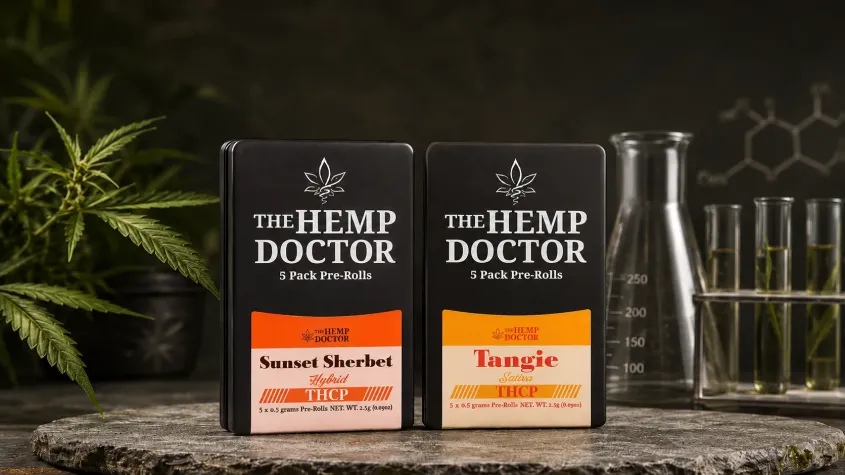
What it is not is “more natural” than a THCP gummy or vape. The THCP went through the same semi-synthetic conversion regardless of whether it ended up sprayed on flower or dissolved into gummy syrup. The format changes. The origin does not. If you prefer flower, our pre-rolls selection and broader flower category cover a range of cannabinoid options, including infused formats.
Find Lab-Tested THCP Products at The Hemp Doctor
Knowing how THCP is produced changes the way you shop for it. Instead of asking “Is THCP synthetic or natural?” as a yes-or-no question, you start asking better ones. Where did the source hemp come from? Was the conversion done cleanly? Does the finished product match what the label claims? Those are the questions a current, batch-matched Certificate of Analysis can actually answer.
That is also why we publish lab results for every cannabinoid product we sell. If you are exploring potent hemp-derived cannabinoids, start with clearly labeled, lab-tested options like The Hemp Doctor’s Zooted THCP + Delta-9 Gummies and review the COA before you try.
Always consult a healthcare professional before adding any new supplement to your routine.