
Northern Lights Strain: Complete Profile Breakdown
Northern Lights
THC
16% to 21%
CBD
Less than 1%
Intensity
Moderate
Strain type
Pure indica
Dominant terpenes
Primary effects
Side effects
Lineage
Northern Lights Strain Description
In this day and age of hybrid, boutique cannabis strains, you won’t often come across a pure indica that works as advertised and gets the job done. Enter Northern Lights.
This is a highly popular strain among those who prefer their smoking sessions to induce a relaxing experience. If you’re more about slowing the world down than having your mind run at a faster pace, this classic indica can be an instant favorite.
Now, without further ado, let’s get into the nitty-gritty details about Northern Lights, specifically its genetics, effects (both the good and not so good), and how to properly grow it if you’re into cultivation.
This is going to be a short yet packed piece that is easy to read. Be sure to stick around until the end.

“In today’s world of modern, “boutique” cannabis strains, legendary variants like Northern Lights are almost always guaranteed to provide that old-school experience that seasoned herb-lovers appreciate: natural aromas, deep, distinct flavors, and a euphoric, sedating high. That’s a bang for the buck. ”
The Hemp Doctor CEO
Northern Lights Strain Genetics & Origin
Northern Lights’ backstory is quite colorful. Ask any veteran grower, and they will tell you about the strain’s mix of Pacific Northwest influence and Dutch refinement. It’s as old-school as it gets, with numerous sources claiming it dates back to the 1970s.
The genetic foundation of this popular strain is a cross between two landrace strains: an Afghani Indica and a Thai Sativa. But its origin story is more legendary. Most sources trace its origins to an island near Seattle, Washington, where a mysterious breeder simply known as “The Indian” developed 11 variants of Northern Lights.
Said breeder labeled these different variations #1 through #11. As the mid-80s set in, the evolution entered full swing. The Northern Lights genetics reached Neville Schoenmaker in the Netherlands. Schoenmaker took the clones from Seattle and backcrossed them with the Afghani parents, creating a version of Northern Lights that became the global standard.
-
Sale!60% Off

THCA SUGAR DIAMOND INFUSED PRE-ROLLS | 5-PACK TINS
Original price was: $29.95.$11.98Current price is: $11.98.Shop Now This product has multiple variants. The options may be chosen on the product page
User-Reported Northern Lights Strain Effects
- Relaxed
- Euphoric
- Sleepy
Northern Lights’ THC content isn’t as high as many of its contemporaries, falling between 16% and 21%. Users describe its psychotropic kick as moderate to high, but it also has a reputation for being a “two-hit-and-quit” strain.
Mental relaxation and euphoria happen within the first 15 minutes, followed by the famous couch-lock sensation at its peak when it hits the first hour. As the effects begin to taper, sleepiness kicks in without leaving the dreaded “weed hangover” the next morning.
Northern Lights Side Effects
- Dry Mouth
- Dry Eyes
- Lethargic
The strain name itself connotes being amid the night sky, which may suggest that its calming effects can induce a lethargic episode as you increase consumption. If you’re amongst friends, that can immediately cut your smoking night short. And of course, you may deal with dry eyes and dry mouth, which is never fun.
As we always advise at The Hemp Doctor, don’t rush it. Control your intake with small doses at first, then gradually increase once you’re comfortable. Also, don’t forget to hydrate.
Flavor and Aroma
If you love old-school strains that deliver classic flavors and aromas, you can’t go wrong with the Northern Lights weed strain.
Right off the jump, when you open a bag, you will notice the pungent and earthy scents, particularly of pine and forest. Underneath it all is a musky sweetness, almost reminiscent of honey, that balances the sharp herbal aromas.
You will also sense some spicy undertones that may give off a faint peppery kick. This is all thanks to its Afghan lineage.
As for its flavor, wood and pine are the primary notes, cleaner and more organic. Underneath it are light citrus and lemon flavors that add tanginess to its taste profile. The finish is spicy and herbal, thanks to the presence of Caryophyllene.
Dominant Northern Lights Strain Terpenes
- Myrcene
- Caryophyllene
- Limonene
Myrcene is the most dominant terpene among the three. It is responsible for the signature musky, herbal scent and a tranquilizing kick that may induce couch-lock if you’re not careful. Caryophyllene adds a peppery kick to the Northern Lights strain’s smell and flavor, while also promoting deep physical comfort.
Last but not least, the presence of Limonene adds a subtle citrus undertone and mood-elevating properties, making the sedating effects less overwhelming.
Physical Characteristics
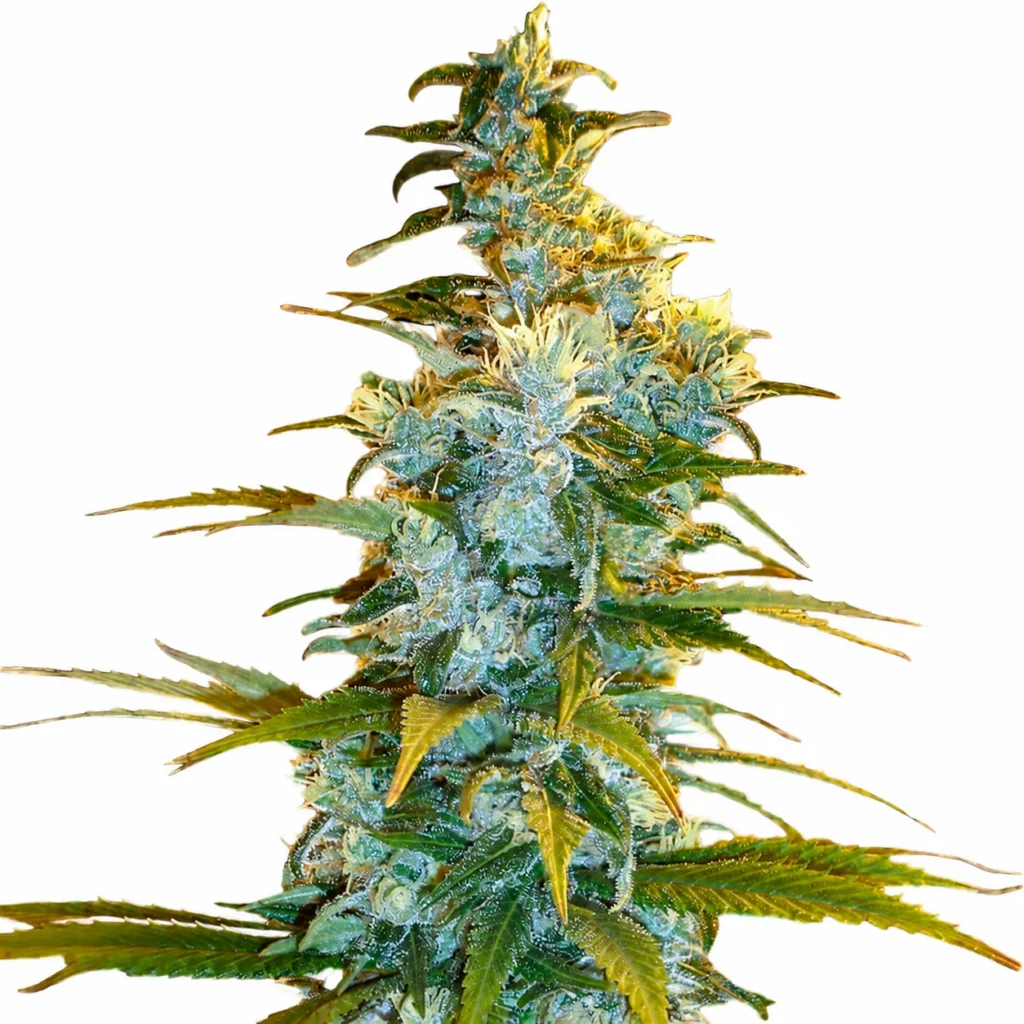
Northern Lights is a classic indica strain, and you can see it in its structure. It grows relatively short, dense, and bushy, filled with resin. Its stalks are sturdy, thanks to its Afghan genetics.
Its flowers are thick and tightly packed, boasting a deep olive green hue. The blue and purple streaks (depending on the phenotype), along with the bright orange pistils, provide accents that make it a feast for the eyes.
But the one trait that makes Northern Lights an eye-catcher is the frosty layer of trichomes on its surface. That crystalline effect almost makes the plant glisten, like a sugar-dusted treat.
Cultivation and Growing Tips
Because of its versatility and low-maintenance reputation, growing Northern Lights is a breeze for most cultivators. It is notably resilient against pests and can adapt to even the smallest environmental fluctuations.
While it can be a forgiving strain that responds well to basic care, Northern Lights still warrants training methods like Sea of Green or Low-Stress Training. These methods help manage height and keep the bushy appearance it is known for.
Northern Lights is also a moderate feeder. Most experienced growers recommend using nitrogen-rich nutrients during the vegetative phase, then move to higher amounts of phosphorus and potassium when the plant enters flowering.
Environmental Needs
Northern Lights thrives in consistent temperatures, specifically between 70–80°F (21–27°C). Exposing it to cooler nighttime temperatures between 55°F and 60°F (13°C and 15°C) can help make its purple hues stand out more.
In terms of relative humidity, it is best to keep it between 50% and 60% RH during the vegetative stage. To prevent bud rot or mold from developing on its dense buds, lower the humidity to 40%-45% RH during flowering.
Flowering Time and Harvesting
Northern Lights is known as a fast-flowering cannabis strain. Growing it indoors can lead to a short flowering time of 7 to 9 weeks. If you’re growing outdoors, it is ready for harvest in late September and early October.
A key indicator that the plant is ready for harvest is in its trichomes. You’re good to go once you see them mostly milky and cloudy, with about 10-20% turning amber. Seeing these signs on your plant enhances the relaxing kick.
Yields
Another thing that makes growing Northern Lights satisfying is its yields. Indoor cultivation can yield up to 550 grams per square meter when grown under optimal lighting (using a 600W HPS or an equivalent LED).
Meanwhile, outdoor growing can yield 600 grams per plant or more, as long as you provide the plant with a warm, sunny climate and sufficient root space.
What You Might Not Know About Northern Lights Strain
Given its popularity and longevity, Northern Lights is one of the most documented strains in history. However, many details of its background remain largely unknown to the general cannabis-loving public. Here are some of them:
- The #5 and #2 phenotypes of Northern Lights are the quintessential parents of modern cannabis. The former is considered the “queen” for its massive yields and resin production, while the latter is known for its pungent aroma. These two are the documented parent strains of famous names like Jack Herer, Shiva Skunk, and Super Silver Haze, to name a few.
- Northern Lights consists almost entirely of Afghan landrace genetics with a trace of Thai Sativa. Unlike most modern poly-hybrids bred from a mix of different strains, this one is deemed genetically “cleaner.”
- Northern Lights was the very first winner of the High Times Cannabis Cup in 1988. It also won in 1989 and 1990, helping it gain a reputation as the most superior strain of that era.
- Unlike a typical “skunk” strain, Northern Lights emits a very low odor during the growing phase, and it is apparently by design. Breeders in the 70s and 80s prioritized earthy and neutral scents to help home growers maintain discretion.
- The original Northern Lights #1 (or simply NL#1 is considered by most cannabis historians as a “lost masterpiece of pure landrace genetics.” And because of its pure landrace genetics, it lacked commercial stability and became difficult to clone.
Related Strains of Northern Lights
If you’re looking for other strains to explore that provide a similar Northern Lights experience, here are five you can check out.
- Shiva Skunk: This powerhouse strain came from the union of Northern Lights #5 and Skunk #1. Shiva Skunk has the same heavy resin production and heavy-hitting pungency.
- Super Silver Haze: This strain is a three-way cross between NL#5, Skunk, and Haze. The Northern Lights genetics provide the dense bud structure and short flowering time.
- Jack Herer: This famous sativa is another three-way cross, this time between NL#5, Shiva Skunk, and Haze. That union bred an energizing sativa that has become a favorite among many.
- Aurora Borealis: This is a direct sibling cross of Northern Lights #10 and Skunk #1. Many consider it to be the “refined” version of Northern Lights, designed for a sweeter, skunkier, and more intense aroma.
- Black Domina: This indica hybrid has Northern Lights #1 as one of its four parent strains. Black Domina is best known for its dark foliage and heavy sedative effects.
If you enjoyed this deep dive on Northern Lights, you’ll find more like it in our Strain Guide, where we break down the genetics, terpenes, and effects of every strain we cover.
Ready to bring an indica home? Browse our Indica THCA Flower collection for top-shelf, lab-tested flower.