Hemp Derived THC VS THC Derived From Marijuana: Similar or Different?

The cannabis industry has evolved from straightforward weed to innovative offerings like topicals and beverages. And yet, according to a 2021 poll, 58% of Americans still think marijuana-derived THC and CBD are one, suggesting a general lack of awareness about hemp and marijuana-derived cannabinoids. This confusion likely extends to Delta-9 THC, a major cannabinoid in which the entire industry sits.
While delta-9 THC can be extracted from two different plant sources—hemp and marijuana—the resulting compound is chemically identical, regardless of its origin. Hemp based THC and marijuana-derived THC are virtually the same in terms of structure and effects.
Let’s clear up the confusion through this myth-busting guide.
🔑 Key Takeaways
- The distinction between hemp or marijuana-derived THC stems from source and legal classification, with hemp-derived THC enjoying legal status at the federal level.
- Regardless of whether it’s sourced from hemp or marijuana, delta-9 THC is identical at the molecular level. As a result, its effects and safety profile remain consistent, regardless of its origin.
What is Hemp Derived THC?
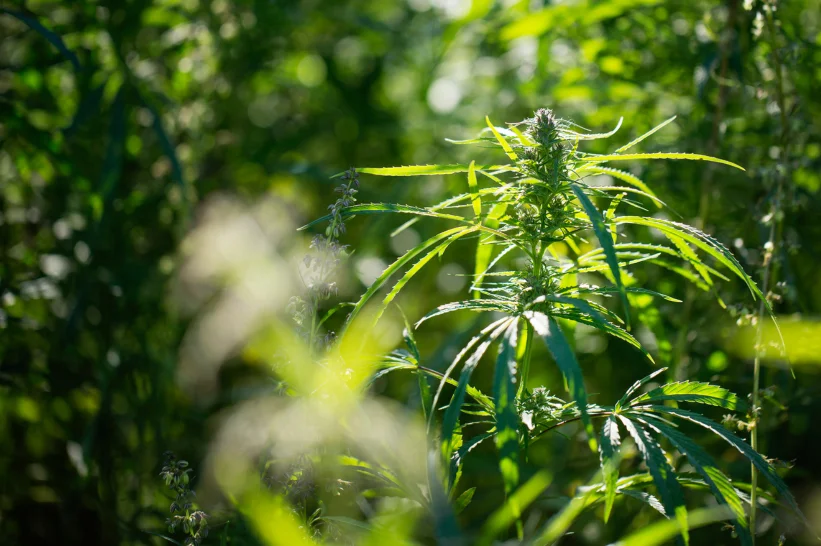
Hemp-derived Delta 9 THC, or simply THC, is extracted from industrial hemp—a type of cannabis containing less than 0.3% THC by dry weight and is federally legal under the 2018 US Farm Bill, now called the Agriculture Improvement Act of 2018.
Through intricate extraction methods, producers concentrate a trace amount of THC from hemp and create a legal product that can be sold in the US, no questions asked. Another way of getting a hemp-derived THC that is still well within the legal grey area is by chemically converting hemp derived CBD into THC.
Other cannabinoids found in industrial hemp include Delta-8 THC, Delta-10 THC, CBD products, and more.
Hemp and marijuana are two different species of the cannabis plant. Hemp is a combination of male and female cannabis plants, with its flowers producing less than 0.3% THC. On the other hand, marijuana is mainly bred as female plants, with its flowers producing an average of 30% THC at most.
What is Marijuana-Derived THC?
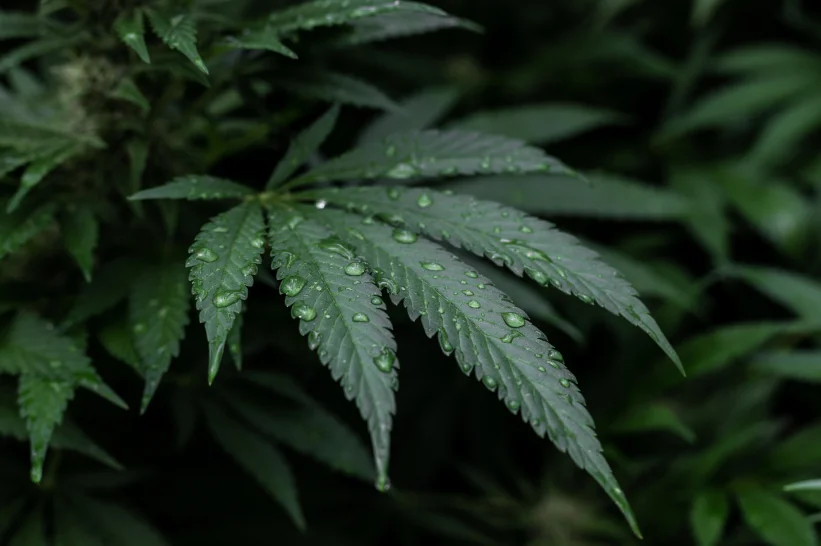
Marijuana-derived Delta 9 THC is sourced from marijuana, a type of cannabis plant with notably high THC content (contains beyond the allowed 0.3% THC by dry weight limit).
Products made from Delta 9 extracted from marijuana are prohibited at the federal level. At the state level, marijuana-derived Delta 9’s legality hinges on state regulations for medical and recreational programs.
Hemp-Derived THC vs. Marijuana-Derived THC: Similarities & Differences
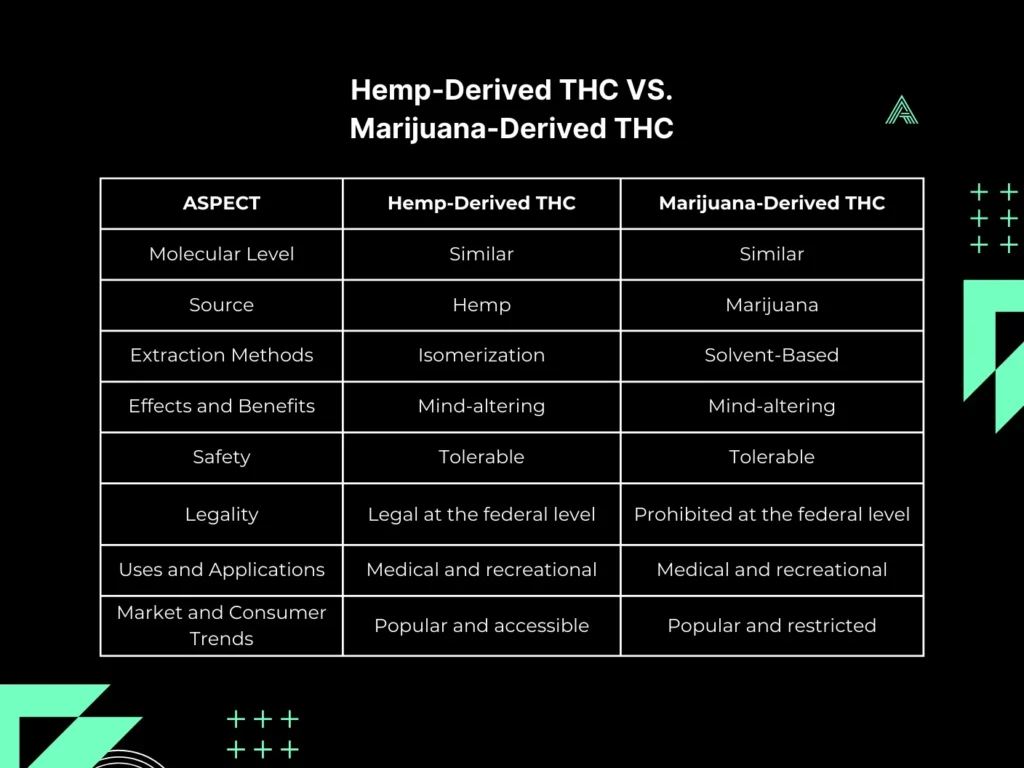
Delta-9-tetrahydrocannabinol, or THC, is a naturally occurring primary psychoactive component in the cannabis plant. It’s the primary causative agent for the mind-altering effects you feel when smoking or consuming cannabis derivative products.
THC can be extracted from two primary sources: hemp and marijuana, each with its own unique properties and legal considerations. Chemically, THC from hemp and marijuana is essentially the same, but their sources dictate the legalities and applications of their use.
The distinction between these two forms of cannabis stems mainly from their historical uses and current legal status. While hemp has been utilized for centuries in producing textiles, papers, and ropes, marijuana has been celebrated in various cultures for its psychoactive properties.
Let’s take a closer look at how THC derived from hemp vs. marijuana differs, but ultimately is the same.
Chemical Composition & Potency
While both hemp and marijuana contain THC, the concentrations differ considerably. Marijuana is typically cultivated for its higher THC content, often exceeding 20%. In contrast, hemp plants are bred to have low levels of THC (0.3% THC or less) but high levels of CBD, often used for its non-psychoactive benefits.
It’s fascinating how the same Cannabis species produces plants with such varied cannabinoid profiles, reflecting their intended uses and growing environments. Factors such as climate, soil type, and cultivation practices lead to these disparities in chemical composition.
Hemp plants are optimized to produce more CBD, while marijuana is cultivated for its THC content.
Source
Hemp-derived THC comes from industrial hemp, while marijuana-derived THC is extracted from cannabis plants bred for high THC levels. This fundamental difference impacts their legal classifications and market positioning, with industrial hemp enjoying a federally legal status and in-demand marketability.
Extraction Methods
Because there’s only so much THC to be extracted in hemp, industry practice requires hemp-derived THC to take the route of using CBD to convert into THC. This requires sophisticated techniques like isomerization.
Marijuana-derived THC, with its higher natural THC content, undergoes simpler extraction processes such as CO2, solvent-based, or ethanol extraction.
Effects and Benefits
The effects of THC, whether derived from hemp or marijuana, are essentially the same, but potency and concentration levels can influence the intensity and duration of those effects.
Consumers seeking more substantial psychoactive effects generally turn to marijuana-derived THC. Meanwhile, hemp-derived THC is often preferred in states with stricter cannabis laws or for those interested in milder experiences.
While both types of THC interact with the endocannabinoid system in the same way, the overall experience can vary significantly from one person to another.
Understanding the nuances of THC’s interaction with the body can help consumers decide which variant is best suited for them. Hemp-derived THC offers a subtler experience, often favored for non-intoxicating benefits like stress relief or minor pain management.
Conversely, users looking for a more pronounced psychoactive experience might opt for products with marijuana-derived THC.
Safety
Is hemp derived Delta 9 safe?
Hemp-derived and marijuana-derived THC products offered in the market undergo rigorous testing for contaminants like pesticides and heavy metals. These are all documented in a Certificate of Analysis (COA) provided by a third-party testing laboratory. While this is the standard, the cannabis industry is still a wild wild west, and many unregulated products remain unnoticed.
The unregulated nature of some hemp derived products can lead to inconsistencies in safety and quality. So, do your due diligence as a responsible consumer and research the company or resellers’ reputation.
Legality (Federal and State-Level)
One of the significant differences between hemp-derived THC and marijuana-derived THC lies in their legal status.
In general, hemp-derived THC products, which must contain less than 0.3% THC, are federally legal in the United States, thanks to the 2018 Farm Bill. Hemp-derived THC benefits from a more stable legal status across the nation as it lacks the psychoactive punch of its marijuana-derived counterpart. This distinction provides consumers access to a range of products that might otherwise be restricted due to marijuana’s legal limitations.
In contrast, marijuana-derived THC is not legal at the federal level but enjoys state-law autonomy in states with medical and recreational programs in place. For example, in states like California, where recreational marijuana use is legal, consumers enjoy broader access to higher THC concentrations.
Uses and Applications
Hemp-derived THC products, such as THC gummies and vapes, cater to those seeking legal, accessible options. Marijuana-derived THC serves a broader range of applications, from recreational enjoyment to targeted medical treatments.
Market and Consumer Trends
Hemp-derived THC is gaining popularity due to its legal status and accessibility, while marijuana-derived THC dominates in states with established recreational markets. Consumer preferences continue to evolve, driving innovation in both sectors.
Is Hemp Derived THC the Same With Marijuana-Derived THC?
The debate over whether hemp-derived THC is the same as marijuana-derived THC is never-ending, but the answer lies in the chemistry. On a molecular level, THC is THC—whether extracted from hemp or marijuana, the delta-9 tetrahydrocannabinol compound remains identical.
The distinction only arises from their source and legal classification. Hemp, defined as cannabis with 0.3% or less delta-9 THC by dry weight, produces THC in far smaller concentrations than marijuana, which typically boasts 15–30% THC. This seemingly tiny difference affects not just potency but also public perception.
The majority of consumers view hemp-derived THC as a milder, more accessible alternative, while marijuana-derived THC carries the weight of higher psychoactive effects and stricter regulations. Yet, functionally and chemically, both forms of THC interact with the body’s endocannabinoid system in the same way, delivering similar effects depending on dosage.
So, while the source may vary, the substance itself remains unchanged.
What to Choose: Hemp-Derived THC or Marijuana-Derived THC?
When choosing between hemp-derived and marijuana-derived THC, consider factors such as desired effects, legal regulations in your area, and personal tolerance levels.
Also, it’s important to verify product labeling to ensure compliance with state and federal laws. This ensures that consumers are not only adhering to the legalities of THC use but also maximizing their personal safety and product effectiveness.
Ultimately, your choice depends on your needs, location, and tolerance. Hemp-derived THC is a legal, low-potency option for those in restrictive areas. At the same time, marijuana-derived THC offers a more substantial, more comprehensive experience for users with access to recreational or medical cannabis.
What’s Next for Hemp-Derived THC?
The future of hemp-derived THC looks cherry as the cannabis industry continues to be in tip-top shape. With growing consumer demand and shifting regulatory landscapes, hemp-derived THC products are likely to play an even more significant role in both recreational and wellness markets.
What’s threatening hemp-derived THC, for now, are the several groups raising concerns about these products falling into the hands of minors and state-licensed adult-use marijuana operators with issues over the economic advantage hemp-derived THC has over them.
Interested in what hemp-derived THC can do for you?
Discover the ultimate hemp-derived THC experience with The Hemp Doctor! We are one of the hemp derived THC brands offering a premium selection of products to suit every preference, including delicious gummies, potent edibles, smooth vapes, and refreshing drinks. Choose from various sizes, flavors, potencies, and strains to find your perfect match.
Shop now on our online store or visit us in person at our Mooresville, Concord, and Huntersville locations. Your journey to premium hemp-derived THC starts here!
-
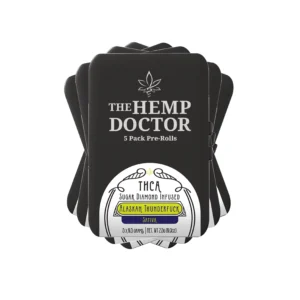
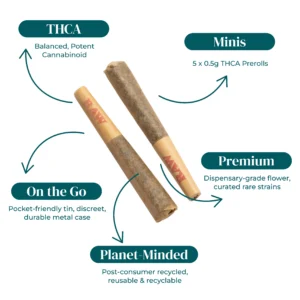
THCA SUGAR DIAMOND INFUSED PRE-ROLLS | 5-PACK TINS
$29.95Shop Now This product has multiple variants. The options may be chosen on the product page -
Hot Seller
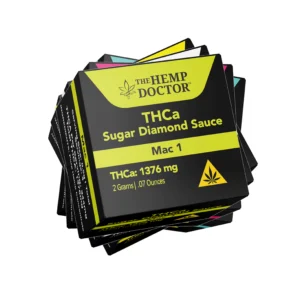
1376MG THCA SUGAR DIAMOND SAUCE | 2G
$49.95Shop Now This product has multiple variants. The options may be chosen on the product page