Can You Fly With Delta 9 Gummies? A 2026 Traveler’s Guide


With all the stresses that can arise during travel, the urge to bring Delta 9 gummies along on your trip can be overpowering—or maybe you just don’t want to part with your nightly routine while away from home for a few days. In either case, it might feel like the obvious choice to stash Delta 9 gummies in your carry-on bag or checked luggage.
Although hemp is federally legal in the United States, Delta 9 THC remains a controlled substance, meaning products must contain under 0.3% by dry weight to stay Farm Bill compliant. Hemp-derived Delta 9 gummies meet this standard and can technically be brought on domestic (emphasis on “domestic”) flights. Still, confusion or delays at security aren’t out of the question, and there are a few important considerations to keep in mind during your travels.
Spoiler: It’s simplest just to keep Delta 9 gummies at home. It’s not as high-risk as flying with THCA flower, but you could still run into easily avoidable problems.
✈️ Key Takeaways
- Hemp-derived Delta 9 gummies are federally legal (under 0.3% Delta 9 THC by dry weight) and can technically be brought on domestic US flights, but TSA confusion or delays are possible.
- Dispensary (marijuana-derived) gummies remain federally illegal and cannot be taken on planes or transported across state lines.
- TSA focuses on safety, not drug enforcement, but agents can report anything suspicious, and most don’t know the difference between hemp and marijuana D9 edibles.
- International travel is a hard no. Most countries treat all THC as illegal, and penalties can be severe.
Quick Answer: Can You Fly With Delta 9 Gummies?
Yes, you can technically fly with hemp-derived Delta 9 THC gummies, but your gummies could still trigger confusion or delays at the airport—major issues are just unlikely. (But to be fair, missing your flight due to holdups could still be considered a “major issue,” and that’s not entirely out of the question.)
Hemp-derived Delta 9 gummies aren’t explicitly banned by the Transportation Security Administration (TSA), assuming they contain less than 0.3% Delta 9 THC by dry weight. Staying under this threshold keeps them 2018 Farm Bill-compliant and federally legal.
Dispensary products (marijuana-derived) don’t have to meet this same dry weight limit and remain illegal under federal law, and cannot be taken on domestic flights, despite growing legalization across the United States.
The TSA’s job is to identify contraband that could interfere with aircraft or passenger safety. While agents are required to report suspicious cargo to local authorities, they don’t go out of their way to find drugs or cannabis products. Unfortunately, this also means that they may or may not know the ins and outs of the Farm Bill, and there’s always a chance TSA officers could flag your gummies for inspection if they resemble marijuana edibles (which they almost always do).
Also: don’t bring cannabis gummies, whether hemp-derived or from a legal dispensary, on an international flight. That’s an entirely different situation, which we’ll get into later.
Understanding Delta 9 Legality in Travel
You’ll want to be careful traveling with any products containing Delta 9 THC, hemp-derived or otherwise.
Keep in mind that Delta 9 THC is a Schedule I controlled substance, rendering it federally illegal in the United States. While hemp-derived Delta 9 gummies contain low amounts of the cannabinoid by dry weight, not all Delta 9 THC products are legal to bring over state lines—and that’s not even considering the fact that some U.S. states have harsher restrictions on hemp than others, despite the plant’s federal legal status.
Cannabis products containing over 0.3% Delta 9 THC can’t be legally transported over state lines, even between states where marijuana is legal. Doing so technically falls under drug trafficking laws, though this is most relevant to larger quantities or commercial transport rather than personal use.
And that’s not even considering the complexity of international travel. Numerous countries across the world have outlawed cannabis and THC in all forms, with penalties ranging from confiscation to serious criminal charges. Authorities of other nations generally don’t distinguish between “hemp” and “marijuana” products, either, often treating any THC content as illegal.
Hemp-Derived Delta 9 vs. Marijuana-Derived: Why It Matters?
When it comes to legality (at least in the U.S.), the distinction between hemp-derived and marijuana-derived Delta 9 is critical—even if we’re looking at the same compound, either way.
Delta 9 THC itself is a Schedule I controlled substance under federal law, and up until the late 2010s, wasn’t legal to distribute or possess in any capacity. With the passage of the 2018 Farm Bill came the legalization of low-THC cannabis products that are required to contain less than 0.3% Delta-9 THC by dry weight.
But the Delta 9 gummies we see on shopping sites and physical stores, by their nature, aren’t low in THC—making the whole premise of “hemp-derived” Delta 9 gummies seem counterintuitive on the surface. They can still contain measurable, psychotropic levels of THC, after all.
The key lies in the “dry weight calculation.” Because gummies are dense and heavy relative to their cannabinoid content, manufacturers can legally include five to 10 milligrams (or more) of Delta 9 THC per serving. It still counts as hemp because the THC is less than 0.3% of the total weight. All that matters is concentration relative to total product weight.
THC is still THC, regardless of its origin, and hemp-derived gummies can produce the same effects as those sold in dispensaries. The difference lies solely in how they’re sourced and labeled. Not everyone understands that nuance, though, including TSA officers or local law enforcement. So even though hemp-derived gummies are federally legal, they can cause confusion and scrutiny during your travels.
Can You Bring Delta 9 Gummies Through TSA? (What the TSA Guidelines Say)
According to the TSA, federally illegal cannabis products containing over 0.3% Delta-9 THC can’t be brought onto a flight. If officers suspect you’re traveling with illicit substances, they’re required to report this to local, state, or federal authorities, though they aren’t directed to seek out illegal drugs.
If a cannabis product (say a Delta 9 gummy) contains beyond 0.3% Delta 9 THC by dry weight, it’s not considered hemp under federal law and therefore falls into the same category as marijuana. These Delta 9 gummies can’t be legally transported on a plane, full stop. Flying with Delta 8 THC, hemp-derived Delta 9 gummies, or other intoxicating hemp products is where the nuance comes into play.
TSA agents aren’t chemists, either. They aren’t trained to recognize cannabis edibles or distinguish legal hemp products from federally illegal marijuana ones, which could lead to confusion if your Delta 9 gummies are spotted.
Whether your gummies make it past the checkpoint depends on an officer’s discretion. Ultimately, you’ll need to decide if the risk is worth it.
What Happens During Security Screening When You Travel with Hemp-Derived Delta-9 THC?
There’s a decent chance that the TSA won’t flag your Delta 9 gummies during a security screening in the first place. Scanners detect organic materials but don’t specifically identify THC, and officers are primarily focused on safety threats, not hemp products.
If your bag is inspected, TSA may perform a visual check or swab test for explosives, but they don’t test substances for THC levels. For many travelers, hemp-derived gummies are likely to go either unnoticed or be quickly waved through if the packaging looks professional and compliant. And yet, the slim risk of a messy situation remains.
Discretion and documentation matter. Products that appear homemade or unmarked could draw unnecessary attention, especially during airport screenings. If you plan to fly with Delta 9 gummies, it’s worth taking a few extra precautions, like keeping them in their original, labeled packaging and carrying a certificate of analysis (COA) for that product. It’ll make your life (and trip) easier in the long run.
What Happens If TSA Finds THC Gummies In Your Luggage?
TSA officers can’t arrest you, but they may involve airport police if they’re uncertain about a product’s legality. Local authorities then decide how to proceed, which usually means verifying whether your gummies qualify as hemp-derived and federally compliant.
Typically, the outcome is minor, and officers may simply confiscate the product or instruct you to discard it. However, a brief delay or questioning may be possible if the packaging is unclear or missing.
To lower your chances of a difficult situation, consider:
- Keeping a certificate of analysis (COA) on hand: Reputable hemp brands always provide COAs, which are a detailed report on cannabinoid breakdown. This is a simple way to demonstrate legality if questioned.
- Using original packaging: You might be tempted to remove gummies from any packaging with “THC” boldly labeled on the front, but that can make them appear more suspicious. Loose gummies in a bag are harder to identify and may raise red flags.
- Educating yourself: Understanding U.S. hemp and cannabis laws before you travel helps you explain what you’re carrying if asked. Again, not every TSA agent will be familiar with the specifics. It isn’t a routine part of their training.
To reiterate, you don’t want to hide your Delta 9 gummies. Trying to conceal them could have the opposite effect—drawing more attention from the TSA or local police. The only foolproof way to avoid mishaps is to leave your gummies at home.
Domestic Flights: Can You Fly With THC Gummies Between States?
If the THC-rich cannabis product in question isn’t federally legal—in other words, if it contains over 0.3% Delta 9 THC by dry weight—you can’t legally bring it on a plane or transport it across state lines, even if cannabis is legal in both your departure and destination states.
As one Quora user, Jeff, shared in a public post, a family friend was fined $1,500 and even spent a night in jail for having just two THC gummies in her purse while driving from Texas to Colorado through Marfa. He didn’t mention whether the gummies were hemp-derived or not, and while they’re not flying, this is a cautionary tale that federal law overrides state-level legalization when it comes to crossing state borders.
Assuming the product is hemp-derived and contains no more than 0.3% Delta-9 THC on a dry weight basis, you can travel with it from one state to another, and nothing in federal law prohibits you from doing so. TSA guidelines don’t ban it either, despite the possibility of misunderstandings. It can still get complicated, though, depending on individual states’ outlooks on hemp-derived THC.
Several states (including some marijuana-friendly ones) have enacted restrictions or outright bans on intoxicating hemp-derived products. These inconsistencies in state and local laws mean that even though your gummies are federally legal, you could still face scrutiny at your destination if local laws differ.
Where It Gets Tricky: State-by-State Grey Zones
If you’re traveling to or from a state with stricter hemp laws, you’ll want to be cautious. These states tend to take the hardest stance against hemp-derived THC products (rather than nonintoxicating CBD), even when they meet the federal definition of hemp. Hemp-derived Delta 9, Delta 8, and THCA products are among the most likely to cause issues, including during travel.
For reference, states with tougher or ambiguous hemp laws currently include:
- Idaho
- Kansas
- South Carolina
- Utah
Some restrict all hemp products that produce intoxicating effects, regardless of THC concentration.
Before flying, it’s wise to check both your departure and arrival state regulations through official government or Department of Agriculture websites, so that you know what to expect and can plan accordingly.
Can I Fly With Delta-9 Gummies Internationally?
No, you should never pack THC products of any kind when flying internationally, regardless of their legality in the United States at any given time.
The exact level of risk depends strongly on your destination country, but cannabis and THC remain illegal in many nations across the globe. Even small amounts can lead to confiscation, fines, denial of entry, or arrest.
International customs and law enforcement authorities typically don’t distinguish between “hemp” and “marijuana” the way U.S. federal law does, so it’s safest to leave Delta 9 products at home.
Smart Alternatives to Flying With Delta 9 Gummies
If you’d rather avoid any potential headaches that come from flying with Delta 9 gummies, consider a few alternatives:
Buy Delta 9 Products at Your Destination
If you’re traveling somewhere with legal marijuana or hemp-derived Delta 9 THC, you can purchase fresh gummies once you arrive. Whether the added expense is worth it depends on your priorities, but it’s the lowest risk option.
Stick to CBD or Other Non-Psychotropic Cannabinoids
Depending on why you use Delta 9 THC, you might be able to substitute it with CBD, CBG, or CBN (and so on). These cannabinoids are less likely to cause issues during travel, and some—including CBN, famously—may even offer similar benefits for sleep or relaxation.
Explore Non-Cannabis Options
If your goal is to stay calm or manage travel anxiety, legal over-the-counter products like melatonin or magnesium supplements can serve a similar purpose.
The Science of Delta 9 Gummies in Flight (What Happens at 30,000 Feet)
Even if you don’t plan to consume Delta 9 gummies mid-flight—which definitely isn’t recommended—it helps to know how cabin conditions can affect them. Their chemical potency doesn’t change simply from being carried on a plane, but the environment can influence texture and how your body responds if you do consume one.
Commercial airlines typically keep cabin pressure at an equivalent altitude below about 8,000 feet, and cabin humidity is much lower than in typical indoor spaces. Both of these factors can alter the texture of gummies, causing them to dry out if not sealed properly or soften if exposed to heat in checked luggage. Again, none of these conditions directly impact potency, but altered texture or melting may make dosing less consistent.
But if you were to consume Delta 9 gummies mid-flight, altitude-related factors such as lower oxygen levels and fatigue could amplify THC’s effects, making them feel stronger or less predictable. It’s safest to wait until you’ve reached your destination before using any THC-containing products, regardless. You don’t want to be caught high in public.
Conclusion
You can fly with hemp-derived Delta 9 gummies if the product truly meets the federal definition of hemp (less than 0.3% Delta 9 THC by dry weight), but that legal lane is narrow and increasingly complicated by state rules and international law.
TSA’s focus is on aviation safety (not drug testing), and officers will refer suspected illegal cannabis to law enforcement, so small mistakes and ambiguous packaging can cause delays or confusion.
If you’re unsure, it’s usually safer to leave Delta 9 gummies at home, buy locally when available, or use low-risk alternatives like melatonin.
Travel Tip: Never miss your Delta 9 gummies again, even during domestic flights. Order them through The Hemp Doctor shopping website and have them shipped to your destination.
-
Best Seller
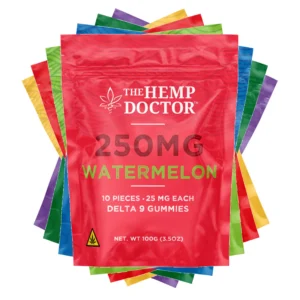
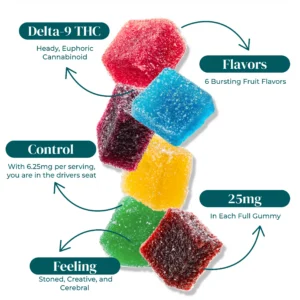
DELTA 9 THC GUMMIES | 25MG
Price range: $6.95 through $59.96 — or subscribe to save 25%Shop Now This product has multiple variants. The options may be chosen on the product page -
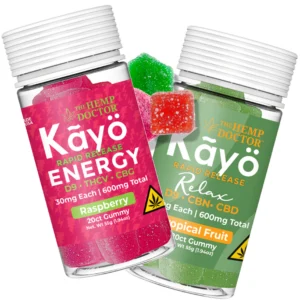
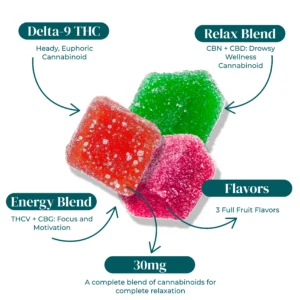
KAYO | RAPID RELEASE THC BLEND GUMMIES | 30MG
Price range: $29.95 through $54.95 — or subscribe to save 25%Shop Now This product has multiple variants. The options may be chosen on the product page