Is Alabama Legalizing Weed in 2026?
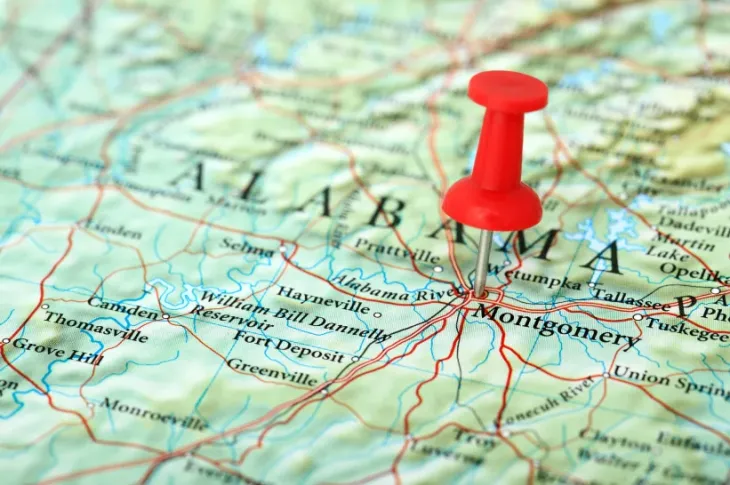
Alabama is not legalizing recreational marijuana. Recreational weed remains illegal to possess or sell. Alabama did legalize a regulated cannabis access program in 2021 through the Compassion Act, and after years of licensing delays, the first legal regulated cannabis dispensary opened in Montgomery on June 4, 2026. Access is restricted to registered adults who meet state eligibility rules, and the program does not permit smoking, vaping, or raw plant material.
Separately, Alabama regulates hemp-derived cannabinoid products under HB 445, also known as Act 2025-385, which took full effect on January 1, 2026. Under that law, smokable and inhalable hemp products are banned statewide, and consumable hemp products such as edibles and beverages must comply with strict THC caps, licensing, testing, and labeling requirements. The Hemp Doctor tracks Alabama’s evolving framework closely, and adult consumers should verify current rules before ordering any hemp-derived product.
Format availability is subject to change as state regulations evolve. Check current Alabama regulations before ordering.
Ship It or Skip It?
Here’s a quick look at which hemp-derived cannabinoids The Hemp Doctor can ship to Alabama, and where each one stands legally as of August 2026.
| Cannabinoid | Ships to Alabama? | Legal Status |
| Delta 8 | ✓ | Shipping but strictly regulated. Compliant D8 edibles and beverages at ≤10mg total THC per serving and ≤40mg per container meet HB 445 requirements and are eligible to ship. Smokable and inhalable D8 formats are banned. Verify product serving size and COA before ordering. |
| Delta 9 | ✓ | Shipping. Compliant D9 edibles and beverages at ≤10mg total THC per serving and ≤40mg per container meet HB 445 requirements and are eligible to ship. Smokable and inhalable D9 formats are banned. Verify product serving size before ordering. |
| THCA | ✗ | Restricted. Smokable THCA (flower, pre-rolls, vapes) is a Class C felony in Alabama. Non-smokable forms fall under the same in-person, licensed-retail rules as everything else. |
| THCP | ✗ | Restricted. Counts toward Alabama’s total THC caps and follows the same in-person, licensed-retail-only rules. |
| CBD | ✓ | Shipping. CBD itself is fully legal, but consumable CBD products fall under HB 445’s shipping restrictions. Verify before ordering any CBD product online. |
Key: ✓ Ships · ✗ Restricted · ⚠ Verify before ordering
What Can Ship to Alabama, Format by Format
Not every cannabinoid comes in every product format, and state law can affect what’s available. Here’s which formats you can order for each cannabinoid in Alabama.
| Product Format | Delta 8 | Delta 9 | THCA | THCP | CBD |
| Gummies / Edibles | ✓ | ✓ | ✗ | ✗ | ✗ |
| Vapes / Carts | ✗ | ✗ | ✗ | ✗ | ✗ |
| Tinctures / Oils | ✗ | ✗ | ✗ | ✗ | ✗ |
| Flower / Pre-Rolls | ✗ | ✗ | ✗ | ✗ | ✗ |
| Concentrates | ✗ | ✗ | ✗ | ✗ | ✗ |
| Topicals | ✗ | ✗ | ✗ | ✗ | ⚠ |
| Drinks / Seltzers | ✓ | ✓ | ✗ | ✗ | ✗ |
| Softgels | ✗ | ✗ | ✗ | ✗ | ✗ |
Key: ✓ Ships · ✗ Restricted · ⚠ Verify before ordering
State-Specific Restriction Notes
Alabama’s hemp framework is one of the most restrictive in the country. Adult consumers should know the following before shopping.
Minimum age. Alabama prohibits consumable hemp products from being sold to persons under 21, and licensed retailers must restrict entry to adults 21 or older. Prior state law also prohibited psychoactive cannabinoids such as delta-8 THC and delta-10 THC from being sold to or possessed by individuals under 21.
Smokable and inhalable products. Smokable hemp products are strictly prohibited in Alabama. The statutory definition of “consumable hemp product” excludes any smokable hemp product, including hemp cigarettes, cigars, joints, buds, flowers, leaves, and ground hemp flower, whether psychoactive or not. HB 445 also prohibits the sale of inhalable hemp products, which sweeps in most vape carts and disposables.
Synthetic or converted cannabinoids. Products containing psychoactive cannabinoids created by chemical synthesis, chemical modification, or chemical conversion from another cannabinoid using non-cannabis materials are prohibited. Alabama’s ABC rule requires COA documentation affirming the submitted material was not created by chemical synthesis, modification, or conversion using non-cannabis inputs.
THC potency caps. For beverages and edible consumable hemp products, one serving may not contain more than 10 mg total THC. Topical, sublingual, and other covered consumable hemp products may not contain more than 40 mg total THC per container. Edible products must be individually wrapped in single-serve packaging, and one carton may not contain more than 40 mg total THC. Beverage serving size may not exceed 12 fluid ounces, or 355 mL, and one carton may not contain more than four 12-ounce containers.
Alcohol and intoxicants. Consumable hemp products may not contain alcohol, except as a flavoring agent, or any intoxicating compound other than cannabinoids.
Testing, COA, packaging, and labeling. Beginning January 1, 2026, consumable hemp products may not be distributed into or within Alabama or sold at retail unless they have a corresponding certificate of analysis from an independent testing laboratory, remain in the original sealed container, meet packaging restrictions, meet serving-size and total-THC content limits, and meet labeling requirements. Retailers and distributors must keep COAs available for inspection.
Retail location restrictions. Most consumable hemp retailer establishments must be restricted to individuals 21 or older and have a dedicated public entrance. Except for specified pharmacy and retail-food-store exceptions, the ABC Board may issue retailer licenses only to persons with an off-premises retail liquor license or persons that sell only consumable hemp products.
Pharmacy exception. Topical and sublingual consumable hemp products may be sold in a pharmacy licensed by the Alabama State Board of Pharmacy if the pharmacy obtains a consumable hemp product retailer license from the ABC Board and complies with the state’s hemp chapter and ABC rules.
Retail food store exception. Consumable hemp beverages may be sold in qualifying retail food stores if the store obtains an ABC consumable hemp product retailer license, and such beverages must be kept separate from nonalcoholic beverages and beverages intended for children, behind glass, and marked with signage indicating they contain hemp-derived compounds.
Direct-to-consumer shipping. Alabama defines an “unlawful hemp product” to include a product shipped or distributed directly to a consumer in violation of Ala. Code § 28-12-60. This is the key rule for online shoppers to check.
Licensing. Alabama regulates manufacture, possession, distribution, and sale of consumable hemp products through Alcoholic Beverage Control Board licensure. The Legislature stated that manufacture, wholesale distribution, and sale of hemp-derived cannabinoid products is strictly prohibited unless specifically allowed under Chapter 12 of Title 28. Read the full text of HB 445 on the Alabama Legislature site.
Format availability is subject to change as state regulations evolve. Check current Alabama regulations before ordering.
What Alabama Locals Are Buying
Here are the compliant hemp products Alabama adults can order — all within HB 445’s ≤10mg per serving and ≤40mg per container limits.
| Product | Category |
| MICRO TARTS | 5MG D9 THC | Delta 9 Edible |
| SOUTHERN HIGH | D9:CBG SELTZER | 15MG | Delta 9 Drinks |
Hemp and Cannabinoid Laws in Alabama
Legal Landscape Overview
Alabama is a restrictive state for cannabis and hemp. Recreational marijuana is illegal, and the state’s regulated cannabis access program, while active in 2026, allows only a narrow set of non-smokable products for registered adults who meet state eligibility rules. Adult consumers cannot legally buy recreational weed anywhere in Alabama, and personal-use possession can carry up to one year in jail and fines up to $6,000 for a first offense. The state-regulated cannabis access program is governed by the Alabama Medical Cannabis Commission, or AMCC, which oversees registration, certification, dispensary licensing, and product approval.
Hemp-derived cannabinoid products fall under a separate framework built by HB 445, or Act 2025-385, signed by Governor Kay Ivey on May 14, 2025. The smokable hemp portion of the law took effect July 1, 2025, and the full licensing, labeling, and enforcement structure became active on January 1, 2026. Under this framework, Alabama bans smokable hemp products entirely, caps THC per serving on consumables at 10 mg, requires ABC Board licensure for retailers, and prohibits synthetic or converted cannabinoids made from non-cannabis materials. In short, Alabama state-regulated cannabis rules and Alabama hemp rules are separate legal tracks, and adult consumers should not assume that “hemp-derived” means unrestricted.
Hemp Law Timeline: Alabama
- 2018 — Federal Farm Bill legalizes hemp and hemp-derived cannabinoids nationally at up to 0.3% Delta-9 THC by dry weight.
- 2019 — Alabama Department of Agriculture and Industries begins licensing industrial hemp growers and processors.
- 2021 — Alabama passes the Compassion Act, creating a regulated cannabis access program for qualifying adults.
- May 14, 2025 — Governor Kay Ivey signs HB 445 into law, creating a regulatory and taxing framework for hemp-derived THC products while banning smokable hemp.
- July 1, 2025 — Smokable hemp ban takes effect. Sale and possession of smokable hemp, including THCA hemp flower, THCA pre-rolls, and hemp vape cartridges, becomes a Class C felony.
- January 1, 2026 — Full HB 445 enforcement begins: consumable hemp products require COAs, ABC Board retailer licensure, THC caps, and compliant packaging and labeling.
- June 4, 2026 — Alabama’s first legal state-regulated cannabis dispensary opens in Montgomery.
- 2026 current status — Smokable and inhalable hemp products such as flower, pre-rolls, and vape disposables cannot be legally sold or shipped into Alabama. Compliant D9 edibles and beverages (≤10mg/serving, ≤40mg/container) are eligible to ship. Recreational marijuana remains illegal statewide. State-regulated cannabis access is available only to registered adults through licensed dispensaries, and registered adults cannot access raw plant material, smoking, or vaping.
Local Restrictions by City and County
No confirmed local ordinances beyond state law were identified in Alabama. Huntsville City Council has publicly discussed updating zoning ordinances for hemp and CBD stores to align with state oversight, but that proposal is not confirmed as an enacted ordinance as of publication. If you are in an Alabama city considering local action, monitor your city council’s public agendas.
City-Specific Rules:
Local Landmark Ties
Alabama’s landscape is full of landmarks that draw both residents and travelers year-round. Here are a few that fit naturally into how adult consumers think about downtime.
USS Alabama Battleship Memorial Park, Mobile. After walking the length of the WWII-era battleship and the USS Drum submarine on the Causeway, many visitors head back tired and sun-worn. Where Alabama rules permit, lower-serving options such as MICRO TARTS 5MG D9 THC fit well within the state’s 10 mg per serving edible cap.
U.S. Space & Rocket Center, Huntsville. Home of the Saturn V Dynamic Test Stand and U.S. Space Camp, this landmark pulls large weekend crowds. Adult consumers heading back to a hotel or Airbnb sometimes prefer a hemp-derived beverage over alcohol, and our SOUTHERN HIGH D9:CBG SELTZER at 5 mg Delta 9 per can is designed for a slow, session-style sip.
Edmund Pettus Bridge, Selma. A National Historic Landmark central to the 1965 voting rights marches, the bridge is a reflective, slower-paced visit. Adult consumers who prefer discreet formats over inhalables often turn to smaller-serving edibles like our MICRO TARTS 5MG D9 THC, which stay well under Alabama’s per-serving edible cap.
-
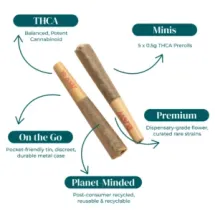
THCA SUGAR DIAMOND INFUSED PRE-ROLLS | 5-PACK TINS
$29.95Shop Now This product has multiple variants. The options may be chosen on the product page - Sale!On SaleBack in Stock
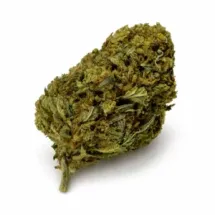
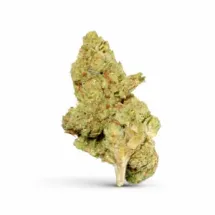
3.5G PREMIUM THCA FLOWER | ROTATING STRAINS
Original price was: $24.95.$15.00Current price is: $15.00.Shop Now This product has multiple variants. The options may be chosen on the product page
What Your Co-Locals Say
Here’s what Alabama hemp users are saying online.
Theme 1: Cautious optimism about legal cannabis access. Community members across the Alabama subreddit generally welcomed the first legal state-regulated cannabis sale in state history, framing it as long overdue. The overall sentiment was positive but tinged with impatience, with several commenters pointing out that the Southeast has trailed most of the country on cannabis policy for years. Sentiment: positive, but slow-moving.
Theme 2: Frustration with lingering gray-market activity. A recurring theme was skepticism that legalization alone would fix Alabama’s cannabis landscape. Commenters described a longstanding pattern of unlicensed sales and local enforcement dynamics that could persist even after legal channels open, and some expressed doubt that current state rules go far enough. Sentiment: mixed, leaning frustrated.
Theme 3: Cultural and political resistance to broader reform. Multiple posters compared Alabama’s pace with more permissive states such as Maryland, Oregon, and California, where they said legal cannabis has become routine rather than a novelty. Several attributed Alabama’s slower rollout to political culture, generational attitudes, and religious influence, expressing hope that future generations will drive change. Sentiment: mixed, with clear generational and political undertones.
Want the full discussion? See the complete thread on Reddit.
Estimated Delivery to Alabama
The Hemp Doctor ships from Mooresville, NC, roughly 400 to 700 miles from most Alabama destinations depending on your city. Our standard estimated delivery window to Alabama is 24 to 48 business hours in transit after processing. Final delivery timing depends on UPS or USPS routing, and our warehouse processing typically adds 2 to 5 business days before the package hands off to a carrier.
Under HB 445, certain hemp-derived formats cannot be lawfully shipped into Alabama, including smokable hemp, such as flower and pre-rolls, and inhalable products, such as vape carts and disposables. Ships-in-scope items are limited to compliant D9 edibles and beverages (≤10mg/serving, ≤40mg/container) that meet Alabama’s consumable hemp product requirements as they evolve, so what appears in your cart may be filtered based on your shipping address.
Holiday periods such as Thanksgiving through New Year’s, plus 4/20 and other major shopping windows, can extend both processing and transit times by 1 to 3 days due to increased carrier volume. Order early if you are shopping around a specific date.